Understanding the mythological story of mahakaleshwar jyotirlinga is essential for anyone exploring ancient Hindu spirituality. This powerful narrative reveals how Lord Shiva conquered time and mortality in the sacred city of Ujjain.
For centuries, pilgrims have traveled to Madhya Pradesh seeking salvation and spiritual enlightenment. The legend behind this revered shrine perfectly captures the boundless protective nature of the divine.
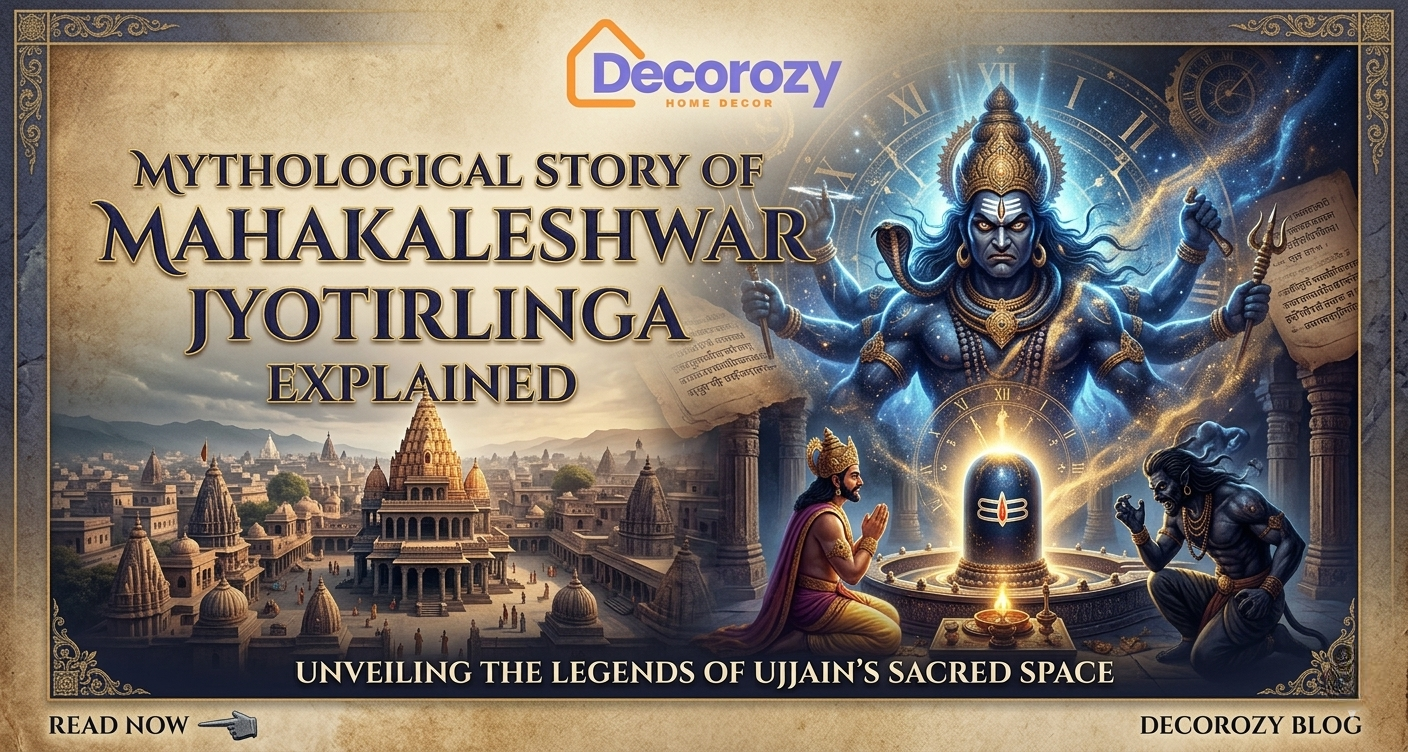
Quick Answer: The mythological story of Mahakaleshwar Jyotirlinga centers on Lord Shiva appearing in Ujjain to destroy the terrifying demon Dushana. After saving his devoted followers, Shiva manifested as an eternal column of light, or Jyotirlinga, taking the form of Mahakal—the ultimate Lord of Time and Death.
The Ancient City of Avanti: Setting the Stage
Long ago, the city of Ujjain was known as Avantika, a hub of intense spiritual learning and deep devotion. It was considered one of the most beautiful and pious cities in ancient India.
The residents of Avantika were deeply devoted to Lord Shiva, dedicating their days to chanting sacred Vedic mantras. A highly respected Brahmin named Chandrasen led these daily rituals with unwavering faith.
Chandrasen’s dedication was so profound that his prayers resonated throughout the cosmos. His pure devotion formed the spiritual foundation required for a divine manifestation.
The Rise of Demon Dushana in the Mythological Story of Mahakaleshwar Jyotirlinga
The tranquility of Avantika was soon shattered by the arrival of a fearsome demon named Dushana. This evil entity despised religious practices and sought to destroy the righteous.
Dushana possessed immense dark powers, which he used to terrorize the peaceful Brahmins and disrupt their holy sacrifices. He commanded his demon army to attack anyone worshipping Lord Shiva.
As the violence escalated, the terrified citizens turned to Chandrasen for guidance and protection. Despite the impending doom, the devout Brahmin refused to abandon his prayers to Lord Shiva.
Lord Shiva’s Intervention: The Climax of the Mythological Story of Mahakaleshwar Jyotirlinga
Hearing the desperate cries of his followers, the earth split open in Avantika with a thunderous roar. From this massive chasm, Lord Shiva emerged in his most terrifying and majestic form.
Radiating cosmic energy, Shiva confronted Dushana and his massive demonic army. With a single, devastating roar, the Lord of Time instantly reduced the demon and his followers to ashes.
Having restored peace, the Brahmins begged Lord Shiva to stay in Avantika permanently to protect them. Answering their plea, Shiva transformed into a radiant, self-manifested column of light.
The Unique Dakshinamukhi Idol: Architectural and Spiritual Significance
The resulting Mahakaleshwar Jyotirlinga is entirely unique among the twelve sacred shrines in India. It is the only Jyotirlinga known as “Dakshinamukhi,” meaning the deity faces the south.
In Hindu tradition, the southern direction is universally associated with Yama, the God of Death. By facing south, Mahakaleshwar symbolizes his absolute mastery over death and the mortal realm.
This architectural alignment is not just a physical trait; it holds immense esoteric power. Tantric traditions revere this specific orientation for its unmatched spiritual energy and transformative potential.
The Bhasma Aarti Tradition: A Direct Link to the Past
You cannot discuss this temple without mentioning the world-famous Bhasma Aarti. This pre-dawn ritual involves waking the deity with sacred ash, chanting, and rhythmic drumming.
According to ancient legends, the ashes symbolize the impermanence of the physical universe. It serves as a daily reminder that everything ultimately returns to dust, except the eternal divine.
By participating in this powerful ceremony, devotees connect directly with the ancient legend. It is a visceral experience that brings the triumph of Mahakal into the present moment.
Exploring the Swayambhu Nature of the Jyotirlinga
Another fascinating aspect of Mahakaleshwar is its “Swayambhu” or self-manifested nature. Unlike statues crafted and installed by human hands, this lingam is believed to have naturally emerged from the earth.
This self-manifestation means the idol derives its “Shakti” or power directly from within itself. It does not require continuous ritualistic mantra chanting to maintain its divine energy.
This intrinsic spiritual power makes Ujjain a prime destination for seekers of absolute liberation. The energy here is described by sages as incredibly intense, pure, and spiritually awakening.
Conclusion
The ancient legends of Ujjain offer more than just a captivating historical narrative. They provide profound insights into the nature of time, devotion, and the ultimate triumph of cosmic order over chaos.
By exploring this sacred lore, we gain a deeper appreciation for India’s rich spiritual heritage. The temple remains a beacon of hope, reminding us of the divine protection available to the pure-hearted.
If you found this spiritual deep-dive inspiring, be sure to explore more exclusive cultural and historical insights right here on Decorozy.com!
FAQ Schema
- Question 1: Why is Lord Shiva called Mahakal in Ujjain?
- Answer: Lord Shiva is called Mahakal because “Maha” means great and “Kala” means time or death. In Ujjain, he conquered death to protect his devotees from the demon Dushana, proving his mastery over mortality.
- Question 2: What is the unique feature of the Mahakaleshwar Jyotirlinga?
- Answer: Mahakaleshwar is the only Jyotirlinga that is “Dakshinamukhi,” meaning the idol faces south. In Sanatana Dharma, the south is the direction of death, symbolizing Shiva’s supreme power over the cycle of life and death.
- Question 3: What is the significance of the Bhasma Aarti at Mahakaleshwar?
- Answer: The Bhasma Aarti is a daily dawn ritual where the deity is worshipped using sacred ash. It symbolizes the impermanence of the physical world and represents Shiva’s eternal nature beyond material destruction.