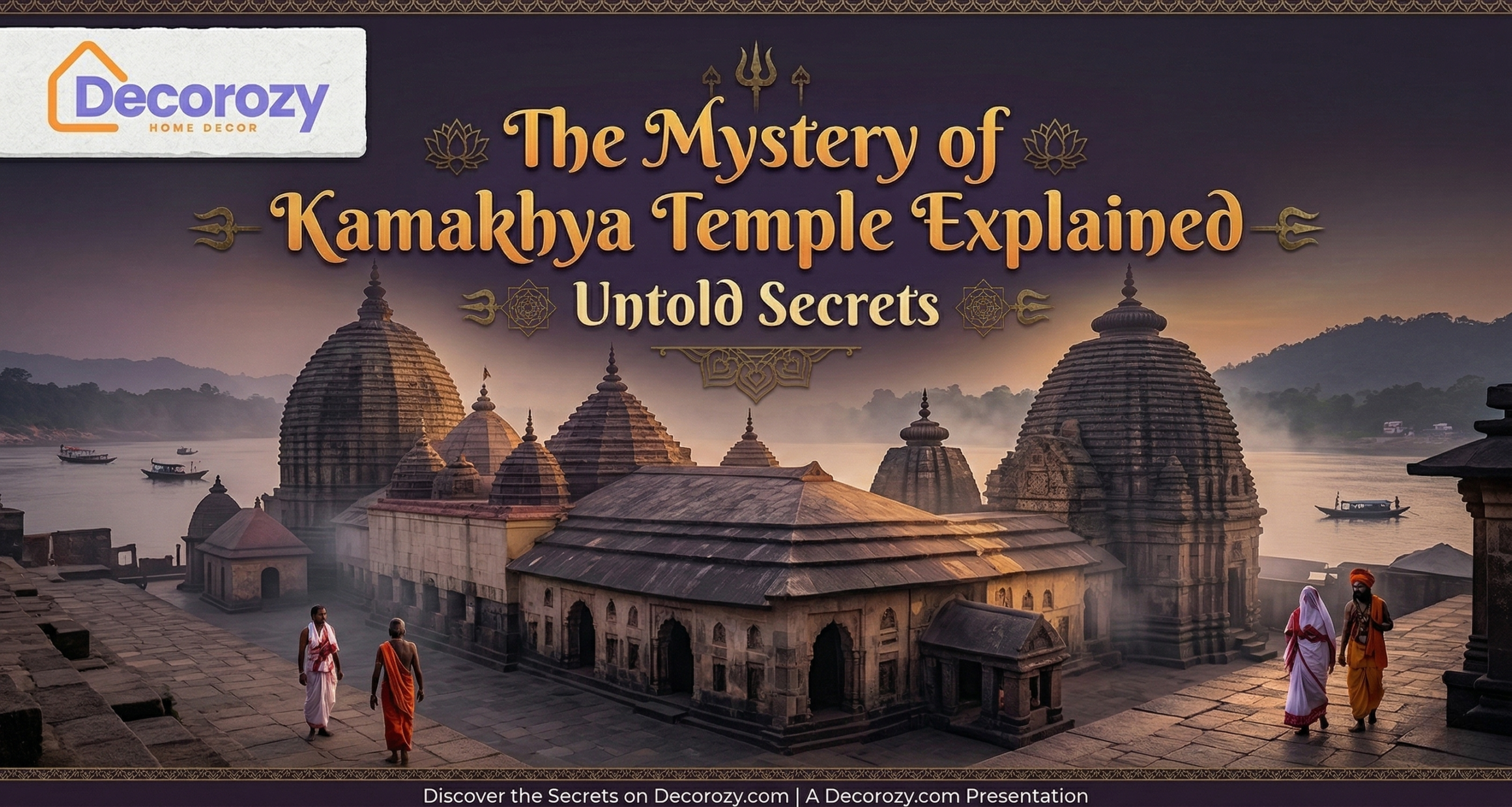
Perched atop the lush Nilachal Hills in Guwahati, Assam, lies one of India’s most enigmatic and powerful spiritual sites. For centuries, historians, scientists, and spiritual seekers have wanted the mystery of Kamakhya temple explained. This ancient Shakti Peetha defies conventional worship, drawing millions to its secretive, subterranean chambers.
Quick Answer: The mystery of the Kamakhya Temple centers on the annual Ambubachi Mela, where the presiding goddess undergoes her menstrual cycle. During this time, the underground spring waters surrounding the sacred yoni-stone famously turn red, symbolizing ultimate fertility and natural creation.
Unraveling the Core Mystery of Kamakhya Temple Explained
To truly have the mystery of Kamakhya temple explained, we must first examine its highly unusual central sanctum. Unlike traditional Hindu shrines, you will not find a sculpted idol, statue, or traditional depiction of a deity here.
Instead, devotees descend into a dark, subterranean cave to worship a naturally occurring rock fissure. This sacred cleft is shaped like a yoni (female genitalia) and is continuously moistened by a natural underground spring.
According to ancient Hindu mythology, this specific location marks the spot where the womb and yoni of Goddess Sati fell to earth. It is universally recognized as the oldest, most powerful, and most revered of the 51 Shakti Peethas.
The Ambubachi Mela: The Bleeding Goddess Mystery of Kamakhya Temple Explained
The most profound aspect of having the mystery of Kamakhya temple explained revolves around the Ambubachi Mela. Held every June, this grand festival celebrates the annual menstruation of the Goddess Kamakhya, honoring female biology as a divine event.
During these three days, the temple doors are completely sealed to the public, and agricultural work ceases. It is during this period that the waters of the nearby Brahmaputra River, and the temple’s internal spring, reportedly turn a striking red.
Skeptics and scientists suggest this crimson hue originates from heavy monsoon rains washing iron-rich cinnabar soils into the water supply. Others point to the widespread, continuous use of red vermilion powder by thousands of visiting priests.
However, for the millions of devotees who flock to Assam, this is a divine miracle of fertility. After the temple reopens, devotees receive a piece of red cloth, supposedly stained by the goddess, which is considered a highly auspicious blessing.
Tantric Traditions and Sacred Architecture
Kamakhya is not merely a mythic destination; it serves as the ultimate epicenter of Tantric Hinduism in India. Ascetics, Aghoris, and mystical scholars gather here to perform complex, esoteric rituals that have been fiercely guarded for millennia.
The temple’s architecture is equally fascinating, blending traditional Hindu temple aesthetics with indigenous construction styles. The current structure features a massive, distinctive hemispherical dome, creating what is known as the Nilachal type of architecture.
Originally destroyed by invaders, the temple was meticulously rebuilt in 1565 by Chilarai of the Koch dynasty. The intricate stone carvings and ancient brickwork offer a rich historical tapestry that fascinates modern architectural and decor scholars alike.
Why This Spiritual Marvel Continues to Captivate
The enduring global fascination with Kamakhya lies in its bold celebration of female power, creation, and fertility. It challenges societal taboos, seamlessly transforming natural biological processes into the highest form of divine reverence.
Beyond its spiritual and cultural gravity, the site is a stunning marvel of ancient water management and natural topography. The way the natural subterranean springs are integrated into the temple’s dark sanctum is a masterclass in ancient engineering.
Understanding the powerful forces at play here requires an open mind and a deep respect for indigenous traditions. The site remains a towering testament to India’s diverse, complex, and deeply rooted spiritual heritage.
For more deep dives into the world’s most fascinating architectural wonders, sacred spaces, and cultural heritage sites, explore our latest expert guides on Decorozy.com today!
FAQ Schema
- Question 1: Why does the water at Kamakhya Temple turn red?
- Answer: During the annual Ambubachi Mela, the water allegedly turns red to symbolize the goddess’s menstruation. Scientifically, this is attributed to high concentrations of iron oxide in the soil, monsoon runoff, and the heavy use of red vermilion powder by priests.
- Question 2: Is there a main idol inside the Kamakhya Temple?
- Answer: No, there is no traditional idol or statue inside the Kamakhya Temple. Devotees worship a naturally formed rock cleft shaped like a yoni, which is constantly fed by a natural underground water spring.
- Question 3: Who built the current Kamakhya Temple structure?
- Answer: While the original site dates back to ancient antiquity, the current temple structure was rebuilt in 1565 by Chilarai, a prominent general of the Koch dynasty, utilizing the unique Nilachal architectural style.