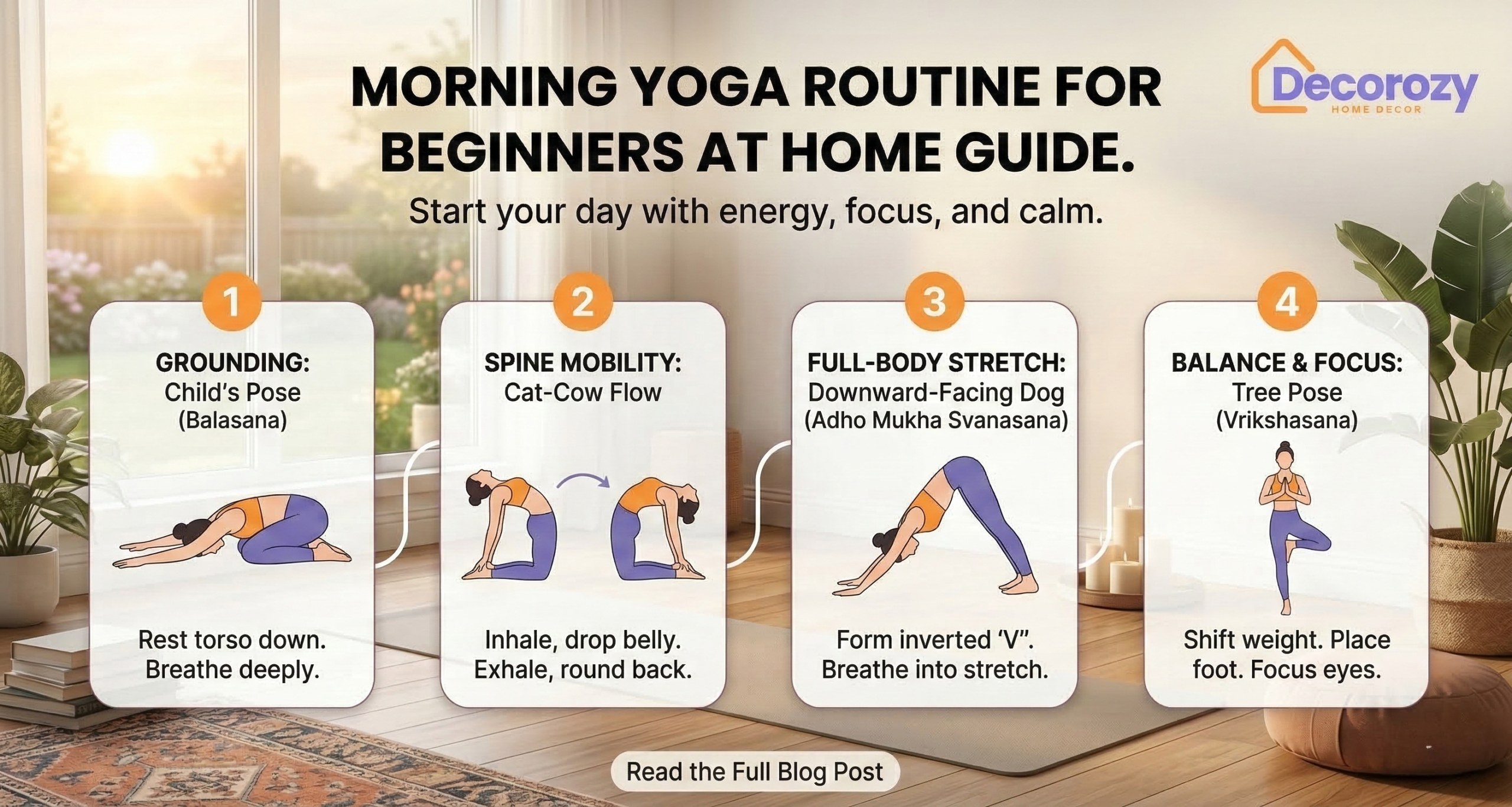
Waking up with stiff muscles and a cluttered mind is a common challenge for many adults. Establishing a morning yoga routine for beginners at home can completely transform your daily energy levels. This accessible practice builds physical strength while anchoring your mental focus for the hours ahead.
Quick Answer: A morning yoga routine for beginners at home should include gentle stretches like Child’s Pose, Cat-Cow, Downward-Facing Dog, and a simple Sun Salutation. Spending just 10 to 15 minutes daily improves flexibility, boosts circulation, and reduces stress without requiring any specialized equipment.
Why Start a Morning Yoga Routine for Beginners at Home?
Starting your day with intentional movement sets a positive, proactive tone. A morning yoga routine for beginners at home helps awaken your nervous system gently and safely.
This practice increases blood flow to your brain and muscles, naturally elevating your energy levels. It serves as a healthy, sustainable alternative to immediately reaching for your smartphone or a highly caffeinated beverage.
Furthermore, consistent home yoga practice reduces cortisol levels early in the day. This hormonal balance helps mitigate daily stress and improves your overall emotional resilience over time.
Setting Up Your Morning Yoga Routine for Beginners at Home
Creating a dedicated space is crucial for a successful morning yoga routine for beginners at home. Choose a quiet corner with minimal distractions and natural light if possible.
You do not need an expensive studio setup to see immediate physical results. A standard yoga mat, comfortable clothing, and a water bottle are the only true essentials for this daily practice.
Try to practice at the exact same time every morning to build a lasting habit. Consistency is far more valuable than the duration of the workout when you are just starting out.
15-Minute Daily Yoga Sequence
Begin with Child’s Pose (Balasana) to gently stretch your lower back and open your hips. Hold this resting posture for five deep, restorative breaths to center your mind.
Next, transition into Cat-Cow (Marjaryasana-Bitilasana) on your hands and knees. Alternate between arching and rounding your spine to improve spinal mobility and lubricate the intervertebral discs.
Push up into Downward-Facing Dog (Adho Mukha Svanasana) to stretch your hamstrings and calves. Pedal your feet slowly to release overnight tension stored in your lower body.
Finish your sequence with a simplified Sun Salutation (Surya Namaskar). This dynamic flow builds gentle heat in the core and prepares your cardiovascular system for the day ahead.
Essential Tips for Maintaining Your Practice
Staying motivated is often the biggest hurdle for new yoga practitioners. Lay your yoga mat out the night before to serve as an immediate visual cue when you wake up.
Always listen to your body and never push through sharp or sudden pain. Utilizing modifications is a sign of a smart, sustainable practice, not a physical weakness.
Track your progress in a small journal to note improvements in your flexibility and mood. Recognizing these micro-wins will keep you dedicated to your wellness journey.
Integrating these simple movements into your lifestyle can yield profound physical and mental benefits. Over time, you will notice increased flexibility, better posture, and a significantly calmer mindset.
Ready to elevate your wellness journey? Explore more expert tips, home decor setups for your zen space, and holistic health guides right here on Decorozy.com!
FAQ Schema
- Question 1: How long should a beginner do yoga in the morning?
- Answer: A beginner should aim for 10 to 15 minutes of morning yoga. This duration is long enough to stretch stiff muscles and boost circulation, but short enough to easily maintain as a daily habit without feeling overwhelmed.
- Question 2: Should I do morning yoga before or after breakfast?
- Answer: You should practice morning yoga before breakfast on an empty stomach. Practicing after eating can cause discomfort, bloating, or nausea during twists and forward folds. Hydrate with a small glass of water instead.
- Question 3: Do I need to be flexible to start yoga at home?
- Answer: No, you do not need to be flexible to start a yoga practice. Yoga is designed to gradually build flexibility over time. Beginners should focus on proper breathing and gentle stretching rather than forcing deep poses.