
As the moon wanes in the month of Phalguna, millions of devotees prepare for the most powerful night of spiritual awakening. Maha Shivratri 2026 is not just a festival; it is a cosmic phenomenon marking the union of Shiva and Shakti. Whether you are seeking divine blessings or a deeper meditative state, understanding the specific timings and traditions is essential for a fruitful observance.
Quick Answer: When is Maha Shivratri 2026?
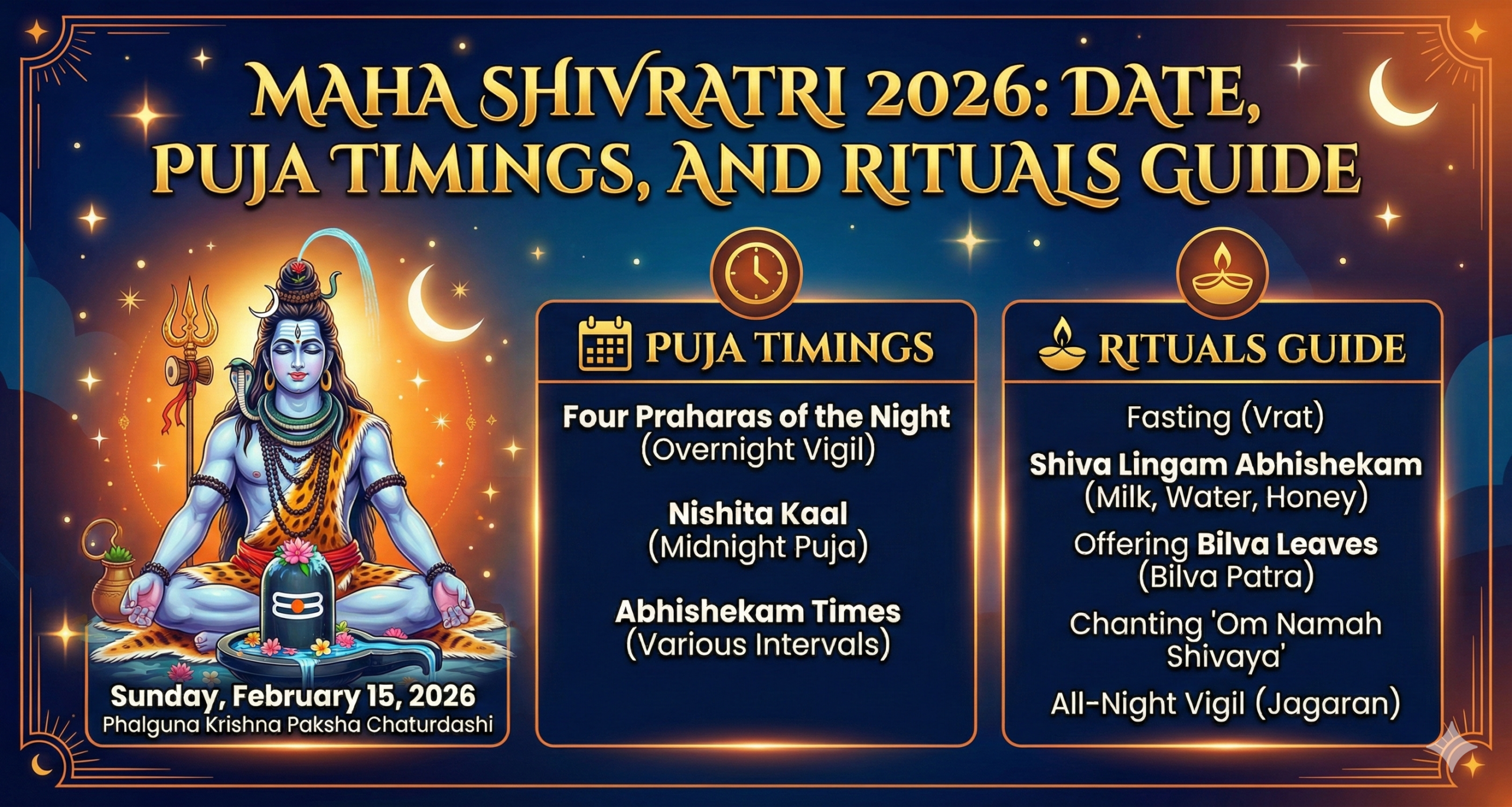
Maha Shivratri 2026 will be celebrated on Sunday, February 15, 2026. The most auspicious Nishita Kaal Puja timing is from 12:09 AM to 01:01 AM on February 16. Devotees should break their fast (Parana) between 06:59 AM and 03:24 PM on February 16.
## Maha Shivratri 2026: Date and Auspicious Muhurat
The Great Night of Shiva falls on the Chaturdashi Tithi of Krishna Paksha. In 2026, the Tithi begins at 05:04 PM on February 15 and concludes at 05:34 PM on February 16. While prayers happen throughout the day, the night is divided into four Prahars, each offering a unique opportunity for devotion.
| Event | Timing (Feb 15 – Feb 16) |
| First Prahar Puja | 06:11 PM – 09:23 PM |
| Second Prahar Puja | 09:23 PM – 12:35 AM |
| Third Prahar (Nishita Kaal) | 12:09 AM – 01:01 AM |
| Fourth Prahar Puja | 03:47 AM – 06:59 AM |
## The Spiritual Significance of Maha Shivratri 2026
Observing Maha Shivratri 2026 offers a path to cleanse past karmas and align with cosmic energies. This night celebrates the Tandava—the celestial dance of creation and destruction—and the wedding of Lord Shiva and Goddess Parvati.
Spiritually, it is believed that the planetary positions on this night naturally surge energy upward in the human spine. This makes it an ideal time for meditation, chanting “Om Namah Shivaya,” and seeking Moksha (liberation). By fasting and staying awake, devotees demonstrate self-discipline and surrender to the supreme consciousness.
## Essential Rituals: Vrat Vidhi and Puja Guide
To fully experience the grace of Mahashivratri, following the traditional Vrat Vidhi is recommended. Begin by taking a Sankalp (pledge) in the morning to observe the fast with sincerity.
- The Holy Bath: Perform a second bath in the evening before starting the night-long vigils.
- Shiva Lingam Offerings: Bathe the Lingam with water, milk, honey, and curd. Offer Bilva Patra (Bael leaves), Dhatura, and sandalwood paste.
- Chanting and Meditation: Keep a constant “Jaagran” (wakeful night) by reciting the Maha Mrityunjaya Mantra to invoke healing and protection.
- Sattvic Fasting: If you cannot observe a waterless (Nirjala) fast, consume fruits, milk, and nuts. Avoid grains and non-sattvic ingredients like onion or garlic.
## Conclusion
Maha Shivratri 2026 is a gateway to spiritual transformation and inner peace. By observing the sacred rituals and timings, you invite the transformative energy of Lord Shiva into your life, destroying negativity and fostering harmony.
Would you like me to create a personalized checklist of items you need for your Maha Shivratri Puja?

Pure Brass Shiv Parivar Idol | Lord Shiva Parvati Ganesh Kartikeya Murti
Invite divine harmony and blessings into your home with this
Pure Brass Shiv Parivar Idol,
depicting Lord Shiva with Maa Parvati, Ganesh ji, and Kartikeya,
ideal for home mandir, office, and spiritual spaces.
- Material: This idol is made of brass
- Dimensions (L × W × H): 8.2 × 3.5 × 6.5 cm
- Weight: 180 grams
83 in stock
Section 3: FAQ Schema
Q: What is the best time to break the Maha Shivratri fast?
A: For Maha Shivratri 2026, the fast-breaking time (Parana) is between 06:59 AM and 03:24 PM on Monday, February 16. It is ideal to break the fast after sunrise but before the Chaturdashi Tithi ends.
Q: Why do we offer Bael leaves (Bilva Patra) to Lord Shiva?
A: Bael leaves are considered dear to Lord Shiva. Their trifoliate shape represents the three Gunas (Sattva, Rajas, and Tamas) or the three eyes of Shiva. Offering them with devotion is said to cool the deity and grant the devotee’s wishes.
Q: Can I sleep during the day on Maha Shivratri?
A: While resting is permitted if health requires it, traditional observance encourages staying awake and mindful throughout the day and night. The goal is to maintain an “upward flow of energy,” which is best achieved in a seated, meditative posture.