Lord Venkateswara: The Divine Incarnation of Wealth and Mercy
For millions of devotees across the globe, Lord Venkateswara is more than a deity; he is a beacon of hope and a source of divine rescue. As a powerful incarnation of Lord Vishnu, he holds a central place in Hindu spirituality, particularly within the Dravidian traditions of South India.
Whether you know him as Balaji, Srinivasa, or Govinda, his presence is believed to guide humanity through the challenges of the current age. But what are the origins of this revered figure, and why do millions flock to his temple every year?
Quick Answer: Who is Lord Venkateswara?
Lord Venkateswara is a revered incarnation of the Hindu deity Vishnu, who descended to Earth to protect humanity during the Kali Yuga (the age of darkness). Residing on the Tirumala Hills, he is worshipped as the “Lord of Seven Hills” and is synonymous with immense wealth, forgiveness, and the fulfillment of devotees’ sincere wishes.
The Legend of Lord Venkateswara and His Descent
The story of Lord Venkateswara is deeply rooted in ancient texts like the Venkatachala Mahatmyam and the Skanda Purana. The legend begins with a test of patience involving the sage Bhrigu. To determine who among the Holy Trinity was most deserving of worship, Bhrigu kicked Vishnu in the chest.
Rather than retaliating, Vishnu responded with humility and massaged the sage’s feet, destroying the sage’s ego. However, Goddess Lakshmi, residing in Vishnu’s chest, felt insulted by this tolerance and left Vaikuntha. To find her and restore balance, Vishnu descended to Earth.
He took the form of Srinivasa and eventually settled in the Venkatachala hills. This descent signifies a profound spiritual lesson: the Divine is willing to endure earthly struggles to remain accessible to devotees. He is the savior who offers a helping hand to those navigating the difficulties of the Kali Yuga.
Why Devotees Worship Lord Venkateswara: Wealth and Compassion
Worshipping Lord Venkateswara offers a unique blend of material and spiritual benefits. He is widely regarded as the “wish-fulfilling” deity. Devotees believe that his benevolent nature allows him to forgive sins and grant prosperity to those who surrender to him with a pure heart.
The Divine Debt to Kubera
A fascinating aspect of his mythology involves his marriage to Padmavathi. To fund the grand wedding, Srinivasa borrowed a massive sum from Kubera, the treasurer of the gods.
This legend underpins the tradition of the Hundi (donation pot) at the Tirupati temple. Pilgrims donate generously, believing they are helping the Lord repay this cosmic interest. In return, it is said that Lord Venkateswara blesses them with financial stability and success in their own lives.
Key Symbols of Protection
The iconography of the deity is rich with meaning:
- The Crown: Symbolizes his supreme sovereignty over the universe.
- The Tilaka: The V-shaped mark represents his power to shield devotees.
- The Hand Posture: One hand points to his feet, indicating that surrender is the path to liberation, while the other offers protection (Abhaya Hasta).
The Tirupati Experience and Modern Devotion
The Venkateswara Temple in Tirupati, Andhra Pradesh, is a testament to the deity’s enduring influence. It stands as one of the wealthiest and most visited religious sites in the world.
A Center of Philanthropy
The temple’s net worth is estimated to be over ₹3 lakh crore. However, this wealth is not hoarded. The temple trust manages vast philanthropic efforts, including free meals for thousands daily, educational institutions, and healthcare facilities. This aligns with the deity’s nature of giving and sustaining life.
Bringing the Divine Home
While the pilgrimage to Tirumala is a life-changing event, modern devotees also seek to bring the deity’s presence into their daily lives. In many homes, a Lord Balaji frame or idol occupies a central spot in the puja room.
Today, there is a growing trend of acquiring high-quality spiritual art, such as 24k gold artworks like those from Prima Art. These intricate pieces serve as perfect gifts for housewarmings or weddings, symbolizing a wish for the recipient to be blessed with the same prosperity and peace that Lord Venkateswara represents.
Conclusion
Lord Venkateswara embodies the perfect balance of power and mercy. His legends teach us the value of patience, while his temple stands as a symbol of how faith can manifest as abundance. Whether through a pilgrimage to the Seven Hills or a quiet prayer in front of a picture frame at home, connecting with him offers a path to inner peace and resilience.
Ready to invite prosperity into your life? Start by offering a simple prayer of gratitude to Govinda today.
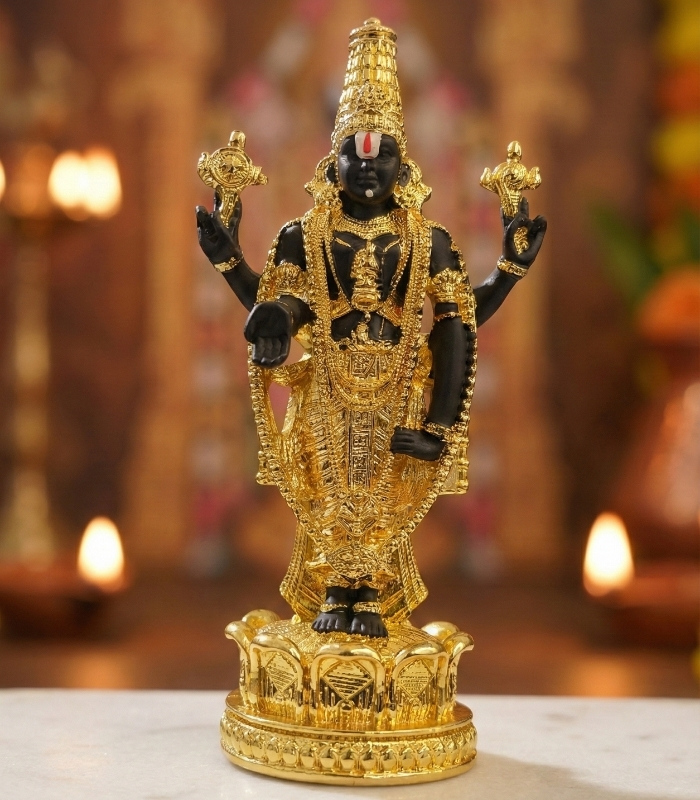
24K Gold Plated Tirupati Balaji Idol | Lord Venkateswara Murti
Invite divine prosperity and blessings with this
24K Gold Plated Tirupati Balaji Idol,
crafted to bring the sacred presence of Lord Venkateswara into your home mandir.
- Material: Premium resin base
- Finish: 24K Gold Electroplated
- Ideal For: Pooja room, home temple & gifting
82 in stock
Section 3: FAQ Schema (People Also Ask)
Q: Why do devotees shave their heads at the Tirupati temple? A: offering hair, known as “Mokku,” is a symbol of suppressing the ego and shedding vanity. By shaving their heads, devotees demonstrate complete surrender to Lord Venkateswara. It represents a fresh start and the removal of past sins, allowing the devotee to approach the deity with humility and purity.
Q: What is the story behind Lord Venkateswara’s loan from Kubera? A: According to mythology, Lord Venkateswara (as Srinivasa) needed funds to arrange his divine marriage to Princess Padmavathi. He borrowed a large sum from Kubera, the god of wealth, promising to repay the interest until the end of the Kali Yuga. Devotees donate money to the temple to help the Lord repay this interest, believing it brings them financial luck in return.
Q: Is Lord Balaji the same as Lord Venkateswara? A: Yes, Lord Balaji is another name for Lord Venkateswara. The name “Balaji” is commonly used in North India, while “Venkateswara” or “Srinivasa” is more common in South India. Both names refer to the same incarnation of Lord Vishnu who resides on the Tirumala hills to bless devotees during the current age.