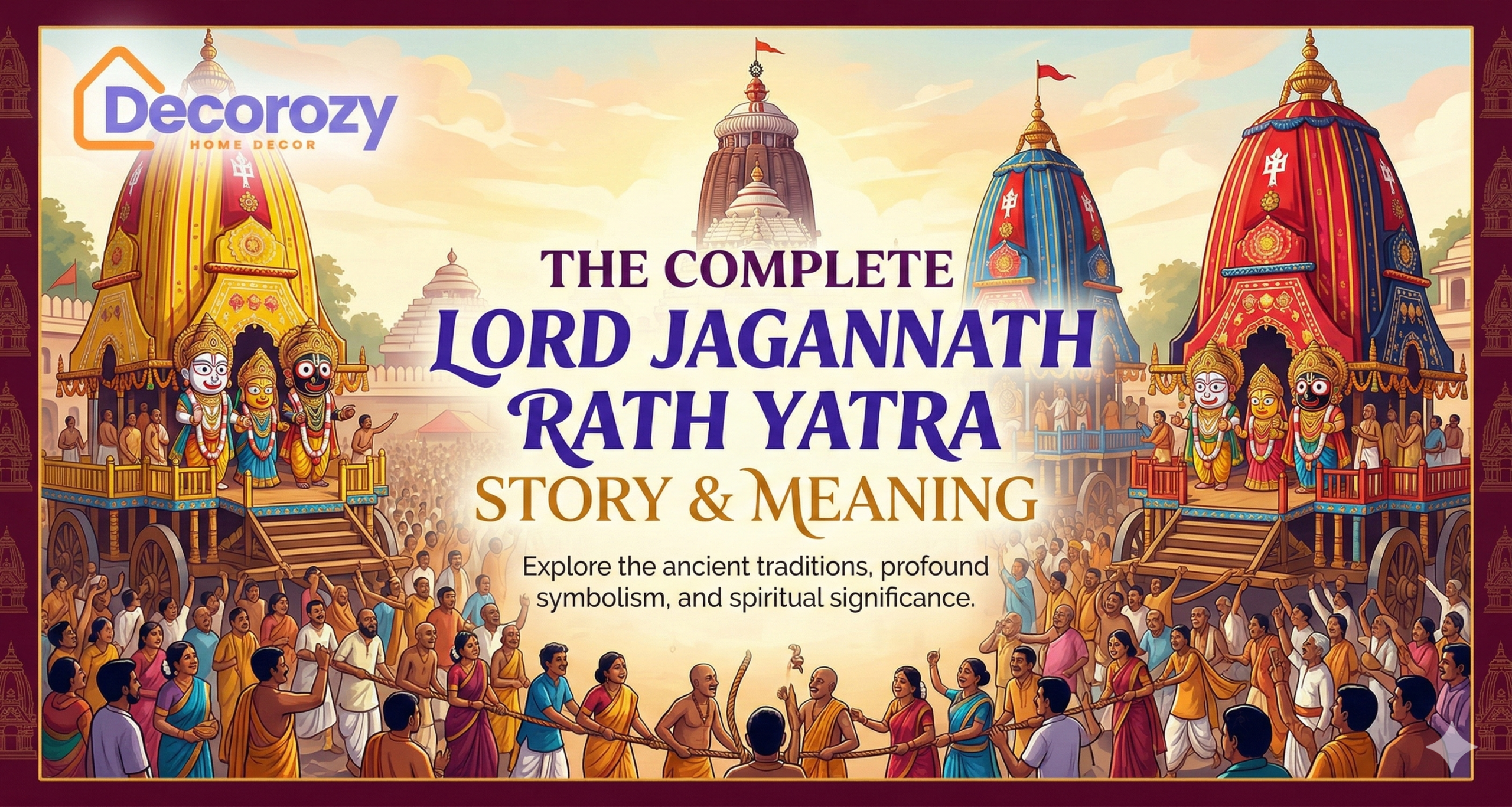
Welcome to this comprehensive guide exploring the Lord Jagannath Rath Yatra story. Steeped in ancient mythology and cultural devotion, this spectacular event draws millions to Puri, Odisha, every year.
If you want to understand the profound history behind the world-famous Chariot Festival, you are in the right place.
Quick Answer: What is the story behind the Rath Yatra? The Lord Jagannath Rath Yatra story commemorates the annual journey of Lord Jagannath (an incarnation of Lord Vishnu), alongside his siblings Balabhadra and Subhadra. They travel from their main temple to the Gundicha Temple, representing a visit to their aunt’s home and symbolizing the Lord’s desire to reunite with his devotees.
The Core Concept Behind the Lord Jagannath Rath Yatra Story
The festival, fundamentally known as the Chariot Festival, translates to a journey (“Yatra”) on a carriage (“Rath”). It highlights the divine’s intrinsic desire to step down from the altar and mingle with humanity.
The Lord Jagannath Rath Yatra story is not just a physical procession but a representation of the soul’s spiritual journey. The Gundicha Temple serves as a metaphorical Vrindavan, allowing the Lord to recreate his childhood home.
By leaving his majestic abode, Lord Jagannath displays incredible humility. He ensures that people from all walks of life, regardless of background, can gaze upon his divine form.
Spiritual Benefits and the Power of Devotion
Participating in this vibrant festival carries immense spiritual weight for Hindu devotees. Touching the ropes of the chariots is believed to cleanse a lifetime of sins and invite divine blessings.
Pulling the heavy wooden carts symbolizes drawing the divine closer to one’s own heart. It requires immense teamwork, stripping away human ego and fostering a deep sense of universal brotherhood.
Furthermore, the annual dismantling of these grand chariots after the festival teaches a vital life lesson. It reminds participants of the temporary nature of material wealth, encouraging a focus on eternal enlightenment.
A Detailed Analysis of the Lord Jagannath Rath Yatra Story Origins
To fully grasp the festival’s depth, we must look at the ancient legends of Lord Krishna and his followers.
Krishna’s Departure from Vrindavan
According to legend, Lord Krishna left the village of Vrindavan, promising his beloved Gopis (cowherd girls) that he would eventually return. His prolonged absence left them devastated.
Decades later, during a solar eclipse, Krishna and his brother Balarama traveled to Kurukshetra for a holy bath. Hearing this, the ecstatic residents of Vrindavan rushed to reunite with him.
Radha’s Sorrow and the Royal Chariot
While the reunion was joyous for many, Radha Rani felt a profound disconnect. The Krishna she remembered wore simple yellow robes and a peacock feather, and played a melodious flute.
In Kurukshetra, she found a regal king adorned in jewels, wielding weapons, and surrounded by noisy armies. This environment starkly contrasted with their peaceful memories on the banks of the Yamuna River.
The Devotees Pull the Chariot
Seeing Radha’s dismay, the devotees took immediate action. Eager to bring their beloved Lord back to the simplicity of Vrindavan, they seized the horses’ reins and began physically pulling Krishna’s chariot themselves.
Accompanied by Balarama and their sister Subhadra, the procession moved forward, fueled by pure love. This passionate act of pulling the Lord back to his spiritual home is the exact event recreated during today’s Rath Yatra.
Conclusion
The Lord Jagannath Rath Yatra story beautifully illustrates the unbreakable bond between the divine and the devotee. It is a timeless celebration of faith, unity, and the longing for spiritual homecoming.
Whether you are drawn to the rich mythology or the vibrant cultural display, the Chariot Festival remains a powerful testament to the triumph of love and devotion.
Section 3: FAQ Schema (People Also Ask)
1. Why does Lord Jagannath leave his temple during Rath Yatra? Legend states that Lord Jagannath wishes to visit his aunt at the Gundicha Temple once a year. Symbolically, this journey represents his deep desire to leave his royal sanctuary and directly interact with his devotees, offering blessings to everyone regardless of their status.
2. What are the three chariots used in Rath Yatra? The festival features three distinct, newly built chariots every year. Nandighosha is the grand chariot for Lord Jagannath, Taladhwaja carries Lord Balabhadra, and Darpadalana is designated for Devi Subhadra.
3. What is the spiritual significance of pulling the chariots? Pulling the chariots is viewed as a highly sacred act of surrender and devotion. Devotees believe that assisting in the Lord’s journey grants liberation from the cycle of birth and death (Moksha) and brings immense spiritual prosperity.