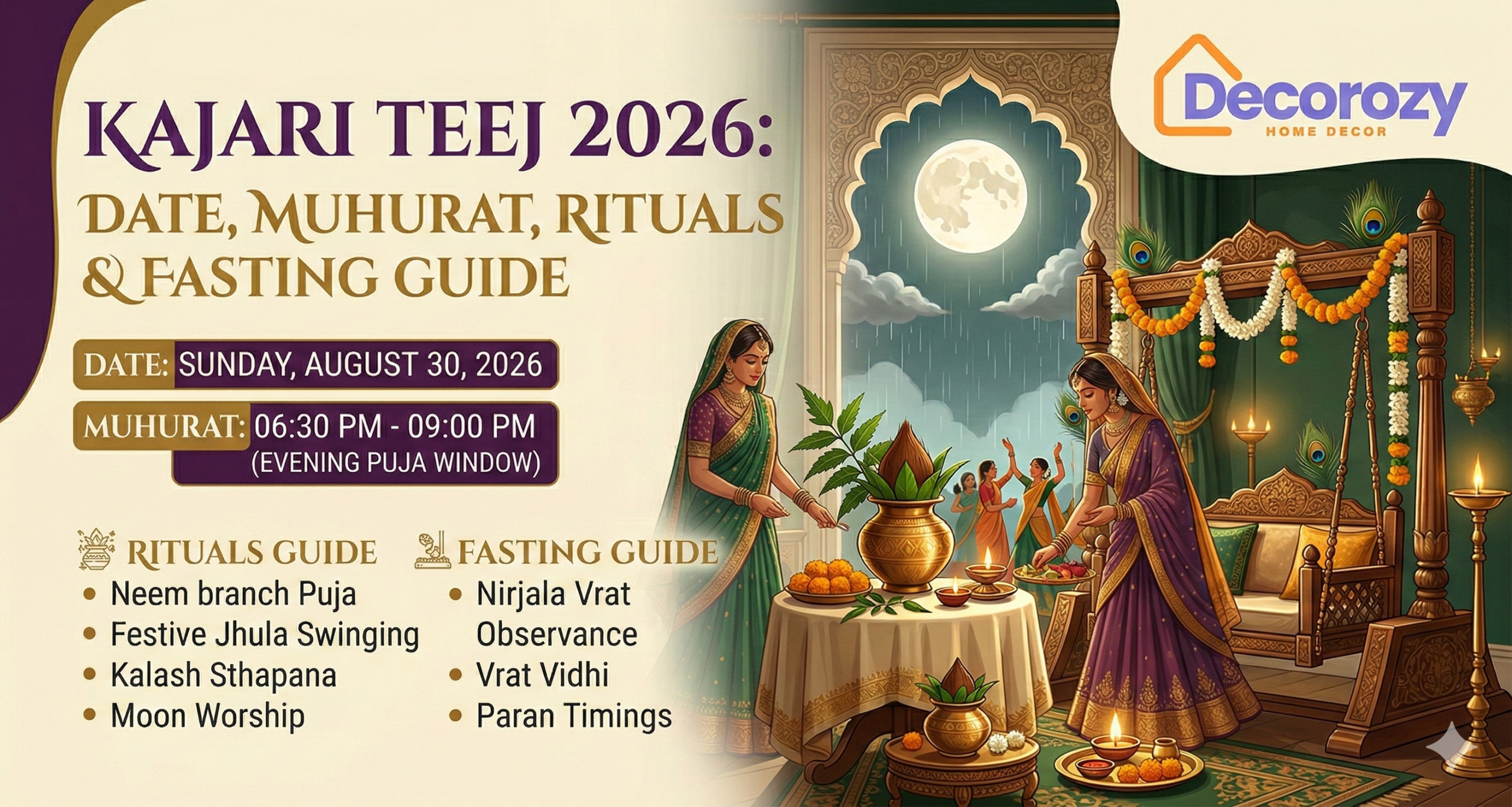
As August approaches, devotees across India are preparing for Kajari Teej 2026, a highly revered festival celebrating devotion, love, and marital bliss. Primarily observed in Uttar Pradesh, Bihar, Rajasthan, and Madhya Pradesh, this sacred day honors the eternal bond between Lord Shiva and Goddess Parvati. Whether you are observing the fast for the first time or looking for the exact puja timings for this year, we have you covered.
Quick Answer: What is Kajari Teej 2026 and when is it celebrated? Kajari Teej 2026 falls on Monday, August 31. This sacred Hindu festival is observed during the Bhadrapad month by women in North India. Devotees observe a strict Nirjala fast to honor Goddess Parvati, seeking divine blessings for marital bliss and family prosperity.
The Significance of Kajari Teej 2026 for Married and Unmarried Women
Kajari Teej, also known as Kajali Teej, falls on the third day of the Krishna Paksha in the Hindu month of Bhadrapad. The festival is deeply rooted in the mythology of Goddess Parvati’s profound devotion.
Legend states that Goddess Parvati underwent 108 births and performed severe penance to win Lord Shiva’s affection. Kajari Teej 2026 commemorates her ultimate success and union with Lord Shiva. By celebrating this day, devotees honor the power of selfless love and dedication.
Women observe this day to strengthen their marital bonds and secure the longevity of their husbands. Additionally, unmarried women participate enthusiastically, keeping the fast to attract a compatible, loving life partner.
Essential Benefits of Observing the Kajari Teej Fast
Observing the fast and performing the traditional puja on this auspicious day brings numerous spiritual and astrological benefits. Spiritually, it aligns the devotee with the divine masculine and feminine energies represented by Lord Shiva and Goddess Parvati.
Astrologically, participating in the rituals can help mitigate negative planetary afflictions related to the seventh house of your birth chart. Since the seventh house governs marriage and partnerships, honoring this day promotes harmony, resolves relationship conflicts, and invites long-lasting peace.
Furthermore, the fast is said to grant the Vardaan (blessing) of a happy, prosperous household. Women dress in beautiful traditional attire, embracing the joy of family and community.
Detailed Analysis of Kajari Teej 2026 Puja Muhurat and Tithi Timings
To reap the full spiritual benefits of the festival, it is crucial to perform the rituals during the correct astrological windows. Here are the exact timings for Kajari Teej 2026:
- Festival Date: Monday, August 31, 2026
- Tritiya Tithi Begins: 09:36 AM on August 30, 2026
- Tritiya Tithi Ends: 08:50 AM on August 31, 2026
- Fasting Window: The fast is typically observed from sunrise to moonrise on the primary festival day.
Because the Tritiya Tithi stretches across two days, the primary fasting and moon-worshipping rituals will culminate on the evening of August 31. Make sure to prepare your puja items in advance to observe the muhurat peacefully.
Celebrating Kajari Teej involves a beautiful blend of strict fasting and joyful community activities. The day is marked by deep devotion and vibrant celebrations.
- The Nirjala Fast: Women observe a strict fast without food or water throughout the day. The fast is only broken after sighting and worshipping the Moon at night.
- Solah Shringar: Women adorn themselves in 16 traditional bridal adornments. Wearing fresh henna (mehndi), colorful bangles, and sindoor is highly encouraged to symbolize prosperity and marital joy.
- Worshipping Goddess Nimdi: A unique tradition involves creating a small mud and cow dung shrine for Goddess Nimdi near a Neem tree branch. Devotees offer raw milk, water, and fruits to seek protective blessings.
- Singing and Swinging: Swings are hung from trees in gardens and courtyards. Women take turns swinging while singing traditional Kajari folk songs to the beat of a dholak, expressing love and longing.
- Moon Arghya and Sattu Prasad: The fast concludes in the evening by offering Arghya (holy water mixed with rice) to the Moon. Afterward, devotees break their fast with a special Sattu made from roasted barley, wheat, gram peas, and pure ghee.
Conclusion
Kajari Teej is much more than a fasting day; it is a vibrant celebration of enduring love, feminine strength, and spiritual dedication. By observing the rituals this August, you can invite profound peace and marital harmony into your life. Embrace the traditions, sing the folk songs, and seek the divine blessings of Lord Shiva and Goddess Parvati.
Section 3: FAQ Schema
Frequently Asked Questions (People Also Ask)
How does astrology explain the impact of Kajari Teej on marriage? Astrologically, observing the Kajari Teej fast helps mitigate negative planetary influences on the seventh house of a birth chart, which governs marriage. Invoking Lord Shiva and Goddess Parvati brings cosmic balance, promoting long-term harmony and understanding between couples.
Why do women offer Arghya to the moon during Kajari Teej? In Vedic astrology, the Moon governs human emotions and mental peace. Offering Arghya (holy water) to the Moon at the end of the Kajari Teej fast helps balance emotional energies, removes negativity, and brings tranquility to marital relationships.
Can unmarried girls keep the Kajari Teej fast? Yes, unmarried women frequently observe the Kajari Teej fast. By demonstrating devotion similar to Goddess Parvati, they seek divine blessings to attract a loving, ideal life partner and strengthen favorable marriage-related planets in their birth charts.