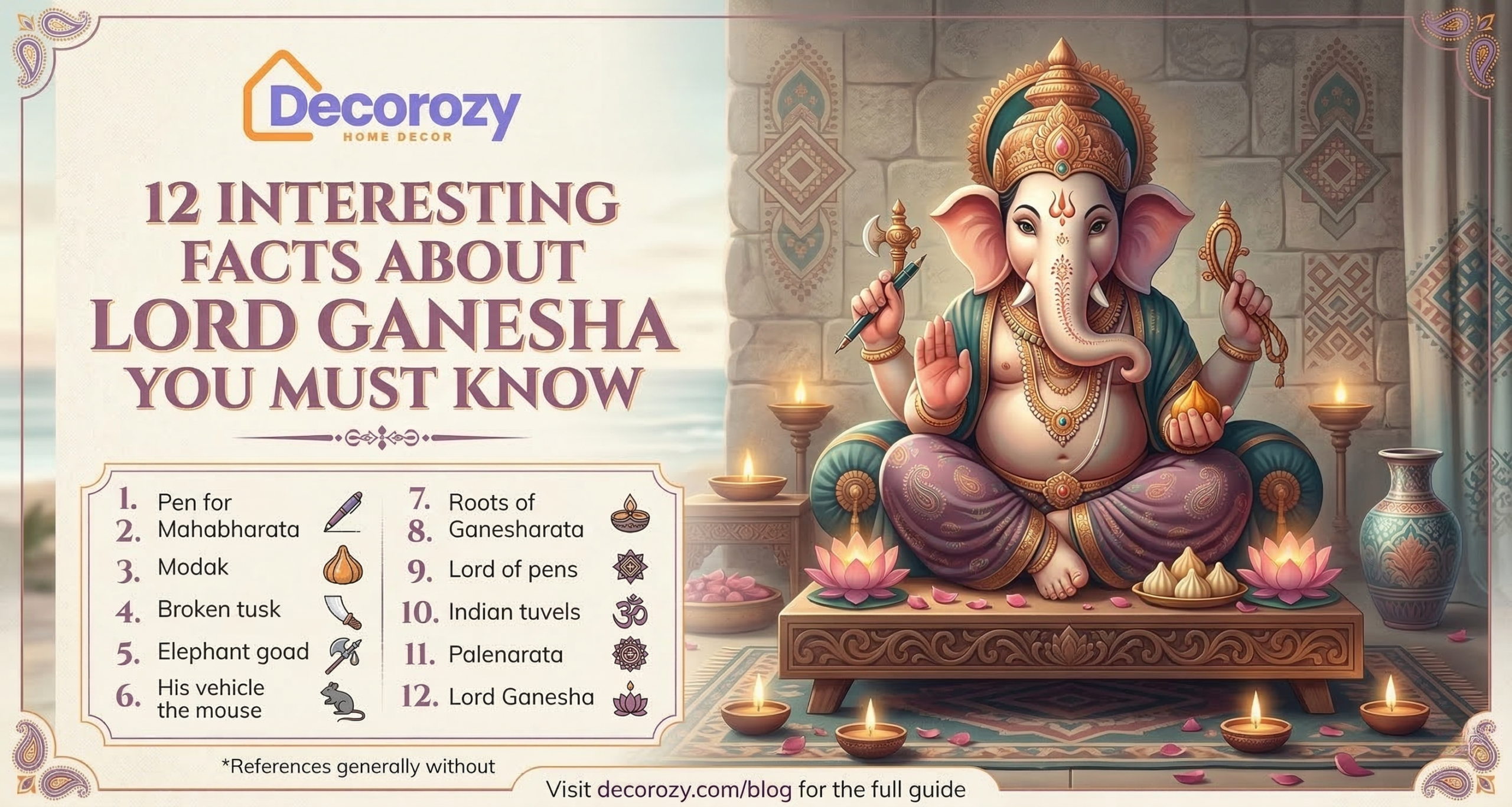
Hindu mythology is rich with profound symbolism, but few deities capture the global imagination quite like the elephant-headed god. If you are seeking to deepen your spiritual knowledge, exploring these interesting facts about Lord Ganesha is the perfect starting point.
As the universal symbol of wisdom, prosperity, and good fortune, he holds a revered space in millions of homes. Uncovering the hidden stories behind his iconography reveals powerful life lessons applicable to the modern world.
Quick Answer: Lord Ganesha is a universally worshipped Hindu deity symbolizing intellect, prosperity, and the removal of obstacles. Key facts include his creation from sandalwood paste by Goddess Parvati, his 108 sacred names, his role in writing the Mahabharata, and his profound global influence beyond traditional Hinduism.
Core Concept: Exploring Interesting Facts About Lord Ganesha
To truly understand this beloved deity, we must look beyond his cheerful depiction and examine the foundational myths. Lord Ganesha, often called Ganapati or Vighnaharta, is primarily known as the “Remover of Obstacles.”
This central concept dictates why he is universally honored before any new venture, from business launches to sacred ceremonies. Every physical attribute of his form carries immense spiritual weight and psychological meaning.
By breaking down the lore surrounding his existence, we gain access to ancient wisdom. These foundational narratives are not mere myths; they are structured guides for living a balanced, humble, and purpose-driven life.
The Spiritual Importance of These Interesting Facts About Lord Ganesha
Understanding the lore behind the deity offers profound benefits for your personal and spiritual growth. Delving into the interesting facts about Lord Ganesha helps practitioners cultivate patience, adaptability, and resilience.
His physical representation serves as a daily visual reminder to prioritize intellect over brute force. For instance, realizing that his large ears symbolize the importance of listening can actively improve our daily communication and mindfulness.
Furthermore, these stories connect generations, preserving vital cultural heritage. Sharing this knowledge fosters a deeper appreciation for diverse global traditions and the universal pursuit of wisdom.
Detailed Analysis: 12 Interesting Facts About Lord Ganesha
1. The Power of 108 Names
Lord Ganesha is worshipped through 108 distinct names, each reflecting a unique attribute or power. Prominent titles include Vighnaharta (Remover of Obstacles) and Ekadanta (The One-Tusked God). Chanting these names is a core practice during religious festivals.
2. A Miraculous Birth Story
Unlike many deities, Ganesha was uniquely created by Goddess Parvati from sandalwood paste to serve as her loyal guard. A tragic misunderstanding led Lord Shiva to behead him in battle. To rectify this, Shiva resurrected him with the head of a powerful elephant.
3. The Ultimate God of New Beginnings
Vedic traditions dictate that Lord Ganesha must be the first deity invoked during any ceremony. He paves the way for success by clearing energetic and physical hurdles. This is why his idol frequently graces the entrances of homes and corporate offices.
4. The Symbolic Mouse Vehicle
Despite his grand stature, Ganesha rides a tiny mouse named Mushika. This striking contrast symbolizes his supreme control over the restless human ego and worldly desires. It also highlights his ability to navigate the smallest, most complex problems.
5. A Contrast in Brotherhood
Ganesha shares a powerful dynamic with his brother, Lord Kartikeya, the fierce god of war. While Kartikeya represents physical prowess and speed, Ganesha embodies calm intellect. Ganesha famously won a race around the world simply by circling his parents, proving wisdom conquers all.
6. The Anatomy of Wisdom
Every feature of his elephant head is a lesson in spiritual anatomy. His large ears encourage active listening, while his tiny eyes demand sharp focus. His versatile trunk represents the need for immense strength coupled with gentle adaptability.
7. The Sacrifice of the Broken Tusk
Ganesha is visually distinguished by his single, unbroken tusk. Legend states he snapped off his own tusk to use as a pen when his writing instrument failed. This act demonstrates ultimate sacrifice and dedication to completing a sacred duty.
8. The Ancient Curse of Goddess Tulsi
In Hindu rituals, holy basil (Tulsi) is universally sacred, yet it is strictly forbidden in Ganesha worship. This stems from a celestial dispute where Ganesha rejected Goddess Tulsi’s marriage proposal. The resulting mutual curses forever separated Tulsi leaves from his offerings.
9. Meaning Unfolded in Four Hands
Ganesha’s four hands hold deeply symbolic tools for spiritual navigation. He wields an axe to sever toxic attachments and a lotus rope to pull devotees toward enlightenment. His remaining hands offer a sweet reward (modak) and a gesture of fearless protection.
10. The Divine Scribe of the Mahabharata
Ganesha is celebrated as the brilliant scribe who physically documented the epic Mahabharata. Sage Vyasa dictated the massive poem under the strict condition that Ganesha must understand every word. This created a flawless partnership of divine intellect and articulation.
11. A Truly Global Phenomenon
Reverence for the elephant-headed god extends far beyond the borders of India. He is actively venerated in nations like Japan, Thailand, and Indonesia. In various Buddhist sects, he is honored as a potent guardian of the Dharma.
12. The Grandeur of Ganesh Chaturthi
The annual 10-day festival of Ganesh Chaturthi is a monumental celebration of his birth. Devotees welcome intricate idols into their homes, offering his favorite modak sweets. The festival culminates in joyful immersion rituals, reminding us of life’s cyclical nature.
Integrating these teachings into your daily life can transform your approach to challenges and new beginnings. For more deep dives into spiritual history, exquisite home decor ideas inspired by global traditions, and lifestyle guides, keep exploring Decorozy.com!
FAQ Schema
- Question 1: What does Lord Ganesh symbolize in daily life?
- Answer: Lord Ganesh directly symbolizes supreme wisdom, intellectual prosperity, good fortune, and the active removal of physical and spiritual obstacles.
- Question 2: Why does Lord Ganesh have an elephant head?
- Answer: The elephant head represents boundless intelligence and deep listening skills. It originates from the myth where Lord Shiva restored Ganesha’s life by replacing his severed head with that of an elephant.
- Question 3: What is the profound significance of Ganesh’s mouse?
- Answer: The mouse, known as Mushika, represents the erratic human ego and endless earthly desires. Ganesha riding the mouse signifies total mastery and control over one’s internal impulses.