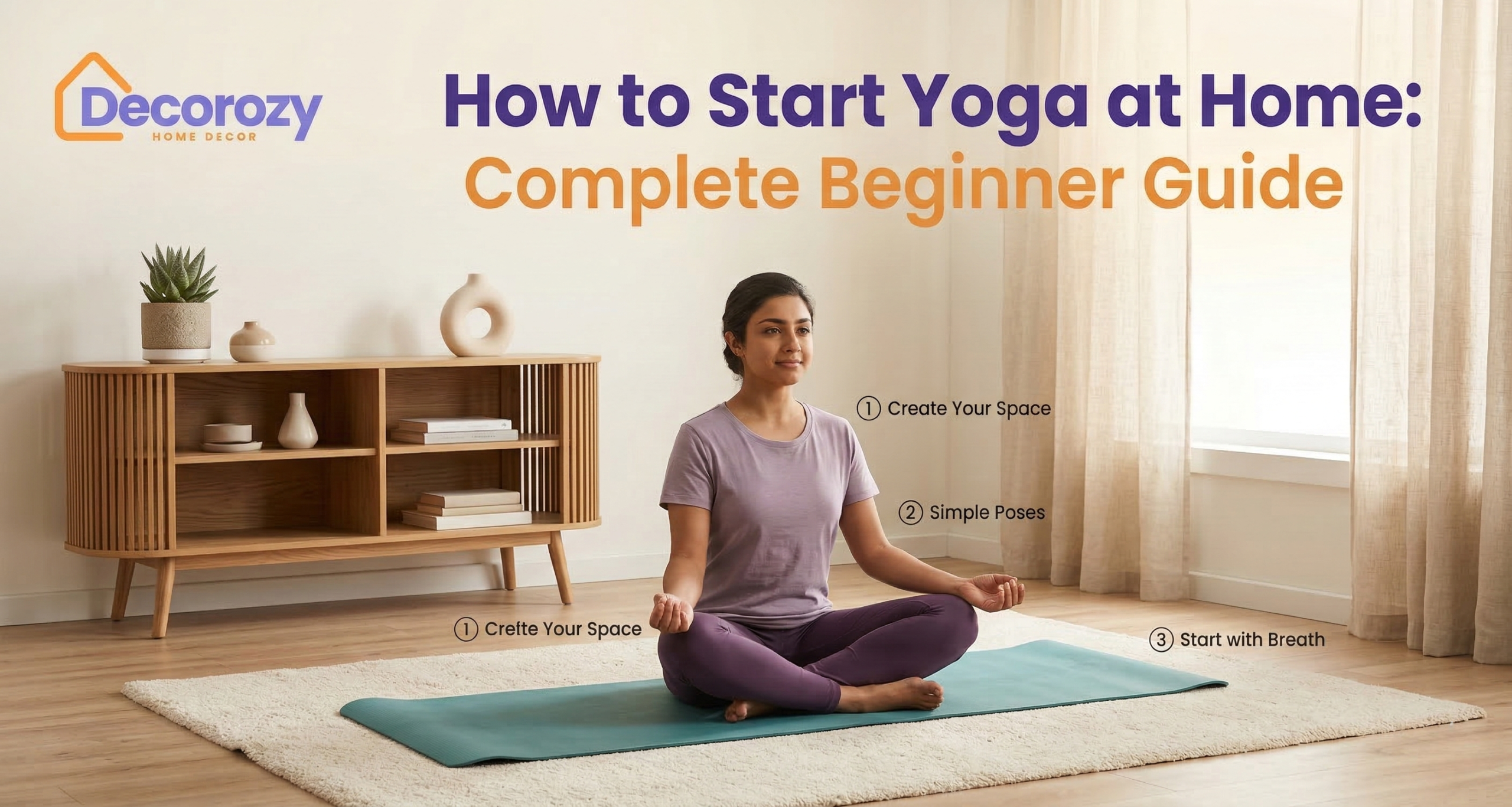
Embarking on a wellness journey does not require an expensive studio membership or a daily commute. If you are researching exactly how to start yoga at home, you have already taken the crucial first step toward better physical and mental health.
Establishing a personal practice allows for unparalleled flexibility, privacy, and the ability to customize your routine. This comprehensive guide will walk you through the structural blueprint of building a highly effective home practice.
Quick Answer: To start yoga at home, clear a quiet space and invest in a high-quality, non-slip mat. Begin with 15-minute daily sessions focusing on foundational postures and deep breathing. Consistency and utilizing structured beginner video tutorials are essential for building a safe, effective home practice.
Understanding How to Start Yoga at Home Safely
Before attempting complex inversions or intense flows, foundational safety protocols must be established. The primary rule of solo practice is learning to actively listen to your body’s neurological feedback.
Pain is a definitive indicator that a posture requires modification or immediate cessation. Distinguish between the discomfort of a deep stretch and sharp, localized joint pain.
Always consult a healthcare professional before beginning any new physical regimen. This is especially critical if you have pre-existing musculoskeletal conditions or cardiovascular concerns.
Setting Up Your Dedicated Practice Space
Environmental psychology plays a massive role in habit formation. Dedicating a specific, clutter-free corner of your home signals to your brain that it is time to focus.
You do not need an expansive room; an area slightly larger than your yoga mat is entirely sufficient. Ensure the flooring is level and the immediate vicinity is clear of sharp objects or furniture.
Consider incorporating elements that promote parasympathetic nervous system activation. Soft lighting, proper ventilation, and minimal audio distractions can significantly enhance your focus and retention.
Essential Equipment for Home Yoga Practice
While yoga is inherently minimalist, acquiring the right foundational gear optimizes your physical alignment. A high-density, non-slip yoga mat is non-negotiable for joint protection and stability.
Avoid overly thick fitness mats, as they compress under pressure and compromise your balance during standing postures. Instead, opt for a standard 4mm to 6mm thickness.
Yoga blocks and a stretching strap are crucial investments for beginners. These props bridge the gap in flexibility, allowing you to maintain correct anatomical alignment without straining.
Core Poses When Learning How to Start Yoga at Home
Mastering fundamental asanas (poses) creates the physical vocabulary needed for more advanced sequences. Start every session with Mountain Pose (Tadasana) to establish baseline posture and grounding.
Transition into Cat-Cow (Marjaryasana-Bitilasana) to articulate the spine and synchronize your breath with movement. This gentle flow warms up the intervertebral discs and central nervous system.
Downward-Facing Dog (Adho Mukha Svanasana) is a staple inversion that stretches the posterior chain. Beginners should keep a micro-bend in their knees to prioritize spinal lengthening over hamstring flexibility.
Child’s Pose (Balasana) serves as your primary resting state. Return to this grounding posture whenever your heart rate spikes or your breathing becomes erratic.
Developing a Sustainable Daily Routine
Consistency yields far greater physiological adaptations than sporadic, intense sessions. Committing to a realistic schedule is the cornerstone of long-term success.
Aim for 15 to 20 minutes of daily practice rather than an exhausting 90-minute session once a week. This frequency builds neuromuscular memory and reinforces the habit loop.
Utilize high-quality, free digital resources to guide your initial sequencing. Platforms like YouTube offer structured 30-day beginner challenges that remove the guesswork from daily programming.
Tracking Progress and Maintaining Motivation
Data tracking is essential for maintaining motivation in isolated environments. Keep a simple practice journal to log your session duration, the poses attempted, and your physical feedback.
Focus on non-scale victories, such as improved sleep quality, increased range of motion, and reduced baseline anxiety. These intrinsic benefits are the true markers of a successful yoga practice.
Remember that flexibility is a byproduct of consistent practice, not a prerequisite for starting. Honor your current physical limitations and celebrate incremental progress over time.
Ready to transform your living space into the ultimate wellness sanctuary? Explore our curated selection of premium home accessories and organizational tools at Decorozy.com to perfectly complement your new daily yoga routine!
FAQ Schema
- Question 1: Can I teach myself yoga at home?
- Answer: Yes, you can effectively teach yourself yoga at home using structured, beginner-focused video tutorials and applications. Focus on foundational poses, utilize props like blocks for proper alignment, and prioritize consistency over complexity to build a safe self-guided practice.
- Question 2: How many times a week should a beginner do yoga?
- Answer: Beginners should aim to practice yoga 3 to 4 times a week. Short, consistent sessions of 15 to 20 minutes are highly effective for building muscle memory, improving flexibility, and establishing a sustainable routine without causing physical burnout.
- Question 3: Is 20 minutes of yoga a day enough?
- Answer: Yes, 20 minutes of daily yoga is entirely sufficient to yield significant physical and mental health benefits. Consistent daily practice improves joint mobility, reduces cortisol levels, and enhances cardiovascular circulation far better than sporadic, prolonged sessions.