Are you wondering how to keep shankh in pooja room to maximize its positive spiritual vibrations? The shankh, or conch shell, is an iconic emblem of Lord Vishnu and deeply revered in Hinduism.
Originating from the mythological ocean churning (Samudra Manthan), this sacred shell represents the element of air and the very breath of life. Placing it correctly in your home shrine can transform the energy of your living space.
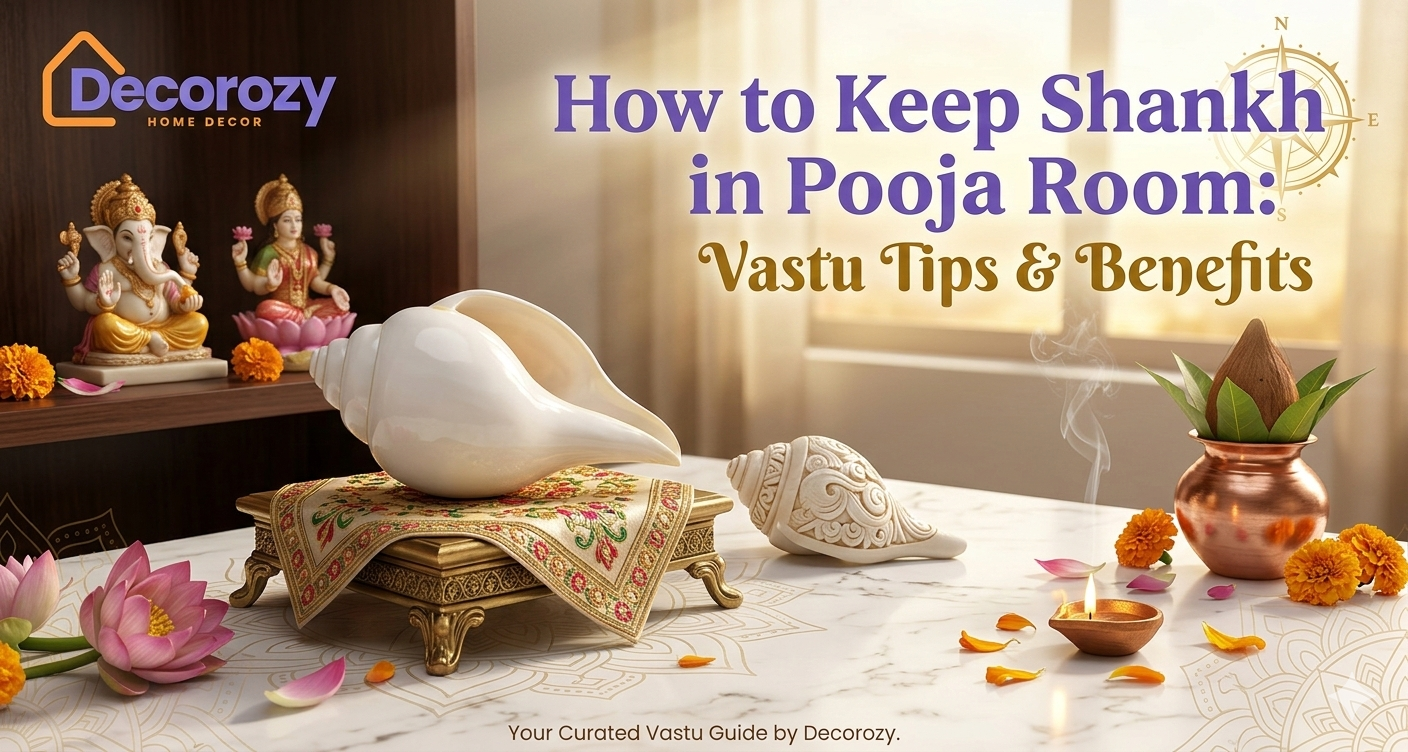
Quick Answer: To properly place a shankh in your mandir, point its narrow end toward the deities and keep the open side facing the ceiling. Rest it on a silver base or a clean red cloth. Place it on the right side of your altar, ensuring it remains purified.
The Spiritual Concept: Why Knowing How to Keep Shankh in Pooja Room Matters
In Sanskrit, the word “Shankham” translates to a vessel that holds sacred water. It is believed to be the residence of powerful deities.
Lord Varun resides in the center of the conch, Lord Brahma at the back, and Goddesses Ganga and Saraswati at the front. Lord Vishnu is famously depicted holding the Panchajanya Shankh to destroy negative forces.
Because of this divine connection, blowing the conch creates a purifying resonance. It clears hurdles, spreads optimism, and invites auspicious beginnings into your home.
Key Benefits of Placing a Conch Shell at Home
Bringing a shankh into your home is not just about tradition; it offers profound spiritual and environmental benefits.
- Attracts Wealth: A properly placed conch shell serves as a magnet for financial success and prosperity.
- Clears Vastu Doshas: Regularly blowing the shell neutralizes architectural Vastu flaws and eliminates bad energy.
- Enhances Wisdom: The presence of the shell invokes Goddess Saraswati, fostering knowledge and learning.
- Mental Peace: The sacred sound of “Om” resonates when blown, instantly calming an anxious mind.
Detailed Analysis: Vastu Rules for How to Keep Shankh in Pooja Room
Understanding exactly how to keep shankh in pooja room involves following specific Vastu shastra guidelines. Correct placement ensures a harmonious environment.
- Purification: Always clean the shankh with holy water before placing it. The best time for this is an auspicious Thursday.
- Orientation: Store the shell with its open section facing the ceiling and its beak on its side.
- Energy Flow: Ensure the pointed end faces the idols. This directs the divine vibrations from the deities into the shell, which then radiates positive energy outward.
- Base Preparation: Use a silver stand or a red cloth spread over a bed of sand. Always place the shell on the right side of the altar.
- Sacred Offerings: Decorate the shell with a swastika symbol, sandalwood paste, red threads, and rice.
Important Usage Rules:
- Never use a blowing shankh to offer water to the deities. Keep blowing shells and devotion shells strictly separate.
- Keep the devotion shell filled with water. Sprinkle this water around your house to ward off evil energy.
- Never keep two conch shells together for worship on the same altar.
- Do not place a cracked or broken shankh in your mandir.
- Avoid placing the shell above a Shivling or offering water to Lord Shiva or the Sun God with it.
Different Types of Shankh for Your Mandir
There are several varieties of sacred conch shells, each serving a unique spiritual purpose.
1. Ganesha Shankh
Shaped like Lord Ganesha, this shell eliminates obstacles and brings good fortune. It is highly protective and can be kept in a home shrine or a cash locker wrapped in red cloth.
2. Vamavarti Shankh
This is the most common left-handed shell used for religious ceremonies. Loved by Lord Vishnu, blowing this shell cleanses your immediate environment.
3. Dakshinavarti (Laxmi) Shankh
Opening on the right side, this closed-mouth shell represents Lord Kuber. It is never blown; it is solely kept for worship in the north or east direction to attract massive wealth.
4. Kauri Shankh
Also retrieved during the Samudra Manthan, Kauris are loved by Goddess Mahalakshmi. Keep them in your cash box to ensure a steady flow of prosperity.
5. Lord Shiva and the Shankh
Mythology states that Lord Shiva killed a demon named Shankhchur, who was created from a curse. Because of this event, the shankh is strictly prohibited in Lord Shiva’s worship.
Conclusion
A shankh is an essential element of daily puja, bringing profound spiritual charm and Vastu benefits to your home decor. By following these sacred placement rules, you invite peace, wealth, and divine blessings into your life.
Section 3: FAQ Schema
Q: Which direction should the Shankh face in the pooja room? A: The Shankh should be placed on the right side of the pooja room. The pointed, narrow end must always face the idols, while the open section should face upwards toward the ceiling to capture and distribute positive energy.
Q: Can we keep two conch shells together at home? A: No, Vastu rules state that two conch shells should never be kept together for worship in the same pooja room. You should maintain one specific shankh for blowing and a separate one (kept distinctly apart) for offering devotion.
Q: Why is the Shankh not used in Lord Shiva’s pooja? A: According to Hindu mythology, Lord Shiva killed a powerful demon named Shankhchur. Because of this conflict, the conch shell is considered prohibited for offering water or prayers to Lord Shiva and should never touch a Shivling.