Are you planning a visit to Amritsar, or are you simply fascinated by India’s magnificent cultural heritage? Understanding the history of the Golden Temple is essential to fully appreciating this breathtaking architectural marvel and spiritual sanctuary.
Known officially as Sri Harmandir Sahib or Darbar Sahib, this shimmering monument embraces visitors with dazzling glory and quiet tranquility. Let us dive into the rich past of this iconic pilgrimage site.
Quick Answer: The Golden Temple was constructed between 1581 and 1604 by Guru Arjan Dev Ji, the fifth Sikh Guru. A revered Muslim saint, Hazrat Mian Mir, laid its foundation. In the early 19th century, Maharaja Ranjit Singh adorned its upper floors with 400 kg of gold leaf.
The Early History of the Golden Temple
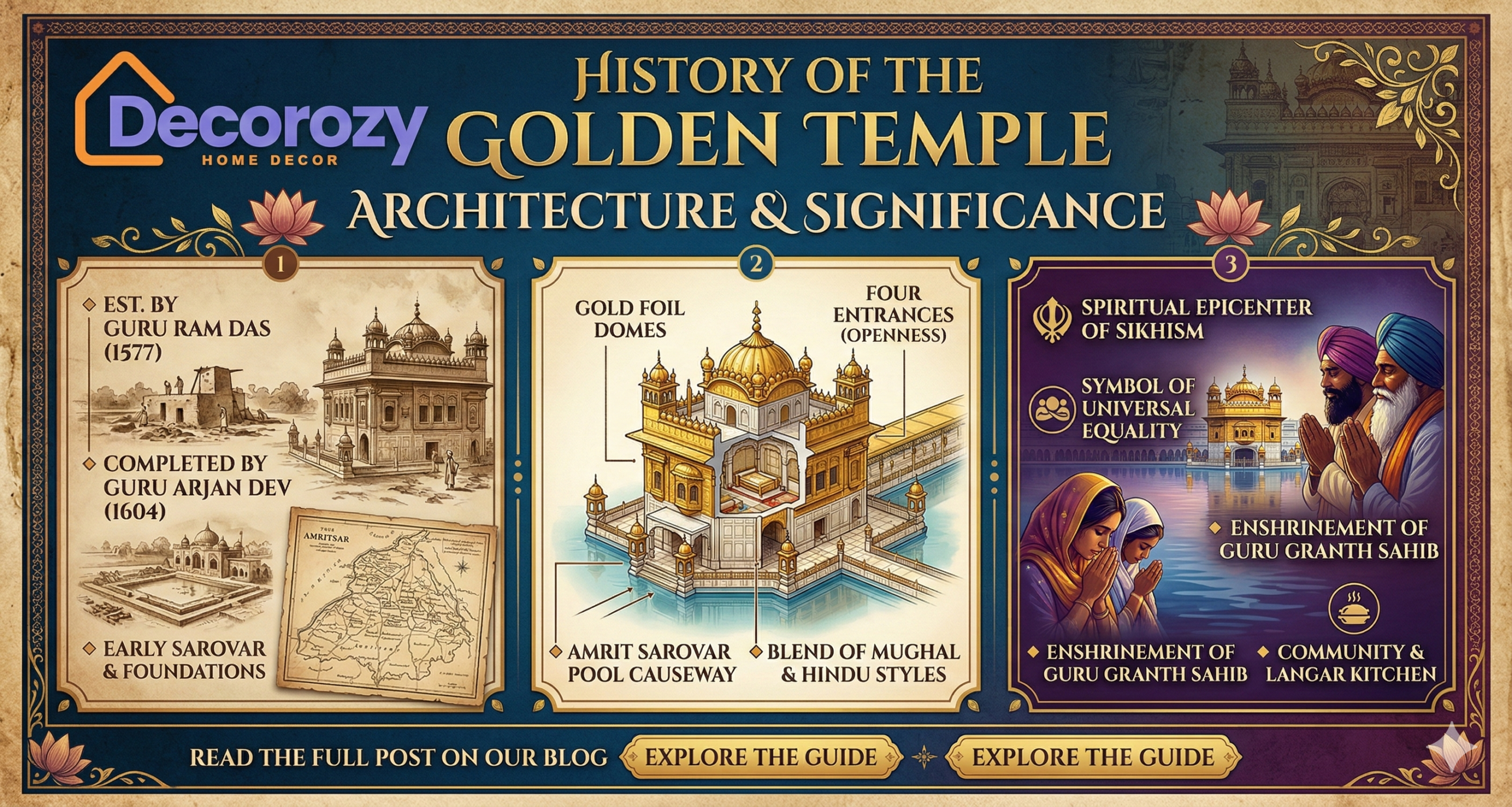
The origins of this majestic place of worship trace back to 1574. Guru Ram Das, the fourth Sikh Guru, purchased a plot of land for just Rs. 700 to establish the city of Amritsar.
He initiated the excavation of the holy pool, known today as the Amrit Sarovar. By 1581, Guru Arjan Dev Ji took over the project and personally designed the central structure.
In a beautiful display of interfaith harmony, Guru Arjan Dev invited a Muslim Sufi saint from Lahore, Hazrat Mian Mir Ji, to lay the foundation stone in December 1588.
Spiritual Significance and the History of the Golden Temple
The history of the Golden Temple is deeply rooted in the core values of Sikhism: equality, humility, and devotion. Unlike traditional temples built on elevated platforms, the Golden Temple was constructed at a lower elevation than the surrounding city.
This design choice forces visitors to physically step down, emphasizing the need to leave one’s ego behind. Furthermore, the temple features open doorways on all four sides, welcoming people from every caste, creed, and religion.
Upon the building’s completion in August 1604, Guru Arjan Dev installed the Guru Granth Sahib inside the sanctum. He appointed Baba Budha Ji as the first Granthi (reader), officially establishing it as a primary center of worship.
Today, it attracts over 100,000 visitors daily. Many devotees even keep a pocket-size replica of the Golden Temple in their homes to maintain a connection to its divine energy.
Architectural Brilliance: Rebuilding and Gold Adornment
The Golden Temple boasts a mesmerizing blend of Indo-Islamic and Hindu-Rajputana architectural styles. The primary two-story structure sits upon a 67-foot square marble slab in the center of the 5.1-meter-deep Amrit Sarovar.
However, the magnificent gold exterior we see today was not part of the original 16th-century design. After facing repeated destruction by Afghan invaders, the shrine required massive reconstruction.
In the early 19th century, Maharaja Ranjit Singh rebuilt the temple using copper and pristine marble, famously overlaying the upper floors and the dome with 400 kg of gold leaf.
Interestingly, the prominent clock tower at the complex entrance has its own unique past. Originally built by the British in 1874 after demolishing a portion of the compound, it was later dismantled by the Sikh community. Despite being replaced by a traditional gateway, the entrance is still commonly called Ghanta Ghar Deori.
Conclusion
From its humble beginnings as a purchased plot of land to its evolution into a shimmering golden beacon of hope, the Golden Temple stands as a testament to resilience and faith. Its inclusive architecture and deeply rooted history continue to inspire millions of people around the globe.
Section 3: FAQ Schema
Who built the Golden Temple? Guru Arjan Dev Ji, the fifth Sikh Guru, initiated the construction of the Golden Temple in 1581. He designed the shrine himself, while the foundation stone was laid by a revered Sufi saint, Hazrat Mian Mir, to promote religious harmony.
When was the Golden Temple built? The initial construction of the Golden Temple took place between 1581 and 1604, with the installation of the Guru Granth Sahib marking its completion. It was later rebuilt and adorned with gold foil in the early 19th century by Maharaja Ranjit Singh.
Why is the Golden Temple made of gold? The temple’s signature gold exterior was added in the early 19th century by Maharaja Ranjit Singh. He donated approximately 400 kg of gold leaf to cover the upper floors and dome, serving both as a protective layer and a profound display of devotion to the Sikh faith.