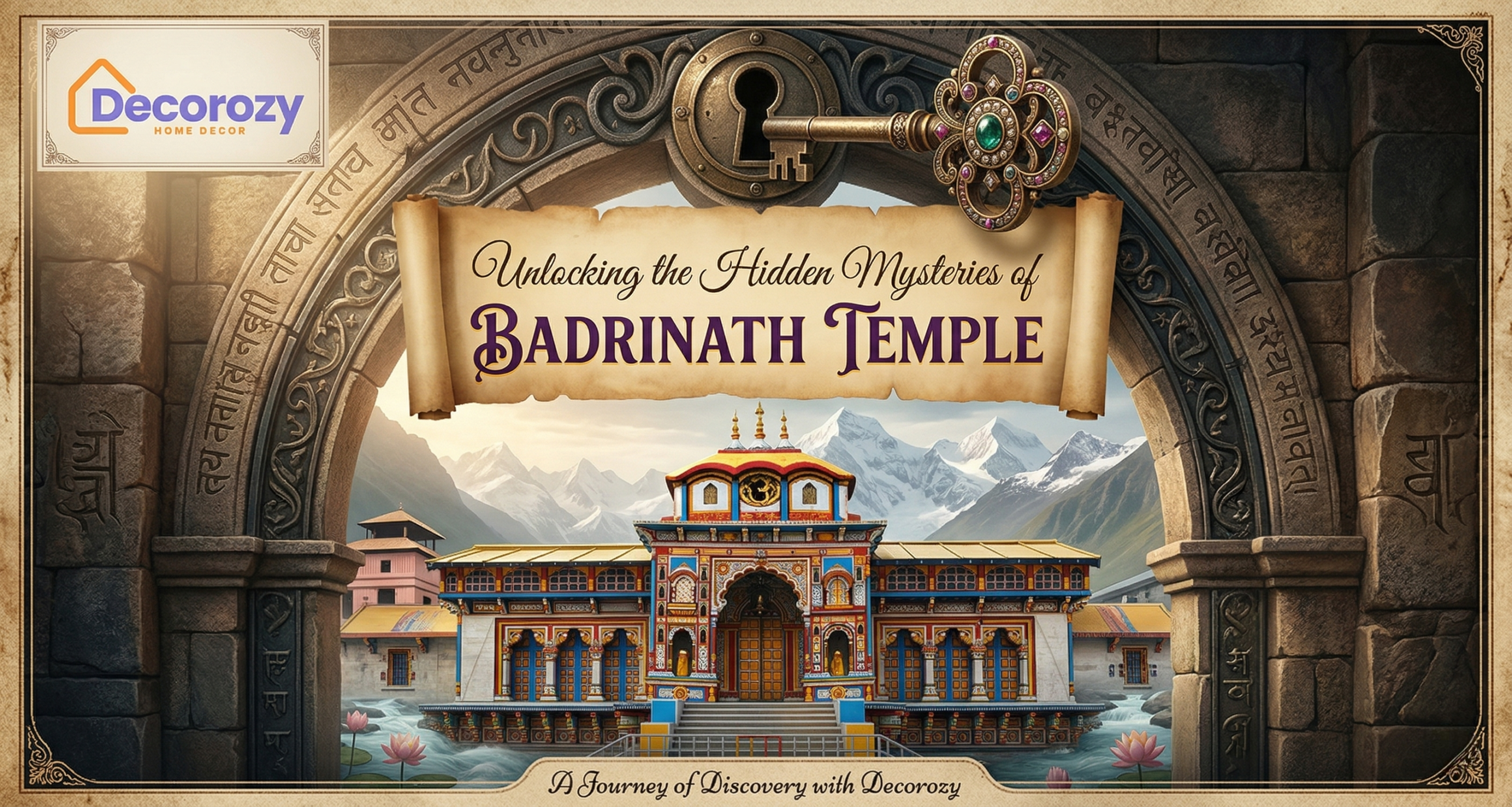
Nestled high in the snow-capped peaks of the Garhwal Himalayas, this sacred destination is more than just a pilgrimage site. For centuries, spiritual seekers and scientists alike have been captivated by the hidden mysteries of badrinath temple. Beyond its breathtaking architecture lies a realm where ancient legends and unexplained phenomena seamlessly blend together.
Quick Answer: The hidden mysteries of badrinath temple include the strict ban on blowing conch shells, the miraculous Akhand Jyoti lamp that burns unattended for six months during brutal winters, and the boiling natural waters of Tapt Kund surrounded by freezing Himalayan temperatures.
Core Concept: The Hidden Mysteries of Badrinath Temple
Badrinath is a cornerstone of the revered Char Dham pilgrimage dedicated to Lord Vishnu. The spiritual magnetism of this site is amplified by unexplained events that defy standard logic. These phenomena bridge the gap between deep-rooted Hindu mythology and geographical anomalies.
The temple sits perfectly between the Nar and Narayana mountain ranges. According to ancient prophecies, these two massive mountains are slowly inching closer to one another. Legends state that when they finally collide, the current path to the shrine will be blocked forever.
When this inevitable geological event occurs, devotees believe Lord Badrinath will relocate. He will move to a new, undiscovered shrine known as Bhavishya Badri. This looming prophecy creates an atmosphere of urgency and profound reverence for modern pilgrims.
Importance of Understanding the Hidden Mysteries of Badrinath Temple
Understanding these secrets is crucial for appreciating the rich tapestry of Indian spiritual history. The mysteries command immense respect from millions of pilgrims worldwide. They also prompt fascinating scientific inquiries that challenge modern geologists.
One such marvel is the Tapt Kund, a natural thermal spring situated just below the main temple. Despite the freezing, sub-zero temperatures of the surrounding region, the water remains scalding hot. The temperature constantly hovers at approximately 55°C year-round.
Devotees take a mandatory dip in these sulphur-rich waters, believing it cleanses them of their sins. Scientists attribute this to geothermal activity underneath the mountains. However, its precise, steady temperature in such a volatile climate remains a captivating wonder.
Detailed Analysis: Science Behind the Hidden Mysteries of Badrinath Temple
Perhaps the most intriguing of the hidden mysteries of badrinath temple is the strict prohibition on blowing a conch shell. In almost all Hindu temples, blowing a conch is a standard auspicious ritual. Yet, Badrinath remains an absolute exception to this universal rule.
Mythologically, it is said that Lord Vishnu was in deep meditation here in the Himalayas. Blowing the conch would disrupt his intense penance. Another legend suggests a demon hid inside a conch shell here, prompting sages to ban the sound entirely.
Scientifically, this rule is a brilliant, life-saving ancient safety measure. The temple is situated in an echo-prone valley surrounded by massive, unstable glaciers. The high-frequency sound waves produced by a conch shell can easily trigger catastrophic avalanches. Thus, this religious mandate actively protects the temple from natural disasters.
The enchanting aura of Uttarakhand goes far beyond just visually stunning landscapes and high altitudes. By exploring these divine secrets, we gain a deeper appreciation for India’s rich spiritual heritage. Want to discover more fascinating architectural wonders, home aesthetics, and spiritual destinations? Explore more exclusive travel guides and lifestyle insights right here on Decorozy.com!
FAQ Schema
- Question 1: Why is the conch not blown in Badrinath temple?
- Answer: The conch is not blown in Badrinath to prevent high-frequency echoes from triggering avalanches in the surrounding snow-capped mountains. Mythologically, it is also believed that sounding the conch would disturb Lord Vishnu’s deep meditation.
- Question 2: What is the mystery of the Badrinath lamp?
- Answer: The mystery of the Badrinath lamp, known as the Akhand Jyoti, is its ability to burn unattended for six months. When the temple is locked during the harsh winter, the lamp miraculously remains lit without any human intervention.
- Question 3: What will happen to Badrinath in the future?
- Answer: According to ancient Hindu prophecy, the Nar and Narayana mountains will eventually merge, permanently blocking access to the current Badrinath temple. Once this happens, the deity will be worshipped at a new location called Bhavishya Badri.