If you are planning a pilgrimage or simply love exploring India’s rich heritage, discovering fascinating Golden Temple facts is the perfect place to start. Located in the heart of Amritsar, this breathtaking Gurudwara is a symbol of equality, peace, and spiritual excellence.
Every year, millions of visitors travel to Punjab to witness the magnificent beauty of Sri Harmandir Sahib. Beyond its stunning visual appeal, the temple holds incredible historical and cultural significance.
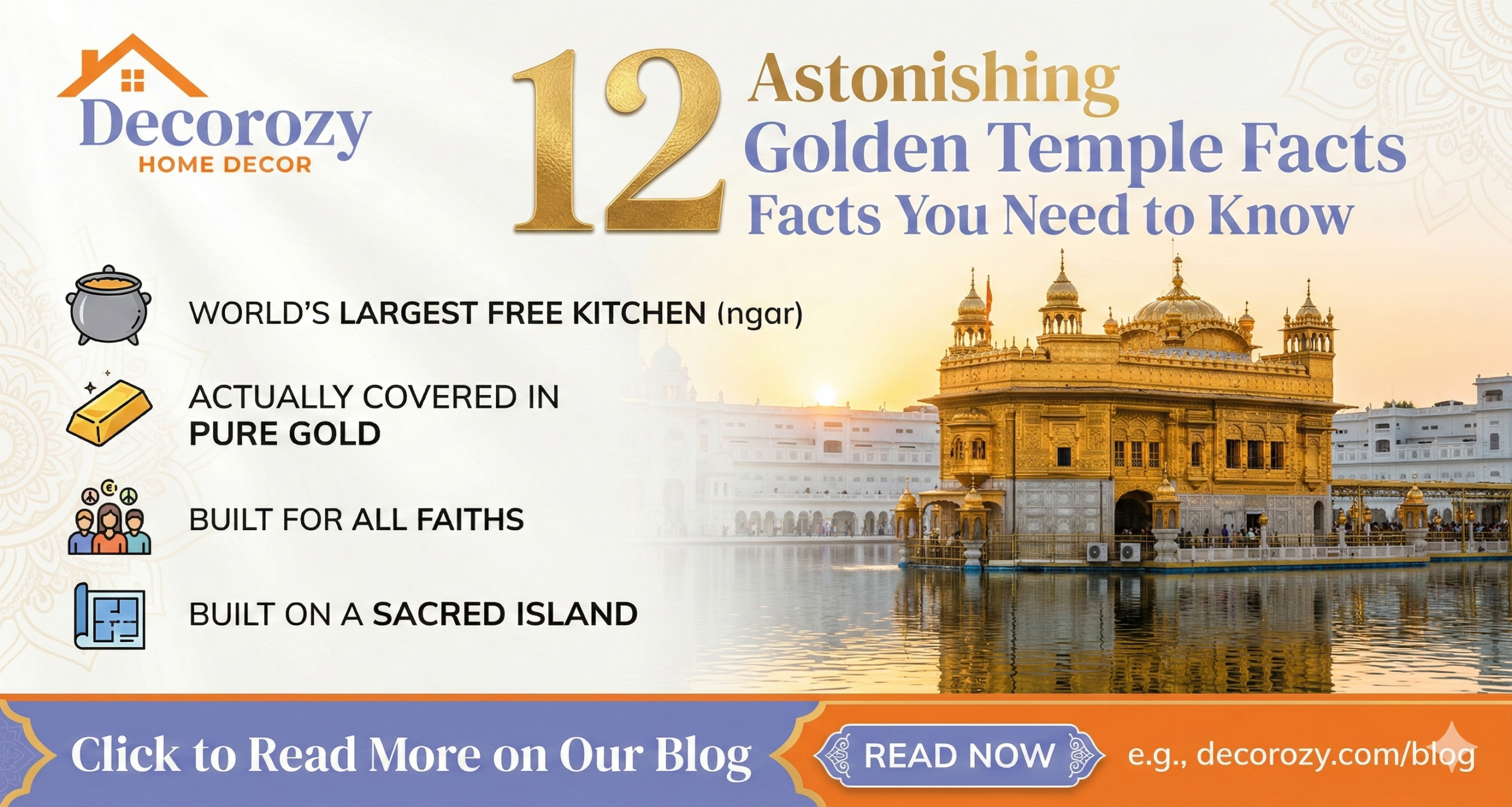
Quick Answer: What is the Golden Temple? The Golden Temple, officially known as Sri Harmandir Sahib, is the holiest shrine in Sikhism, located in Amritsar, India. Covered in hundreds of kilograms of pure gold, it features the world’s largest free community kitchen and welcomes people of all religions.
Concept and History: Intriguing Golden Temple Facts
The history of this sacred site dates back long before the first bricks were laid. Legend states that Lord Buddha spent time meditating at the tranquil lake surrounded by dense forests that originally occupied the site.
Later, Guru Nanak, the founder of the Sikh religion, frequented this peaceful location for reflection. The actual construction of the Hari Mandir began in 1581 under Guru Ramdas Sahib, the fourth Sikh guru, and took eight years to finish.
The temple has endured a turbulent history, having been destroyed by gunpowder during invasions in 1762. It was bravely defended by martyrs like Baba Deep Singh, who fought valiantly to protect the holy shrine before taking his last breath on its grounds.
Maharaja Ranjit Singh later restored the temple, transforming it into the resilient, golden legacy we see today.
Architectural Marvels and Golden Temple Facts
When exploring Golden Temple facts, the stunning architecture is impossible to ignore. The shrine boasts a seamless blend of Mughal and Hindu architectural styles, featuring exquisite marble sculptures resembling the Taj Mahal.
The English name stems from the 750 kilograms of pure gold covering its upper floors and domes. In 1995, a four-year renovation upgraded this plating to 24-karat gold, valued today at over 130 crores.
Unlike traditional Hindu temples built on raised platforms, Sri Harmandir Sahib’s first floor sits below ground level. Visitors must descend stairs to enter, a unique design choice that beautifully symbolizes humility and a modest life.
Furthermore, the temple features four distinct entrances, representing its core philosophy that people of all castes, creeds, and religions are welcome.
Detailed Analysis of Spiritual Significance and Practices
The temple is surrounded by the Amrit Sarovar, a holy lake whose name translates to “pool of ambrosial nectar.” Devotees bathe in these purifying waters, while volunteers actively assist in filling buckets for worshippers.
Inside the temple rests the Guru Granth Sahib, the primary holy text of Sikhism. Placed on a jewel-encrusted platform, this sacred compilation features hymns and prayers from Sikh gurus as well as Hindu and Muslim saints.
Perhaps the most heartwarming feature of the shrine is its Langar Sewa, the largest free kitchen in the world. Run entirely by volunteers and funded by donations, it serves delicious, simple vegetarian meals to over 50,000 people daily.
Conclusion
A visit to Amritsar offers much more than a visual spectacle; it provides a profound spiritual awakening. From its resilient history to its unmatched community service, these incredible details highlight why the shrine remains a premier global pilgrimage destination.
Ready to experience this architectural and cultural marvel for yourself? Share this post with your travel companions and start planning your journey to Punjab today!
Section 3: FAQ Schema
1. Why is it called the Golden Temple? It earned the name “Golden Temple” because its upper floors and domes are completely covered in pure gold leaf. Maharaja Ranjit Singh originally added the gold, and it was later renovated in the 1990s using 750 kilograms of 24-karat gold.
2. Who laid the foundation stone of the Golden Temple? In a beautiful display of religious harmony, the foundation stone of the Golden Temple was laid by Mian Mir, a highly respected Sufi saint. This was done to emphasize that the Gurudwara is open to people of all faiths.
3. Can anyone eat at the Golden Temple’s Langar? Yes, absolutely anyone can eat at the Langar, regardless of their religion, caste, or background. The community kitchen serves over 50,000 free, nutritious vegetarian meals every single day, entirely prepared and served by dedicated volunteers.