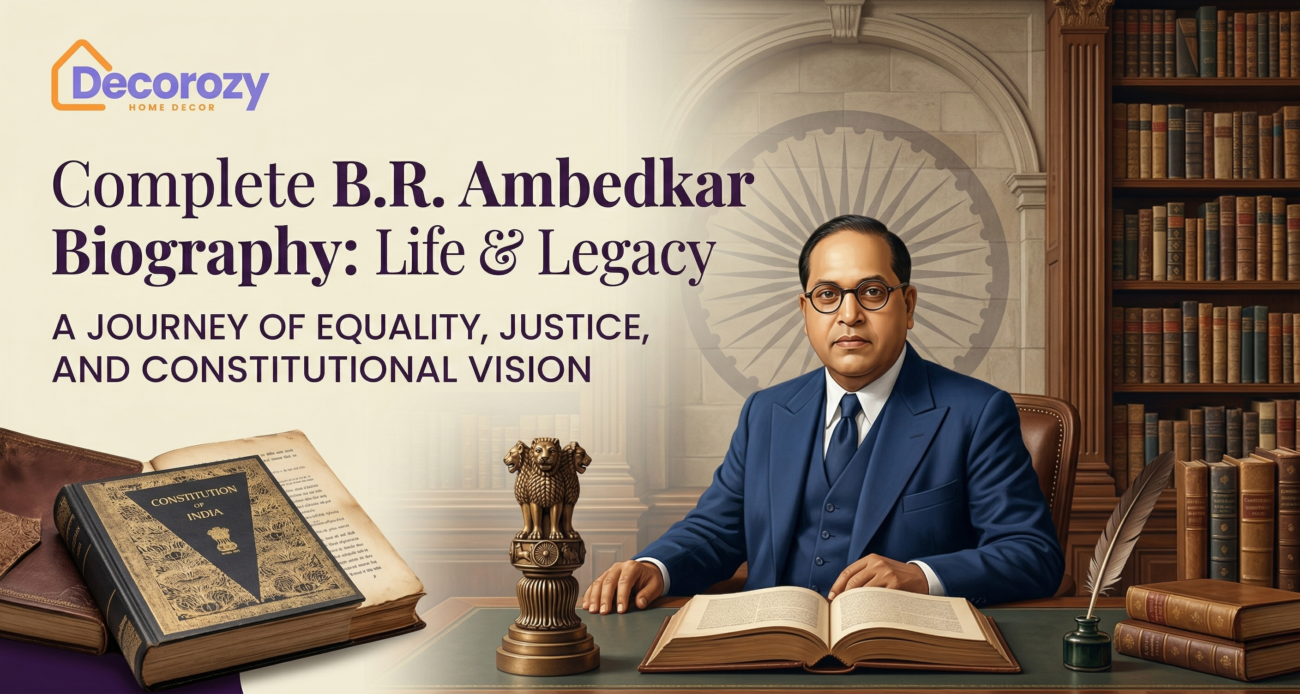
When examining the historical foundations of modern India, one question frequently arises: why is B.R. Ambedkar called Father of Indian Constitution? His unparalleled legal expertise and deep sociological understanding shaped the world’s longest written constitution. Dr. Ambedkar’s vision transformed a newly independent nation into a robust democratic republic.
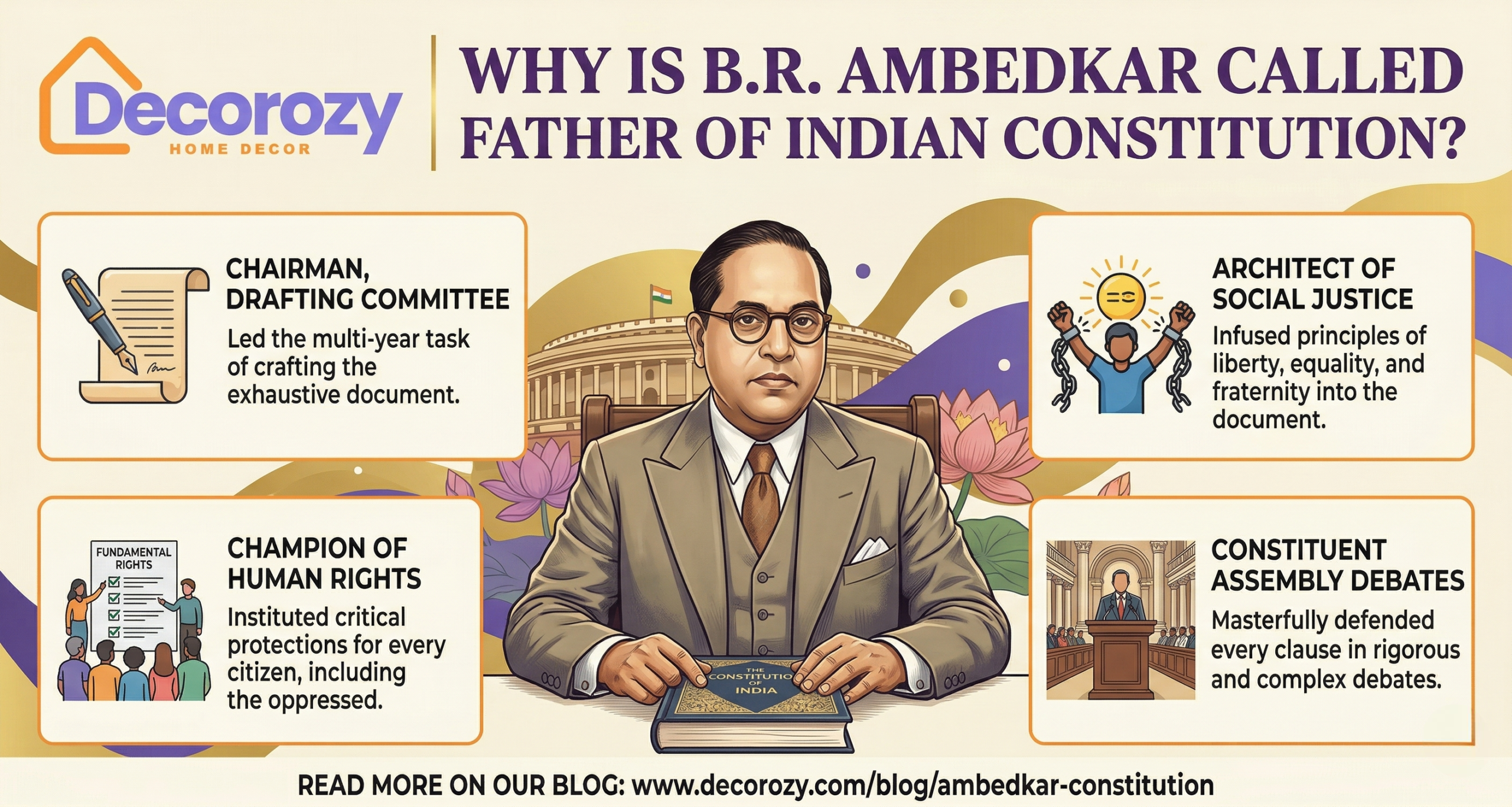
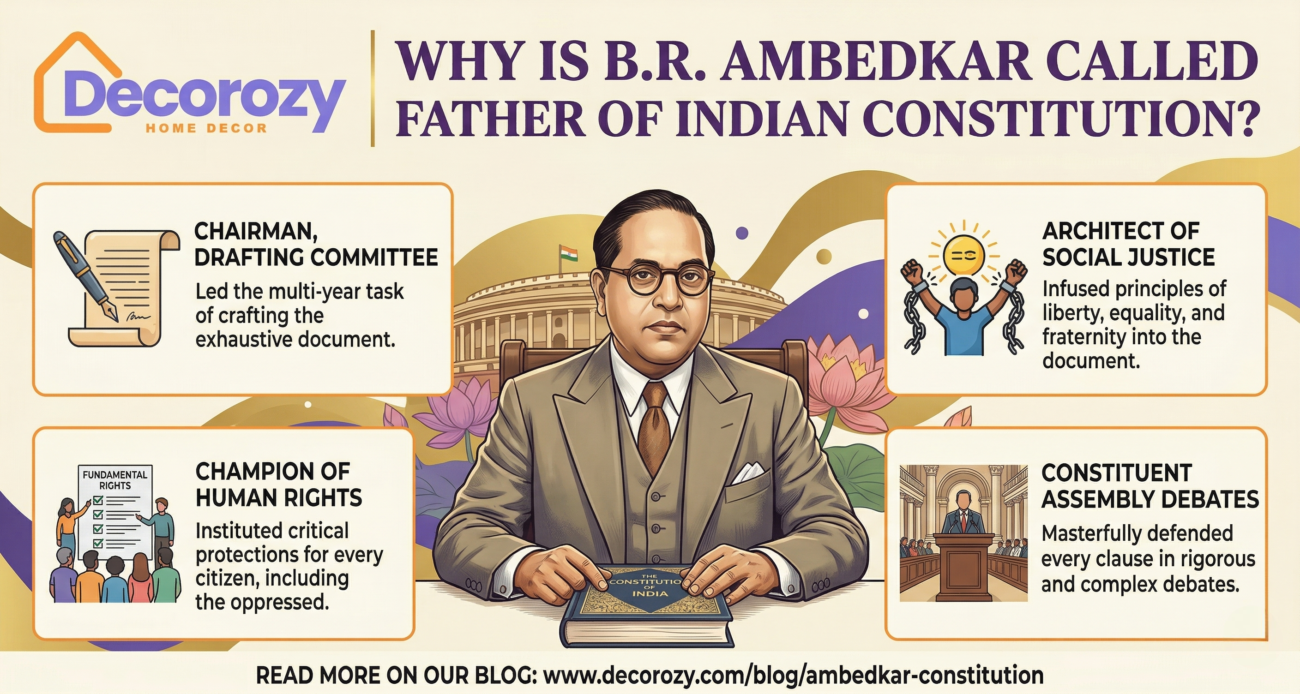
Quick Answer: Dr. B.R. Ambedkar is called the Father of the Indian Constitution because he served as the Chairman of the Drafting Committee. He meticulously structured the foundational document, synthesizing global constitutional principles to ensure fundamental rights, equality, and social justice for all citizens.
The Core Concept: Why is B.R. Ambedkar Called Father of Indian Constitution?
On August 29, 1947, the Constituent Assembly appointed Dr. Ambedkar as the Chairman of the Drafting Committee. This monumental responsibility placed him at the helm of constructing India’s democratic framework.
He was tasked with studying various global democratic structures and adapting their best practices for India. His brilliant legal mind allowed him to integrate complex principles into a cohesive, functional legal document.
Ambedkar successfully balanced the diverse socio-economic, religious, and cultural complexities of India. By weaving together a strong central government with state autonomy, he created an enduring, resilient constitutional framework.
The Importance of His Role: Why is B.R. Ambedkar Called Father of Indian Constitution?
Dr. Ambedkar’s role went far beyond merely writing legal statutes; he acted as the ultimate defender of the marginalized. He recognized that political democracy was meaningless without social and economic democracy.
Through his relentless advocacy, he enshrined Fundamental Rights into the Constitution, protecting citizens from state overreach. He fundamentally abolished untouchability and implemented reservations for scheduled castes, aiming to rectify centuries of historical injustice.
His compelling arguments in the Constituent Assembly debates were critical in passing these progressive articles. By guiding the assembly through contentious issues, he cemented his legacy as the chief architect of modern Indian society.
Detailed Analysis of Constitutional Safeguards
Ambedkar designed the Constitution with a system of rigid checks and balances to prevent authoritarianism. He ensured the judiciary remained independent, acting as the ultimate guardian of the citizens’ constitutional rights.
He also embedded the Directive Principles of State Policy to guide future governments toward a welfare state. These principles act as a moral compass, ensuring economic parity and social welfare remain central to governance.
Furthermore, he introduced the mechanism for constitutional amendments, recognizing that the document must evolve. This foresight ensured the Indian Constitution remained a living, adaptable framework rather than a static historical text.
The foundational principles established by Dr. Ambedkar continue to guide India’s democratic journey today. For more insights on historical frameworks, structural design, and deep-dive analysis, continue exploring the expertly curated content on Decorozy.com!
FAQ Schema
- Question 1: Who appointed Dr. B.R. Ambedkar as the Chairman of the Drafting Committee?
- Answer: The Constituent Assembly of India formally appointed Dr. B.R. Ambedkar as the Chairman of the Drafting Committee on August 29, 1947, due to his profound legal expertise and understanding of social justice.
- Question 2: How long did it take to draft the Indian Constitution?
- Answer: It took the Constituent Assembly, led by Dr. B.R. Ambedkar, exactly 2 years, 11 months, and 18 days to complete the monumental task of drafting the Indian Constitution.
- Question 3: What was Dr. Ambedkar’s main focus while drafting the Constitution?
- Answer: Dr. Ambedkar’s primary focus was to ensure fundamental rights, eliminate social inequalities like untouchability, establish an independent judiciary, and create a strong federal structure to unite a diverse nation.