Creating a sacred space in your house is essential for spiritual well-being and daily peace. Selecting the best god idols for home temple as per vastu india ensures your prayers channel pure, positive energy.
A perfectly aligned pooja room acts as the energetic core of an Indian household. When you follow ancient Vastu Shastra principles, you invite prosperity and deflect negative vibrations.
Quick Answer: The best god idols for a home temple as per Vastu include Ganesha, Lakshmi, and Saraswati. Idols should be seated, made of solid brass, marble, or wood, and face the West so worshippers face East. Idols must not exceed 9 inches in height and should never face each other.
Significance of the Best God Idols for Home Temple As Per Vastu India
Vastu Shastra is the ancient Indian science of architecture and cosmic energy flow. Applying these rules to your spiritual space is not just about tradition; it is about energetic optimization.
Placing the best god idols for home temple as per vastu india creates a divine magnetic field. This field resonates throughout your living space, impacting your family’s health, wealth, and emotional stability.
Ignoring Vastu principles can lead to energetic blockages in your household. Misplaced deities or broken idols can inadvertently attract stagnation or financial hurdles.
By strictly adhering to Vastu guidelines, you harmonize the five elements within your home. This harmonious environment accelerates the manifestation of your daily prayers and intentions.
Core Rules for the Best God Idols for Home Temple As Per Vastu India
Before bringing any deity into your home, you must understand the dimensional limits set by Vastu. Idols should never exceed 9 inches (22.5 cm) in height.
Larger idols are strictly meant for public temples where daily, complex rituals (Prana Pratishtha) are performed. Smaller idols are ideal for the manageable, daily devotion of a family home.
Spacing is another critical rule for your pooja mandir. God idols must be kept at least one inch away from the wall to allow spiritual energy to circulate freely around them.
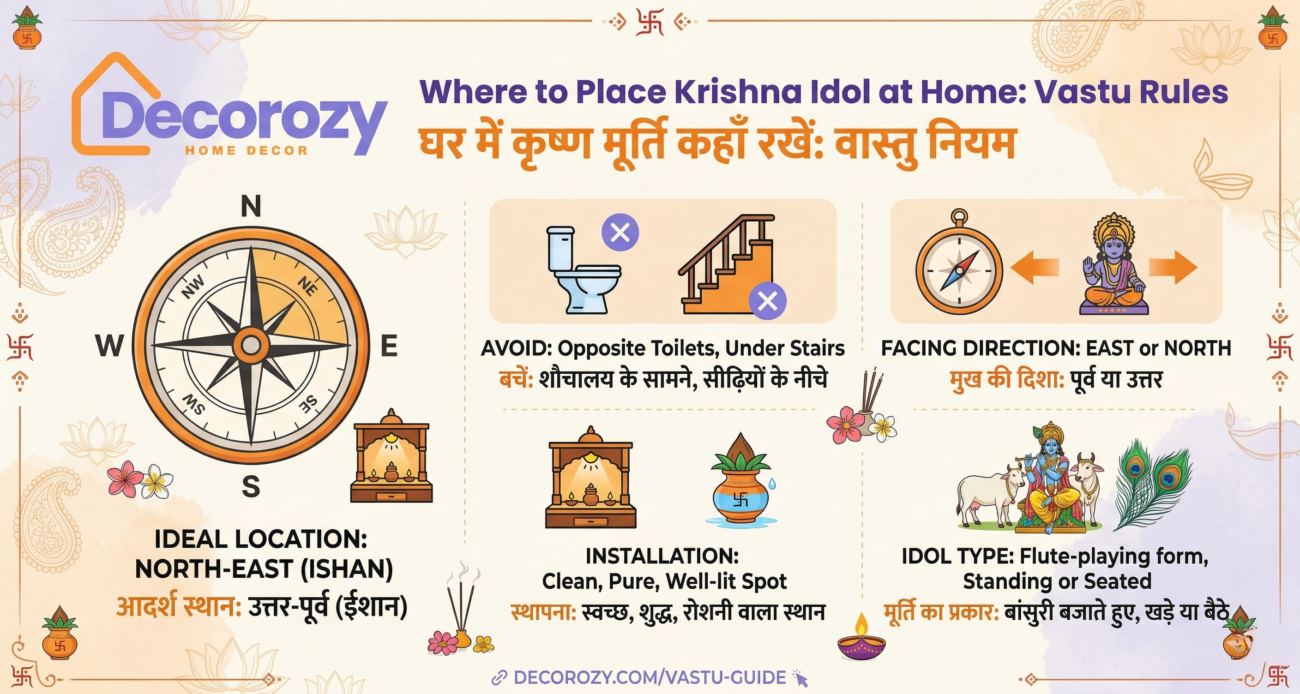
Furthermore, ensure that no two idols of the same deity are placed together. Idols should also never face each other, as this creates a conflicting loop of energy rather than radiating it outward.
Ideal Deities to Place in Your Pooja Room
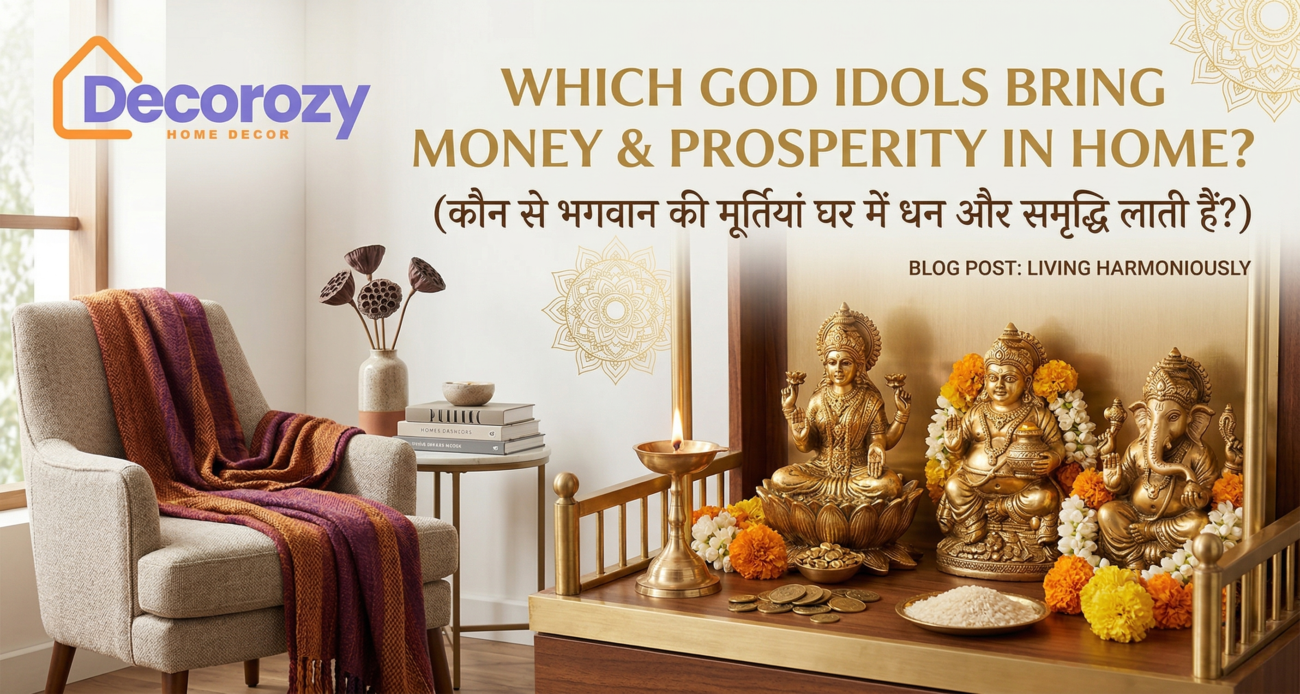
Lord Ganesha is the remover of obstacles and should be the first deity placed in your mandir. Vastu dictates that a seated Ganesha idol, specifically with the trunk turning to the left, brings immense tranquility.
Goddess Lakshmi and Goddess Saraswati should ideally be placed alongside Lord Ganesha. Goddess Lakshmi attracts wealth, while Saraswati brings wisdom, creating a perfect balance of material and intellectual prosperity.
Lord Shiva is best worshipped in the form of a small Shivling rather than a large idol. Ensure the Shivling is placed in the northern section of the mandir and receives daily water offerings.
Lord Hanuman idols are powerful but require specific placement. Only a seated or blessing posture of Hanuman is recommended for homes, positioned facing the South direction to ward off evil.
Best Materials for Vastu-Compliant Idols
The material of your deity plays a vital role in how effectively it conducts cosmic energy. Solid brass is highly recommended by Vastu experts because it produces resonant vibrations during chanting.
Marble is another excellent choice, particularly for idols of Goddess Lakshmi and Lord Ganesha. White marble represents purity and peace, making it perfect for a meditative environment.
Carved wooden idols, especially those crafted from sacred woods like sandalwood or neem, are also highly auspicious. They naturally absorb and radiate the positive mantras chanted in their vicinity.
Avoid hollow statues, fragile glass, or cheap plastics in your home temple. Vastu states that easily breakable or synthetic materials fail to anchor the powerful spiritual energies of a pooja room.
Investing in high-quality, Vastu-compliant spiritual decor elevates the aesthetics and energy of your home. For premium, handcrafted mandir accessories, explore the exclusive spiritual collection at Decorozy.com today to bring divine harmony into your living space.
FAQ Schema
- Question 1: Which direction should god idols face in a home temple?
- Answer: According to Vastu Shastra, god idols should ideally be placed in the East or West directions. Worshippers should face East or North while praying to maximize the absorption of positive cosmic energy.
- Question 2: Can we keep two Ganesha idols in the pooja room?
- Answer: No, Vastu strongly advises against keeping two idols of the same deity in a home temple. Multiple idols of the same god can create conflicting energy patterns and disrupt the harmony of your sacred space.
- Question 3: What should be the maximum height of god idols at home?
- Answer: The height of any god idol in a home temple should not exceed 9 inches. Taller idols require stringent, temple-level daily rituals that are difficult to maintain in a standard household environment.