The intersection of medical history and mythology often creates fascinating, yet highly complex, public debates. When discussing ancient plastic surgery in India, many people immediately think of the revered deity, Lord Ganesha.
But what is the actual truth behind these popular claims? We must separate documented medical achievements from rich cultural symbolism to understand our history accurately.
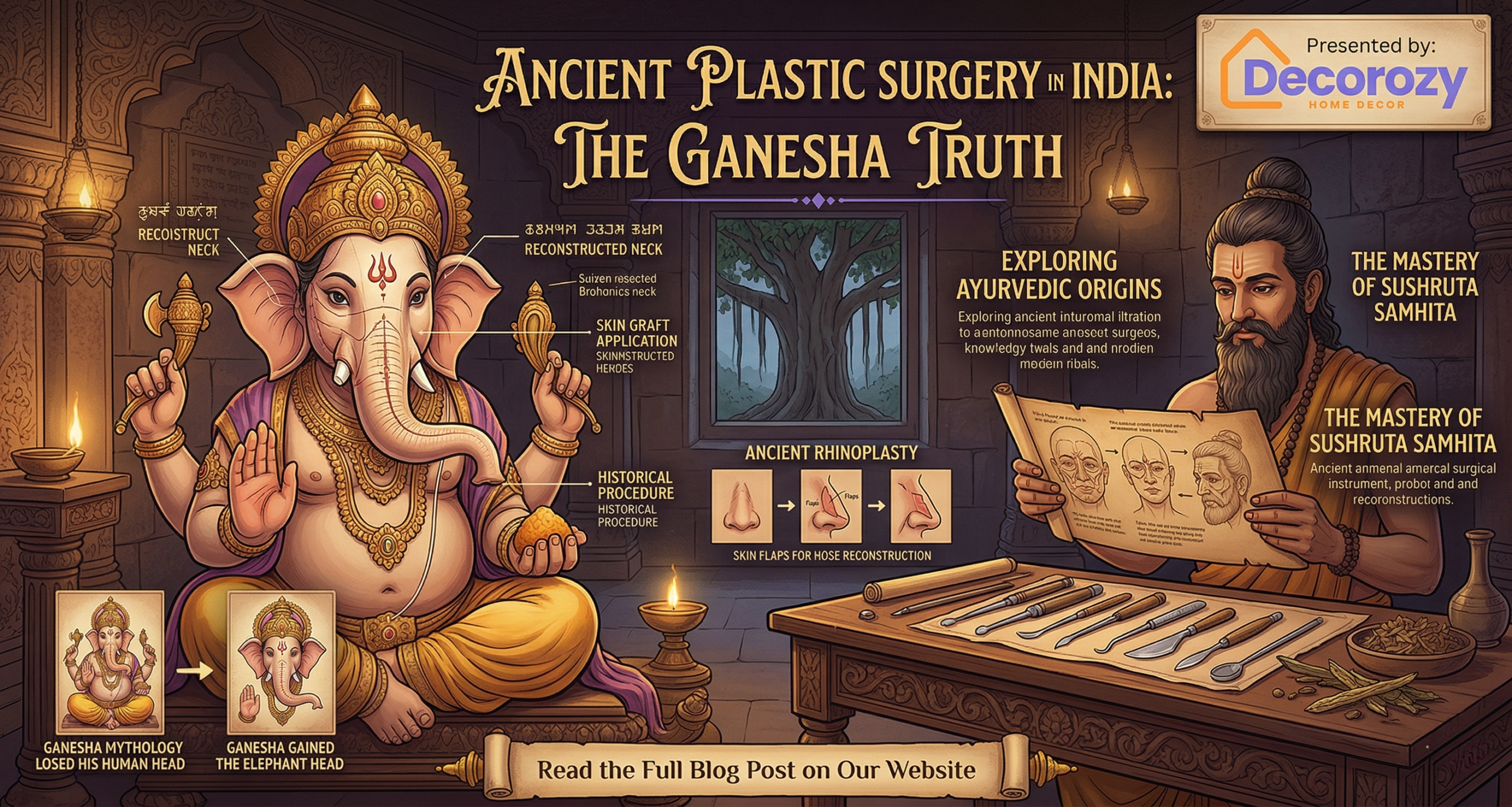
Quick Answer: While ancient plastic surgery in India is a documented historical fact pioneered by the physician Sushruta around 600 BCE, the story of Lord Ganesha is religious mythology. Ganesha’s elephant head represents profound spiritual symbolism, not physical evidence of ancient head transplants.
The Real History of Ancient Plastic Surgery in India
To understand the factual roots of ancient plastic surgery in India, we must look to the Sushruta Samhita. This ancient Sanskrit text is a foundational document in Ayurvedic medicine.
Written by the revered sage Sushruta around the 6th century BCE, the text details incredibly complex surgical procedures. Today, Sushruta is widely recognized by global medical historians as the “father of plastic surgery.”
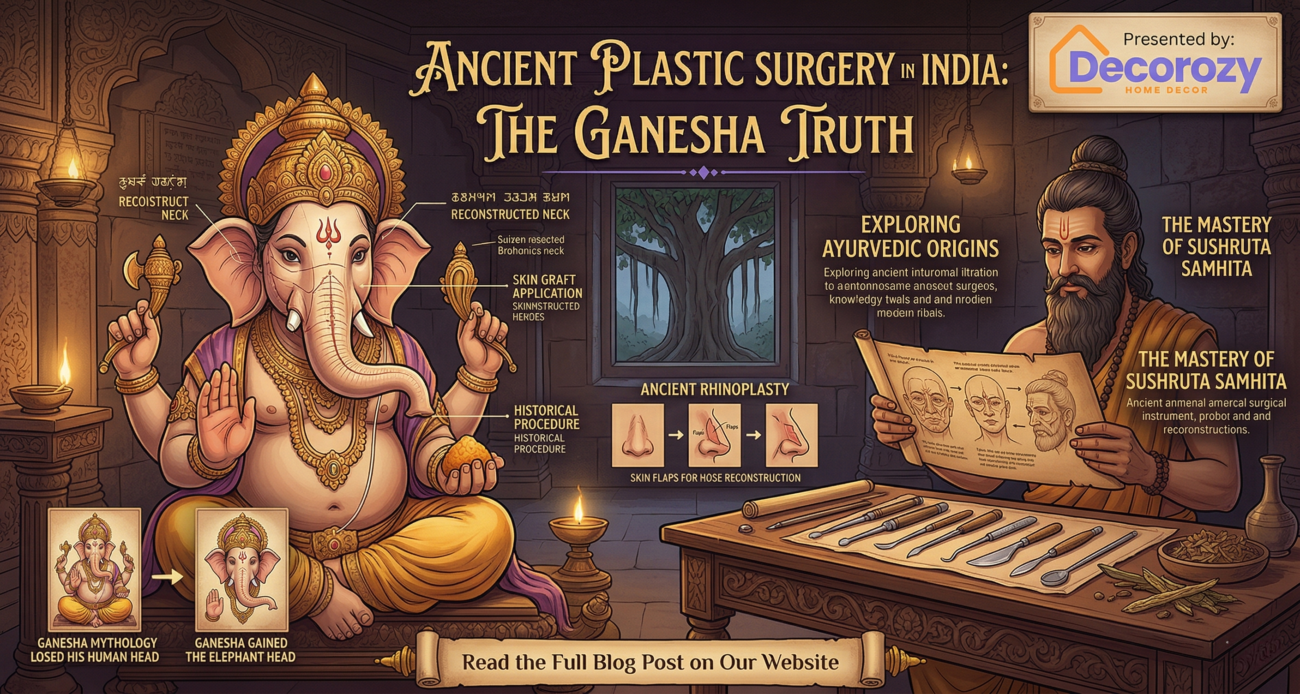
Sushruta meticulously documented techniques for reconstructing noses, a procedure known today as rhinoplasty. This reconstructive surgery was often necessary due to the historical punishment of nose amputation.
His methods involved using a pedicle flap of skin from the forehead or cheek to rebuild the nasal structure. These foundational techniques remain highly relevant and are still referenced in modern reconstructive surgery today.
Why the Legacy of Ancient Plastic Surgery in India Matters
Recognizing the factual basis of ancient plastic surgery in India is crucial for appreciating global medical history. It highlights the advanced scientific understanding present in early Indian civilization.
These early physicians demonstrated a profound understanding of human anatomy, anesthesia using wine, and the prevention of infection. Their empirical, observation-based approach laid the groundwork for future medical breakthroughs.
Acknowledging Sushruta’s genuine contributions protects the academic integrity of Indian historical science. It prevents actual, verifiable scientific milestones from being overshadowed by literal interpretations of mythology.
By separating medical fact from religious fiction, we honor the true genius of ancient Ayurvedic practitioners. Their documented surgical innovations deserve serious academic recognition, untainted by pseudo-scientific claims.
Analyzing the Myth: Ancient Plastic Surgery in India and Ganesha
The mythological story of Lord Ganesha involves Lord Shiva replacing his son’s severed head with that of an elephant. This beautiful narrative is incredibly rich in spiritual and philosophical meaning.
However, conflating this story with ancient plastic surgery in India creates a dangerous scientific misconception. Inter-species head transplants are entirely different from the localized skin grafts documented by Sushruta.
Even with today’s highly advanced medical technology, successful inter-species head transplants remain scientifically impossible. Claiming the Ganesha story is literal medical history ultimately undermines the credibility of genuine Indian scientific achievements.
Ganesha represents supreme wisdom, the removal of life’s obstacles, and the realization of the ultimate self. We can revere this powerful mythology while simultaneously celebrating the documented, factual history of ancient Indian surgeons.
Understanding the clear distinction between historical fact and cultural myth is essential for appreciating our rich past. The genuine surgical achievements of ancient India are remarkable enough without needing mythological embellishment to prove their worth.
For more authoritative, data-driven explorations into history, culture, and design, continue reading on Decorozy.com. Share your thoughts and join the discussion in the comments below!
FAQ Schema
- Question 1: Who is considered the father of ancient plastic surgery in India?
- Answer: Sushruta, an ancient Indian physician who lived around 600 BCE, is globally recognized as the father of plastic surgery. He authored the Sushruta Samhita, which details early reconstructive techniques like rhinoplasty.
- Question 2: Is the story of Lord Ganesha proof of ancient Indian head transplants?
- Answer: No. The story of Lord Ganesha is a profound religious myth with deep spiritual symbolism. It is not a historical account of medical surgery or inter-species head transplants.
- Question 3: What type of plastic surgery was actually performed in ancient India?
- Answer: Ancient Indian surgeons primarily performed reconstructive procedures like rhinoplasty (nose reconstruction) and otoplasty (ear lobe repair). They successfully used localized skin grafts from the forehead or cheek to repair facial deformities.