The ancient Vedic texts hold profound wisdom, acting as a gateway to deep spiritual enlightenment. At the heart of this ancient literature lies the concept of agni dev in rigveda mantras and their meanings. These sacred Sanskrit hymns offer a profound understanding of cosmic fire and divine transformation.
Quick Answer: Agni Dev, the revered Vedic fire god, is the foremost deity invoked in the Rigveda. The mantras dedicated to him serve to call upon the divine messenger, purifier, and supreme priest of sacrifices. Analyzing these hymns reveals profound spiritual truths about cosmic order and inner illumination.
Understanding Agni Dev in Rigveda Mantras and Their Meanings
The Rigveda opens with a powerful invocation to Agni, highlighting his supreme importance in Vedic tradition. He is not just a physical fire, but the vibrant spark of life and the light of pure consciousness. Studying agni dev in rigveda mantras and their meanings helps us grasp the foundations of ancient Indian spirituality.
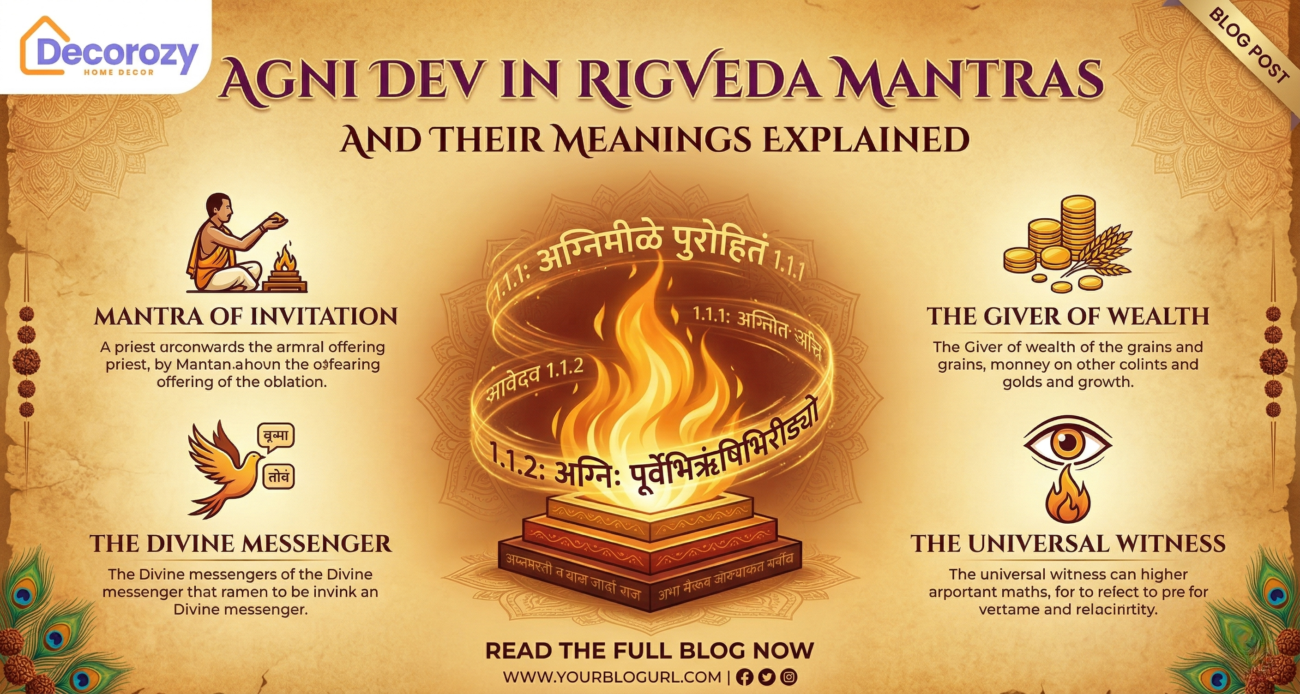
Agni acts as the vital bridge between humanity and the celestial realm. When priests chant these sacred Suktas, they believe the sacred fire carries their offerings directly to the gods. This essential function makes Agni the ultimate mediator in all ancient fire rituals and Yajnas.
Furthermore, the language of the Rigveda uses rich metaphors to describe his divine attributes. He is often depicted as a youthful, radiant god, endlessly reborn each day through the friction of sacred wood.
The Spiritual Power of Agni Dev in Rigveda Mantras and Their Meanings
Delving into agni dev in rigveda mantras and their meanings reveals a profound psychological and spiritual layer. On an inner, esoteric level, Agni represents the burning flame of human willpower and intellectual clarity. This inner fire consumes ignorance and naturally illuminates the path toward ultimate truth.
The chanting of these specific mantras is said to purify the surrounding environment and the chanter’s mind. The vibrational frequency of the Sanskrit syllables awakens dormant spiritual energy within the practitioner. Many modern spiritual seekers still utilize these ancient hymns to foster meditation and mental focus.
By understanding these exact translations, we can actively apply this ancient wisdom to our modern lives. The fire god teaches us about continuous transformation, urging us to burn away our negative traits.
Core Examples of Vedic Hymns and Translations
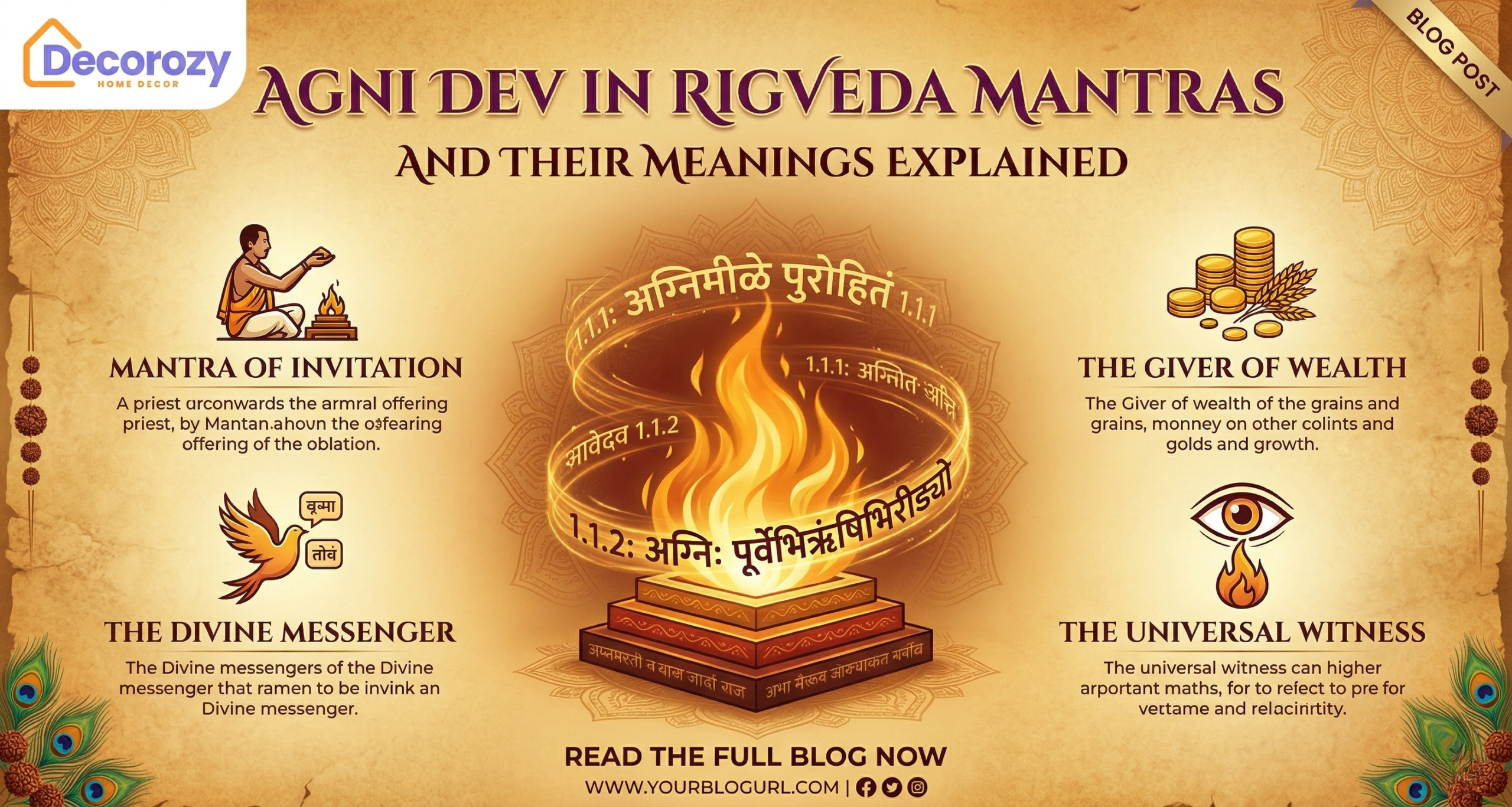
The very first hymn of the Rigveda, “Agnim Ile Purohitam,” beautifully captures the essence of this deity. This highly venerated mantra translates to: “I glorify Agni, the high priest of the sacrifice, the divine, the ministrant.” It firmly establishes him as the ultimate bestower of infinite wealth, courage, and divine blessings.
Another famous invocation praises Agni as “Jatavedas,” meaning the one who intimately knows all of creation. These verses heavily emphasize his role as the eternal witness to all human actions and cosmic events. They remind the reciter that divine consciousness is ever-present, all-knowing, and endlessly watchful.
The wisdom embedded in these ancient texts remains timeless, offering immense spiritual value today. By meditating on these powerful hymns, you can ignite your own inner fire of awareness and growth. Explore more about ancient spiritual practices, sacred mantras, and home harmony on Decorozy.com today!
FAQ Schema
- Question 1: Why is Agni the very first deity mentioned in the Rigveda?
- Answer: Agni is the first deity invoked because he acts as the divine messenger and high priest. He is absolutely essential for delivering prayers and physical offerings from humans to the other cosmic gods.
- Question 2: What does the word “Jatavedas” mean in Vedic mantras?
- Answer: Jatavedas is a crucial epithet for Agni Dev, translating roughly to “the knower of all beings.” It signifies his all-encompassing cosmic awareness and undeniable presence within every single aspect of the universe.
- Question 3: Can anyone chant Rigveda mantras dedicated to Agni Dev?
- Answer: While traditional rules suggest learning under a qualified Guru for exact phonetic pronunciation, anyone can respectfully study their meanings. Understanding the textual translations offers immense spiritual clarity and aids in personal transformation.