Mahavira vs Gautama Buddha: Philosophies of Peace and Designing a Mindful Home
Creating a sanctuary in today’s fast-paced world requires more than just beautiful furniture; it demands a philosophy of peace and mindfulness woven into your very living space.
At Decorozy, we believe that the ancient wisdom of India’s greatest spiritual teachers can profoundly influence how we curate our homes, transforming everyday rooms into holistic havens.
When we explore the teachings of Mahavira vs Gautama Buddha, we uncover timeless principles of harmony, balance, and intentional living that perfectly align with premium, mindful interior design.
Quick Answer: Mahavira (Jainism) and Gautama Buddha (Buddhism) were 6th-century BCE spiritual contemporaries who championed non-violence (Ahimsa). While Mahavira emphasized extreme asceticism and absolute non-violence to liberate the soul, Buddha advocated the “Middle Way”—a balanced approach to achieving enlightenment and ending suffering.
Key Takeaways
Historical Contemporaries: Both figures emerged in ancient India to challenge orthodox rituals, offering inward-focused paths to spiritual liberation.
Philosophical Differences: Mahavira favored rigorous self-discipline and extreme minimalism, whereas Buddha taught a balanced moderation known as the Middle Path.
Aesthetic Translation: Their philosophies directly inspire modern mindful decor—from the strict, clean lines of Jain-inspired minimalism to the harmonious, balanced serenity of Buddhist-inspired Decorozy living spaces.
Historical Context: The Roots of Spiritual Awakening
To truly appreciate the debate of Mahavira vs Gautama Buddha, we must understand the cultural landscape of 6th-century BCE India.
It was a period of intense spiritual questioning, where seekers retreated to forests to meditate and discover the ultimate truths of human existence.
Both Mahavira (born Vardhamana) and Gautama Buddha (born Siddhartha) were royal princes who renounced their luxurious palaces and worldly comforts.
They left behind unimaginable wealth to seek answers to the fundamental problems of suffering, aging, and the cycle of rebirth.
Their journeys led to the formalization of Jainism and Buddhism, two dominant philosophies that continue to shape mindful living, ethical choices, and even serene interior aesthetics today.
The Content Mind Map
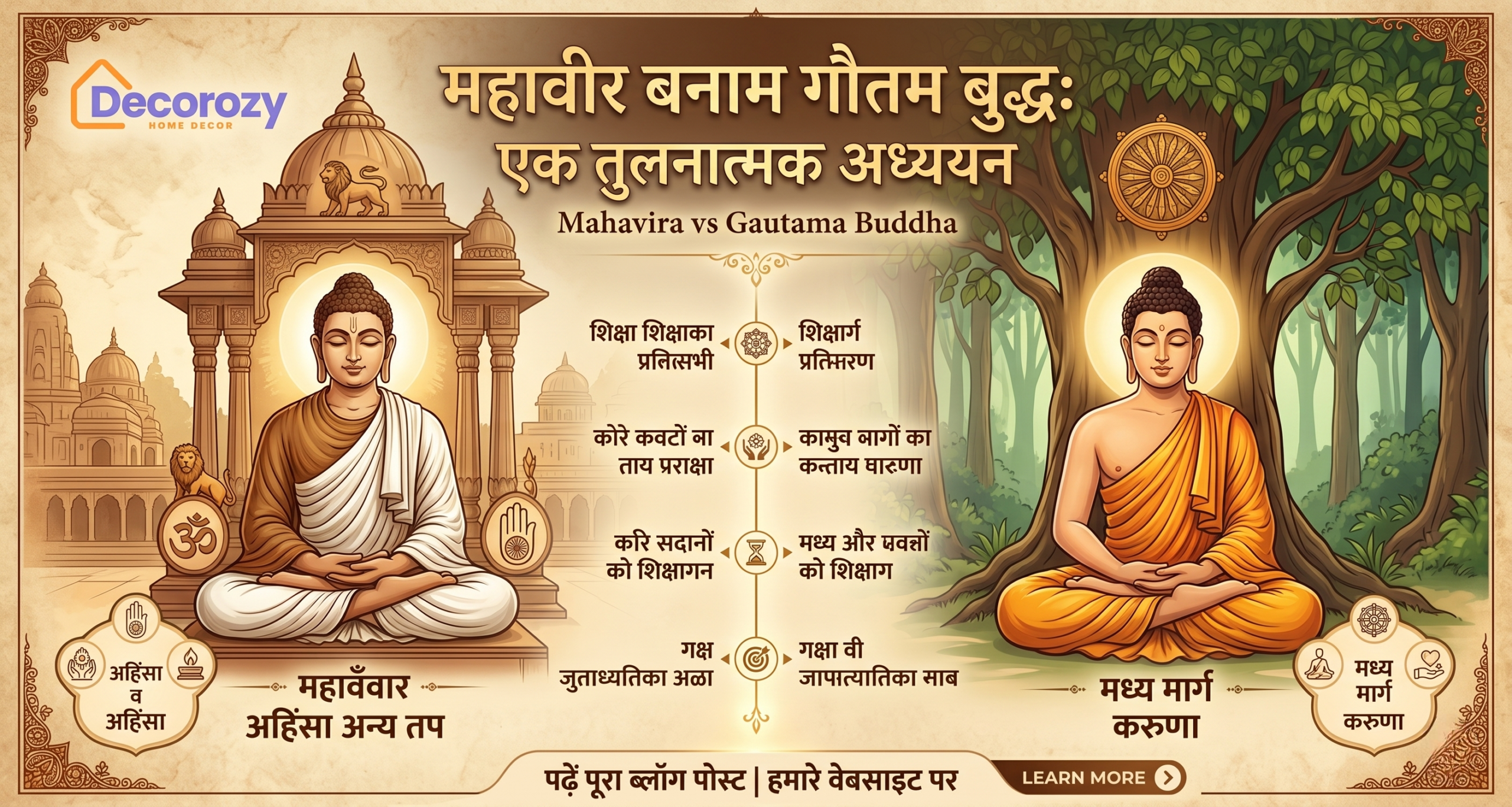
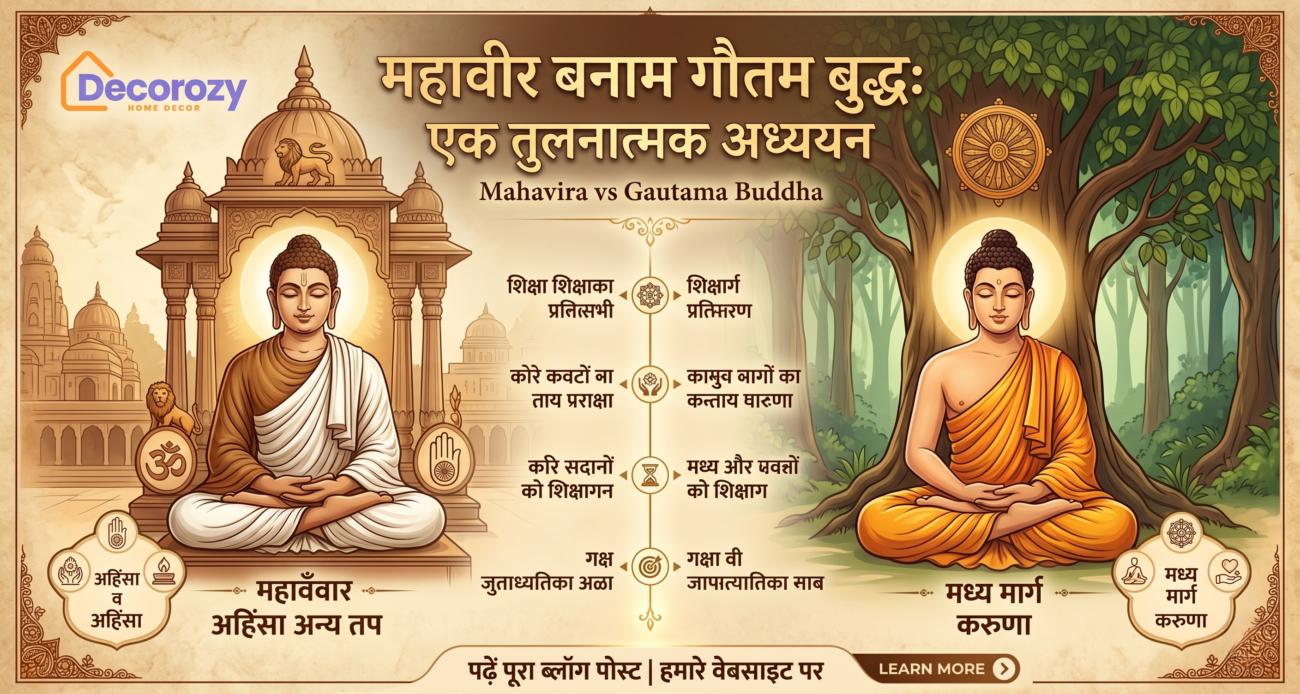
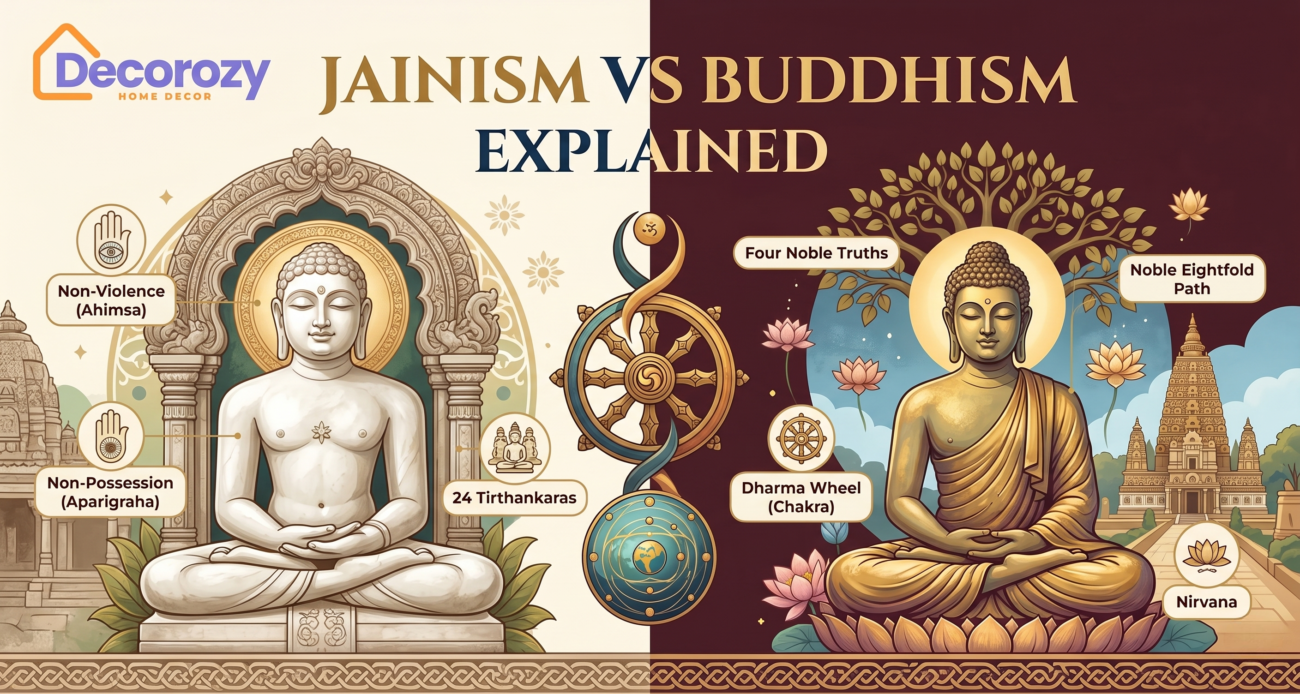
Mahavira vs Gautama Buddha: Core Philosophies
Mahavira (Jainism) -> Focus on absolute Ahimsa (non-violence), rigorous asceticism, and the belief that all things possess a soul (Jiva).
Gautama Buddha (Buddhism) -> Focus on the Four Noble Truths, the Eightfold Path, and achieving Nirvana through the balanced Middle Way.
Buddhist Balance -> Symmetrical room layouts, dedicated meditation corners, calming water features, and Decorozy Buddha statues.
Mahavira vs Gautama Buddha: A Comparative Analysis
While both teachers shared common ground in rejecting the caste system and prioritizing non-violence, their methods for achieving ultimate liberation varied significantly.
Understanding these nuances helps us appreciate the diverse ways we can approach mindfulness in our daily lives and our home environments.
Feature / Concept
Mahavira (Jainism)
Gautama Buddha (Buddhism)
Decorozy Design Translation
Path to Liberation
Extreme asceticism and severe self-discipline.
The “Middle Way” (moderation between extremes).
Mahavira: Stark minimalism. Buddha: Cozy, balanced harmony.
Concept of Soul
Every living and non-living thing has a soul (Jiva).
‘Anatta’ or non-self; no permanent, unchanging soul.
Respect for all natural materials; organic textures and earthy tones.
Karma
Physical matter that attaches to the soul through actions.
Intentional actions (mental, vocal, physical) that shape the future.
Intentional placement of decor; creating positive energy flows.
Ultimate Goal
Moksha (freedom from rebirth and karma).
Nirvana (extinguishing the flames of desire and ignorance).
Creating a home that serves as a tranquil retreat from the outside world.
Stance on Ahimsa
Absolute and extreme (e.g., sweeping paths to avoid insects).
Essential, but practical (avoiding intentional harm).
Cruelty-free fabrics, sustainable woods, and eco-friendly accents.
Designing Your Space: The Middle Path vs Absolute Minimalism
When examining Mahavira vs Gautama Buddha through the lens of interior design, we are essentially looking at two distinct approaches to minimalist living.
Mahavira’s philosophy of absolute detachment translates well to a highly modern, ultra-minimalist aesthetic where only the absolute necessities are kept.
This means clear countertops, hidden storage, unadorned walls, and a stark, clean environment that completely removes visual distractions.
Conversely, Gautama Buddha’s “Middle Way” encourages a home that is comfortable but not overly indulgent, creating a perfect blueprint for transitional and Japandi design styles.
Implementing the Buddhist “Middle Way” with Decorozy
To bring the Middle Way into your home, start by balancing the elements within your rooms to avoid both cluttered chaos and sterile emptiness.
Use Decorozy’s curated collections of soft, neutral textiles to soften hard architectural lines and create a welcoming atmosphere.
Establish a dedicated focal point in your living room or study, perhaps featuring a finely crafted Decorozy Buddha sculpture to serve as a daily reminder of peace.
Incorporate the principle of mindfulness by choosing furniture that serves a clear purpose and brings joy without overwhelming the senses.
Lighting should be layered—combining natural sunlight with soft, warm ambient lamps to cultivate a soothing evening retreat.
Embracing Jain-Inspired Absolute Minimalism
If you resonate more with Mahavira’s teachings, your approach to home decor should be rooted in strict intentionality and the absolute removal of excess.
Begin by thoroughly decluttering your space, donating items that no longer serve a functional purpose in your daily routine.
Focus heavily on the ethical sourcing of your decor; choose Decorozy’s eco-conscious, vegan leather alternatives and sustainably harvested wood pieces.
Embrace negative space—allow your walls to breathe without excessive artwork, and let the architecture of the room speak for itself.
This form of extreme aesthetic discipline fosters a home environment where the mind can achieve sharp focus and profound tranquility.
The Role of Nature and Ahimsa in Modern Decor
Both Mahavira and Gautama Buddha placed immense importance on our relationship with the natural world.
Ahimsa, or non-violence, is not just a behavioral rule; it is a mindset that dictates how we interact with our environment and the materials we bring into our homes.
Bringing the Outdoors Inside
To honor these ancient traditions, integrate biophilic design principles by introducing a variety of indoor plants, which naturally purify the air and boost your mood.
Use planters from Decorozy’s botanical collection to house your greenery, ensuring they complement the room’s overarching color palette.
Water is a powerful symbol of purity and flow in both traditions; consider adding a small, tabletop water fountain to your entry or meditation space.
The gentle sound of flowing water acts as white noise, masking the chaotic sounds of the city and grounding you in the present moment.
Ethical and Sustainable Choices
Mindful living means being aware of the lifecycle of the products you purchase.
When comparing Mahavira vs Gautama Buddha, both philosophies urge us to step lightly on the earth.
Opt for Decorozy rugs woven from natural, biodegradable fibers like jute or organic cotton, avoiding synthetic materials that harm the environment.
By making intentional, compassionate choices in our decor, we transform our homes into physical manifestations of our highest spiritual values.
A beautifully designed room is not merely about visual appeal; it is a sacred space that nurtures the soul and encourages daily reflection.
Conclusion: Transform Your Home into a Mindful Sanctuary
The historical dialogue between Mahavira vs Gautama Buddha offers much more than ancient religious history; it provides a timeless blueprint for achieving inner peace.
Whether you lean toward the disciplined minimalism inspired by Mahavira or the balanced, harmonious Middle Way taught by the Buddha, your home is the perfect canvas to express these philosophies.
By intentionally selecting decor that promotes tranquility, sustainability, and mindfulness, you elevate your living space into a true sanctuary.
Ready to bring serenity and balance into your home?
Explore our exclusive, premium collections of mindful home accessories, ethical furnishings, and calming centerpieces today.
Visit Decorozy.com and start designing your peaceful retreat now.
Frequently Asked Questions (FAQs)
Q1: What is the main difference between Mahavira and Gautama Buddha? A: While both were 6th-century BCE teachers who promoted non-violence and rejected orthodox rituals, Mahavira advocated for extreme asceticism and severe self-discipline, whereas Gautama Buddha promoted the “Middle Way” of moderation to achieve enlightenment.
Q2: Did Mahavira and Buddha ever meet? A: Although Mahavira and Gautama Buddha were contemporaries living in ancient India during the same period and shared overlapping geographic regions for their teachings, historical records do not indicate that they ever met in person.
Q3: How can I apply Buddha’s ‘Middle Way’ to interior design? A: You can apply the Middle Way by avoiding extremes in your decor—do not over-clutter, but avoid sterile emptiness. Choose comfortable, functional Decorozy furniture, balance colors and textures, and create a space that is harmonious, welcoming, and calm.
Q4: What is the concept of Ahimsa in Jainism vs Buddhism? A: Both emphasize Ahimsa (non-violence). In Jainism (Mahavira), Ahimsa is absolute and extreme, extending to microscopic life, requiring strict dietary and lifestyle practices. In Buddhism, Ahimsa focuses primarily on avoiding intentional harm to sentient beings.
Q5: How does mindful home decor improve mental health? A: Mindful decor, featuring elements like natural light, indoor plants, soothing colors, and uncluttered spaces, reduces visual stress and cortisol levels. Curating your space with Decorozy items helps create a dedicated sanctuary that promotes daily relaxation and mental clarity.