The Ultimate Guide to the Jainism vs Hinduism Difference for Your Sacred Home Space
Creating a tranquil, spiritually uplifting home is a cornerstone of modern interior design, and at Decorozy, we believe your personal space should reflect your deepest philosophies. Integrating ancient wisdom into your living environment transforms a mere house into a sanctuary of peace, balance, and aesthetic brilliance.
Understanding the profound concepts behind Eastern philosophies allows you to curate a space that resonates with intentionality. When exploring the Jainism vs Hinduism difference, interior enthusiasts can uncover unique design principles, from vibrant abundance to mindful minimalism, allowing Decorozy’s premium decorative pieces to shine in their true spiritual context.
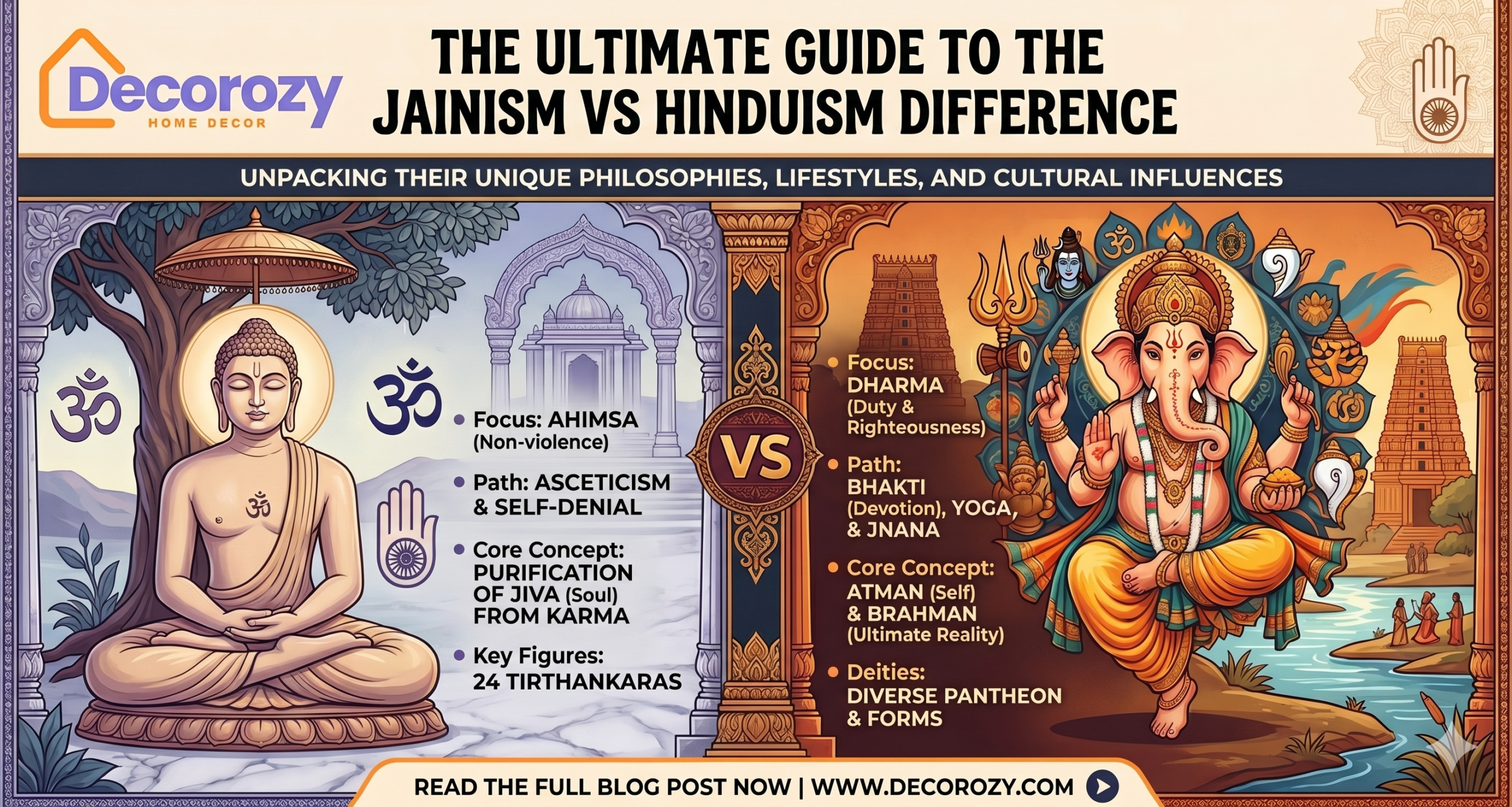
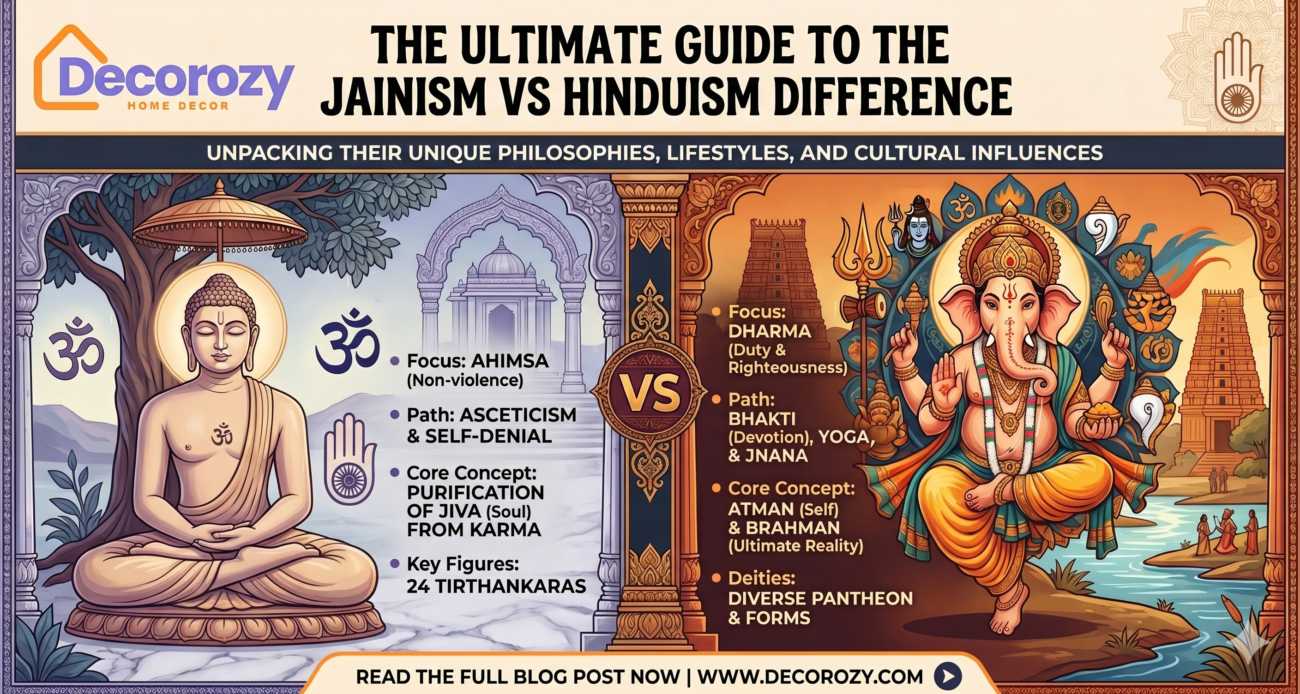
Quick Answer: The primary Jainism vs Hinduism difference lies in their core theology and approach to liberation. Hinduism centers on a creator god, Vedic rituals, and diverse deities, inspiring vibrant, ornate home spaces. Jainism rejects a creator god, emphasizing strict Ahimsa (non-violence) and asceticism, inspiring minimalist, eco-conscious, and deeply serene meditation corners.
Key Takeaways
Design Philosophy: Hinduism embraces vibrant, element-rich decor inspired by Vastu, while Jainism favors minimalist, sustainable, and purely serene aesthetics.
Material Selection: The Jain focus on Ahimsa dictates cruelty-free, eco-conscious home materials, whereas Hindu decor often utilizes a wide variety of ornate metals and organic offerings.
Focal Points: Hindu home altars feature diverse deities and dynamic energy, while Jain spaces center around Tirthankaras, promoting inward reflection and profound stillness.
Understanding the Spiritual Roots for Home Design
To truly master the art of spiritual interior styling, one must look beyond surface-level aesthetics. The foundational beliefs of ancient traditions directly inform how we organize space.
By analyzing the Jainism vs Hinduism difference, we unlock two distinct yet harmonious paths to spiritual interior design. Hinduism, deeply rooted in the Vedas, views the universe as a divine creation.
This translates to home environments that celebrate life, energy, and cosmic balance through rich textures and colors. Vibrant tapestries, ornate brass diyas, and elaborate pooja mandirs characterize this approach.
Conversely, Jainism teaches that the universe is eternal, driven by cosmic laws rather than a creator deity. The ultimate goal is the liberation of the soul through non-violence and self-control.
In home decor, this manifests as extreme mindfulness in spatial planning. Jain-inspired interiors lean heavily into minimalism, prioritizing natural light, uncluttered surfaces, and cruelty-free materials.
Every decor item selected from Decorozy can be intentionally placed to reflect either the vibrant celebration of Hindu philosophy or the serene asceticism of Jainism.
Dictates sourcing from Decorozy’s sustainable collections.
Altar Design
Elaborate Mandirs with multiple deities and offerings.
Simple elevated platforms for a single Tirthankara idol.
Influences spatial allocation in the living room.
Lighting
Bright, dynamic, multiple oil lamps (Diyas).
Soft, natural, diffused lighting, single subtle lamps.
Directs window treatments and artificial lighting.
Expert Implementation: Decorating with Hindu Principles
Vibrant Altars and Deity Idols
When designing a Hindu-inspired sacred space, the mandir is the heart of the home. This area requires a high degree of craftsmanship and attention to detail.
Decorozy recommends utilizing intricately carved wooden platforms or premium metallic accents to house your deities. The Jainism vs Hinduism difference is striking here; Hindu altars often feature a pantheon of gods like Ganesha, Shiva, or Lakshmi.
Each deity brings a specific energy, requiring diverse decorative elements like silk cloths, brass bells, and intricate rangoli designs at the base.
Vastu Shastra Integration
Hindu interior design is deeply intertwined with Vastu Shastra, the ancient Indian science of architecture. Proper directional alignment ensures the free flow of positive energy (Prana).
For instance, placing the puja room in the Northeast corner (Ishan Kund) is considered highly auspicious. Utilizing Decorozy’s reflective wall mirrors and specific color palettes can help balance the elemental forces in rooms that lack ideal Vastu alignment.
Use of Metals and Elements
The integration of the five elements is crucial. Copper vessels for water, brass diyas for fire, and earthen pots for earth are staples.
You can elevate this traditional practice with Decorozy’s premium metallic vases and intricately cast candle holders. The sensory experience is rich, blending the visual weight of metals with the softness of fresh flowers.
Expert Implementation: Decorating with Jain Principles
Ahimsa and Sustainable Materials
The Jain principle of Ahimsa (non-violence) extends far beyond diet; it profoundly impacts interior design choices. A Jain-inspired home meticulously avoids materials derived from animal cruelty.
This means opting out of leather, silk, or bone-inlay furniture. Decorozy’s exclusive line of sustainable, plant-based textiles and reclaimed wood decor perfectly aligns with this ethical mandate.
By understanding the Jainism vs Hinduism difference, you can appreciate why Jain spaces prioritize ethical sourcing over sheer opulence, creating a home that is as guilt-free as it is beautiful.
Minimalist Meditation Corners
Jain philosophy encourages deep introspection and detachment from material excess. Therefore, Jain-inspired interiors are masterclasses in minimalism.
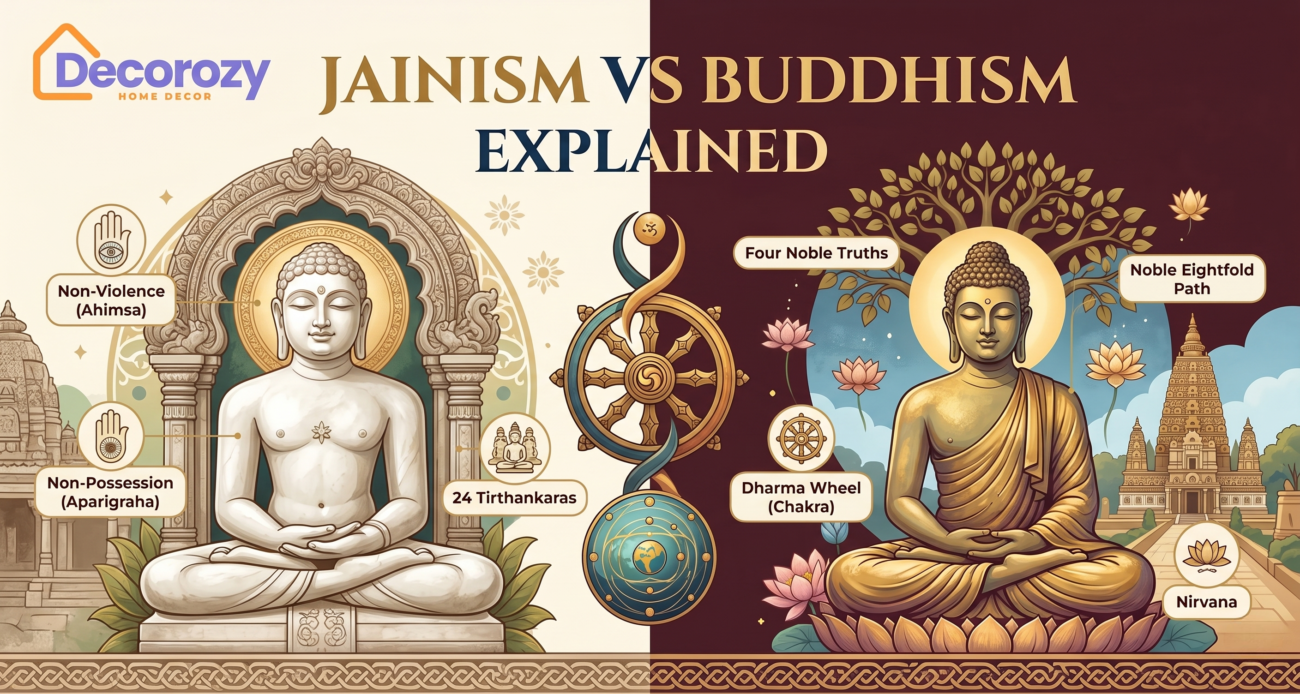
Instead of a grand, multi-tiered mandir, you might find a simple, elegantly carved marble slab hosting a serene idol of Mahavira. The surrounding space remains intentionally bare to prevent mental distraction.
Decorozy’s minimalist floor cushions and unadorned stone planters serve as ideal accompaniments for these quiet zones of reflection.
Subtle Symbolism and Geometry
While Hindu decor uses dynamic imagery, Jain decor often relies on precise geometric symbolism. The Jain Swastika, representing the four states of existence, or the open palm representing Ahimsa, are utilized subtly.
These symbols can be integrated through minimalist wall art or delicately etched glass pieces from Decorozy. The color palette remains neutral—whites, soft creams, and muted earthy tones—to reflect purity and detachment.
Bridging the Divide in Modern Interiors
Creating a Unified Zen Space
Modern homeowners often seek to blend these philosophies to create a personalized sanctuary. You can honor the Jainism vs Hinduism difference while harmonizing their best elements.
Start with a foundation of Jain minimalism—decluttered spaces, sustainable Decorozy furniture, and neutral tones. Then, introduce strategic focal points of Hindu vibrancy.
A single, beautifully ornate brass Ganesha placed on a stark, reclaimed-wood console table creates a stunning visual contrast that respects both traditions.
Lighting and Ambiance
Lighting bridges the gap between these two interior styles. While Hindu rituals use bright, active fire, and Jainism prefers soft, natural illumination, modern lighting design can accommodate both.
Install dimmable warm LED fixtures hidden behind Decorozy’s architectural wall panels. This allows you to shift the room’s energy from a brightly lit, festive Hindu celebration space to a softly glowing, meditative Jain retreat with the turn of a dial.
Ultimately, whether you lean towards the exuberant energy of Hindu design or the disciplined peace of Jain aesthetics, Decorozy provides the premium artifacts needed to bring your spiritual vision to life.
Explore our exclusive collections at Decorozy.com today to discover ethically sourced, masterfully crafted decor that transforms your home into a true sanctuary. Elevate your interior narrative with pieces that speak to your soul.
Frequently Asked Questions (FAQs)
Q1: What is the main Jainism vs Hinduism difference in home decor? A: The main difference is aesthetic volume. Hinduism favors vibrant, sensory-rich spaces with ornate altars honoring diverse deities, while Jainism favors strict minimalism, eco-conscious materials, and uncluttered meditation corners focusing on internal peace.
Q2: Can I mix Jain and Hindu decor styles in my living room? A: Absolutely. You can combine the clean, sustainable, minimalist foundational furniture inspired by Jainism with a few vibrant, ornate focal pieces like a traditional Hindu brass idol from Decorozy for a balanced aesthetic.
Q3: Does Decorozy offer Ahimsa-compliant home products? A: Yes, Decorozy offers a premium selection of Ahimsa-compliant decor, including vegan leather accents, cruelty-free textiles, and sustainably harvested wood furniture ideal for ethical, Jain-inspired homes.
Q4: How does Vastu differ between Jain and Hindu homes? A: While both cultures respect spatial energies, Hindu homes often strictly adhere to Vastu Shastra for architectural alignment and elemental balance. Jain homes prioritize the principle of non-violence (Ahimsa) in material selection as their highest spatial rule.
Q5: What is the best color palette for a Jain-inspired meditation room? A: A Jain-inspired meditation space thrives on purity and detachment. Stick to a neutral palette of bright whites, soft creams, and muted earthy tones using Decorozy’s minimalist wall coverings and organic cushions.