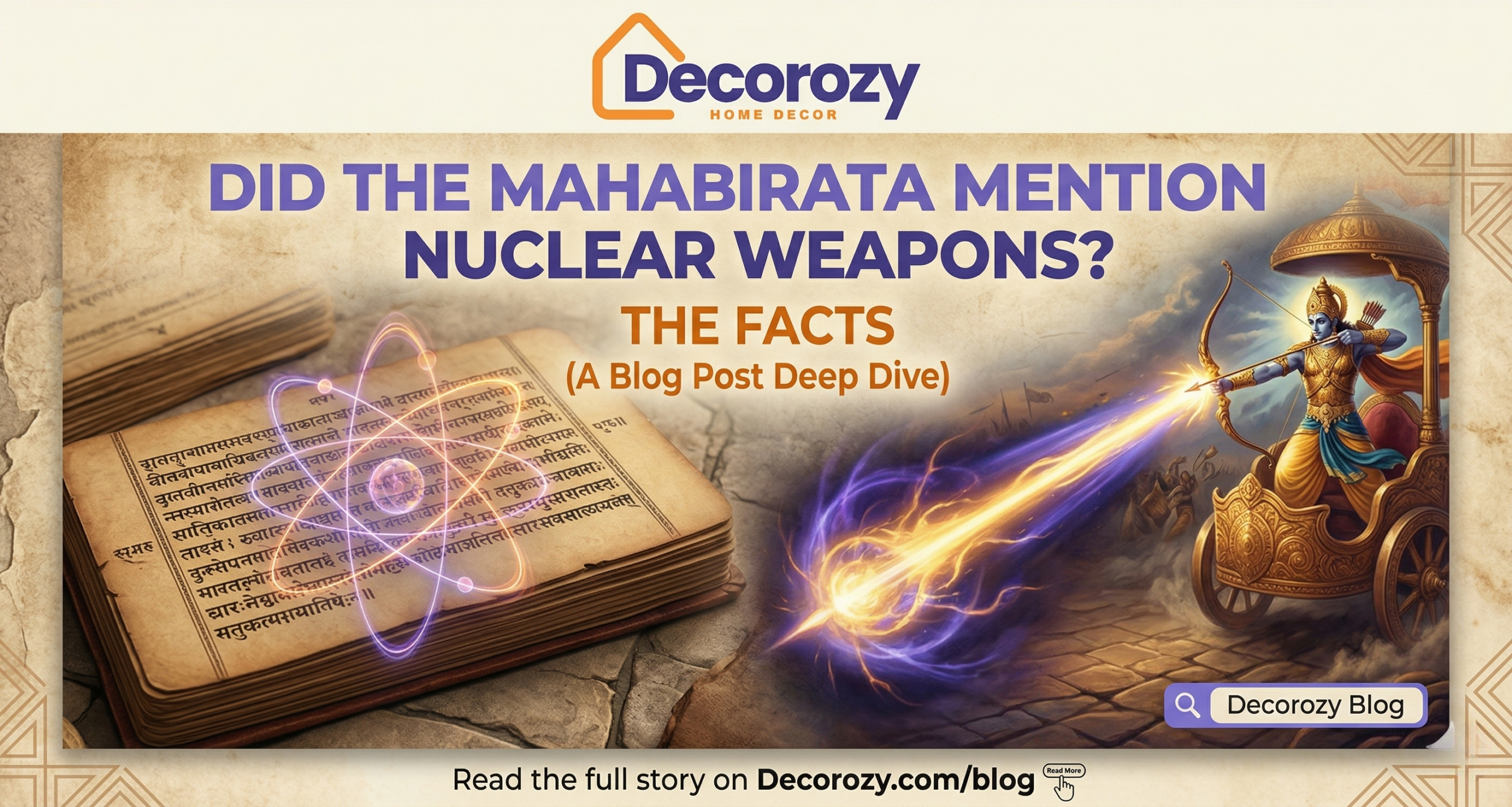
The internet is filled with fascinating theories regarding ancient advanced technology. Many history enthusiasts and readers often ask, did the Mahabharata mention nuclear weapons?
This ancient Indian epic is renowned for its profound philosophy, complex characters, and massive, world-altering battles. However, separating historical reality from mythological fiction is crucial when analyzing ancient texts.
Quick Answer: No, the Mahabharata does not mention literal nuclear weapons. The epic describes mythological, divinely invoked weapons like the Brahmastra. While modern theorists compare these poetic, highly exaggerated descriptions to atomic blasts, historians and archaeologists universally agree they represent mythological allegory, not historical advanced technology.
Why Do People Think the Mahabharata Mention Nuclear Weapons?
The theory that ancient Indians possessed atomic technology stems from specific verses in the epic. The texts describe divine weapons of mass destruction, most notably the Brahmastra and the Brahmashirsha astra.
These mythological weapons are described as possessing the radiance of “ten thousand suns” rising at once. The aftermath of their use includes poisoned food, barren land, and soldiers’ hair and nails falling out.
To a modern reader, these vivid, apocalyptic descriptions sound remarkably similar to the effects of radiation poisoning and a nuclear fallout. This coincidence has heavily fueled the ancient astronaut and ancient nuclear war hypotheses.
Historical Facts: Did the Mahabharata Mention Nuclear Weapons?
Despite the compelling poetic imagery, from a historical and scientific perspective, did the Mahabharata mention nuclear weapons? The definitive answer is no.
Historians, Sanskrit scholars, and archaeologists attribute these passages to hyperbole and religious allegory. Ancient poets frequently used exaggerated metaphors to emphasize the immense, divine power of the gods and their chosen warriors.
Furthermore, there is absolutely no archaeological evidence of ancient nuclear warfare in the Indian subcontinent. Soil samples, ancient ruins, and geological records show no trace of weapons-grade radioactive isotopes or vitrified sand from that era.
The Oppenheimer Connection and Ancient Lore
The modern association between the Mahabharata and atomic warfare was heavily cemented by J. Robert Oppenheimer. As the father of the atomic bomb, Oppenheimer famously quoted the Bhagavad Gita (a section of the Mahabharata).
Upon witnessing the first nuclear test in 1945, he recalled the line: “Now I am become Death, the destroyer of worlds.” This profound philosophical connection bridged the gap between ancient philosophy and modern physics in the public consciousness.
While the Mahabharata offers incredible literary and philosophical depth, its weapons remain firmly in the realm of myth. Exploring these ancient texts provides insight into the human imagination, rather than lost technological blueprints.
For more deep dives into history, culture, and elevating your everyday living spaces, explore our latest guides on Decorozy.com!
FAQ Schema
- Question 1: What is the Brahmastra in the Mahabharata?
- Answer: The Brahmastra is a powerful, mythological weapon described in ancient Indian epics. It is said to be created by the god Brahma and possesses catastrophic, world-destroying power, but it is a supernatural concept rather than a historical device.
- Question 2: Did J. Robert Oppenheimer quote the Mahabharata?
- Answer: Yes, J. Robert Oppenheimer famously quoted the Bhagavad Gita, a 700-verse scripture that is part of the Mahabharata epic. After the Trinity nuclear test, he recalled the verse, “Now I am become Death, the destroyer of worlds.”
- Question 3: Is there archaeological proof of ancient nuclear war in India?
- Answer: No, there is no archaeological, geological, or historical evidence to support the theory of ancient nuclear warfare in India or anywhere else in the world. Modern scientific analysis of ancient ruins reveals no trace of radioactive fallout.