
Blog

How Old is the Yajurveda? A Historical Timeline
Welcome to Decorozy’s authoritative deep dive into ancient historical scriptures. If you are researching Indian antiquity, you will eventually need to pinpoint the exact age of various Vedic texts. In this guide, we will explore exactly how old is the Yajurveda and its historical context.
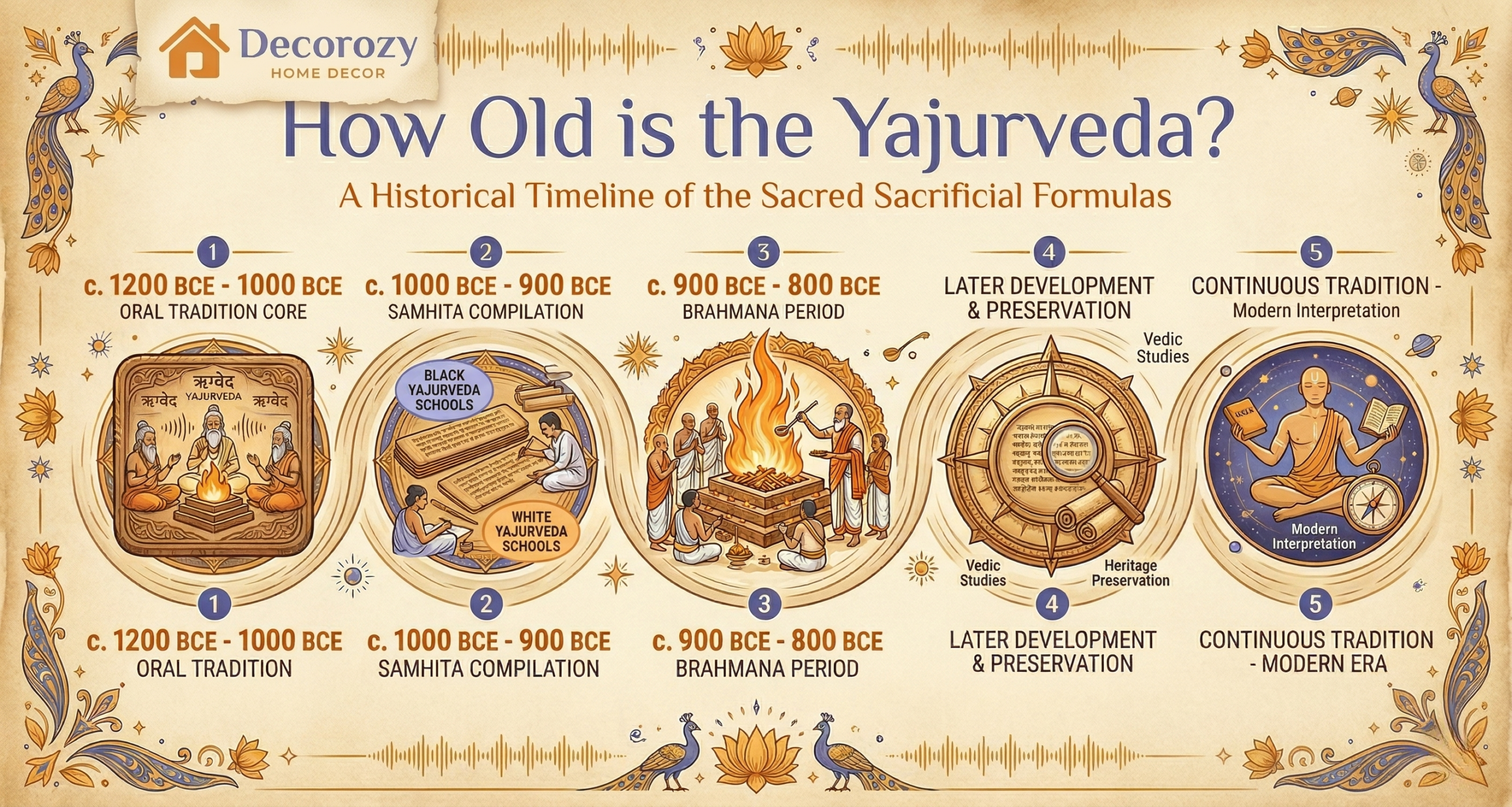
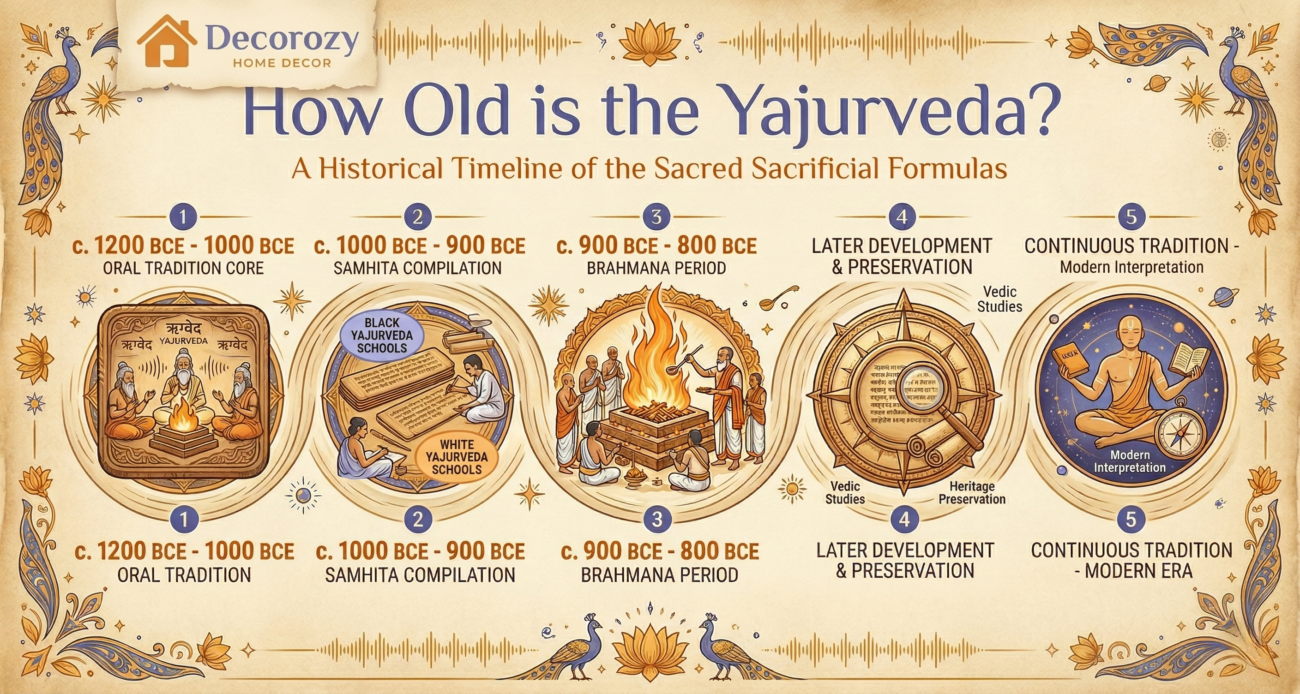
Quick Answer: The Yajurveda is estimated to be between 2,800 and 3,200 years old. Academic scholars date its core composition to the early Iron Age in ancient India, specifically occurring between 1200 BCE and 800 BCE, immediately following the older Rigveda.
Understanding How Old is the Yajurveda Historically
Determining the precise age of ancient manuscripts requires rigorous linguistic and historical analysis. Researchers rely heavily on philological evidence to establish accurate chronological timelines for these vital texts.
When analyzing how old is the Yajurveda, we must examine the ancient Kuru Kingdom. This specific region in northern India served as the primary center for the scripture’s early compilation and ritualistic development.
Leading Indologists globally agree the text originated between 1200 BCE and 800 BCE. This reliable dating places its creation and codification firmly within the early Iron Age of the Indian subcontinent.
Why Knowing How Old is the Yajurveda Matters for Historians
Establishing a firm historical timeline gives experts unparalleled insight into ancient societal structures. It effectively maps the early evolution of religious rituals, civic duties, and cultural practices in the region.
Dating the text accurately also helps archaeologists trace the migration and settlement patterns of Indo-Aryan communities. It provides a foundational, data-driven anchor for broader South Asian historical studies.
Furthermore, it clarifies the distinct linguistic transition from early Vedic Sanskrit to classical forms. This evolutionary map is critical for linguists studying the broader Indo-European language family tree.
Detailed Analysis: Dating the Vedic Texts
Unlike physical archaeological artifacts, oral traditions cannot be carbon-dated through conventional scientific methods. Scholars must instead use comparative linguistics and cultural references hidden within the verses.
The text prominently mentions certain metals, specialized societal roles, and new geographical locations not found in the older Rigveda. These distinct literary markers clearly indicate a later chronological period of composition.
By cross-referencing these internal clues with regional archaeological findings, such as Painted Grey Ware, experts finalize their estimates. This multidisciplinary approach confidently confirms the 1200 to 800 BCE developmental timeframe.
Understanding the historical dating of ancient texts provides a fascinating window into early human civilization. For more expert historical analyses, SEO insights, and high-ranking content guides, stay tuned to Decorozy.com!
FAQ Schema
- Question 1: What is the Yajurveda?
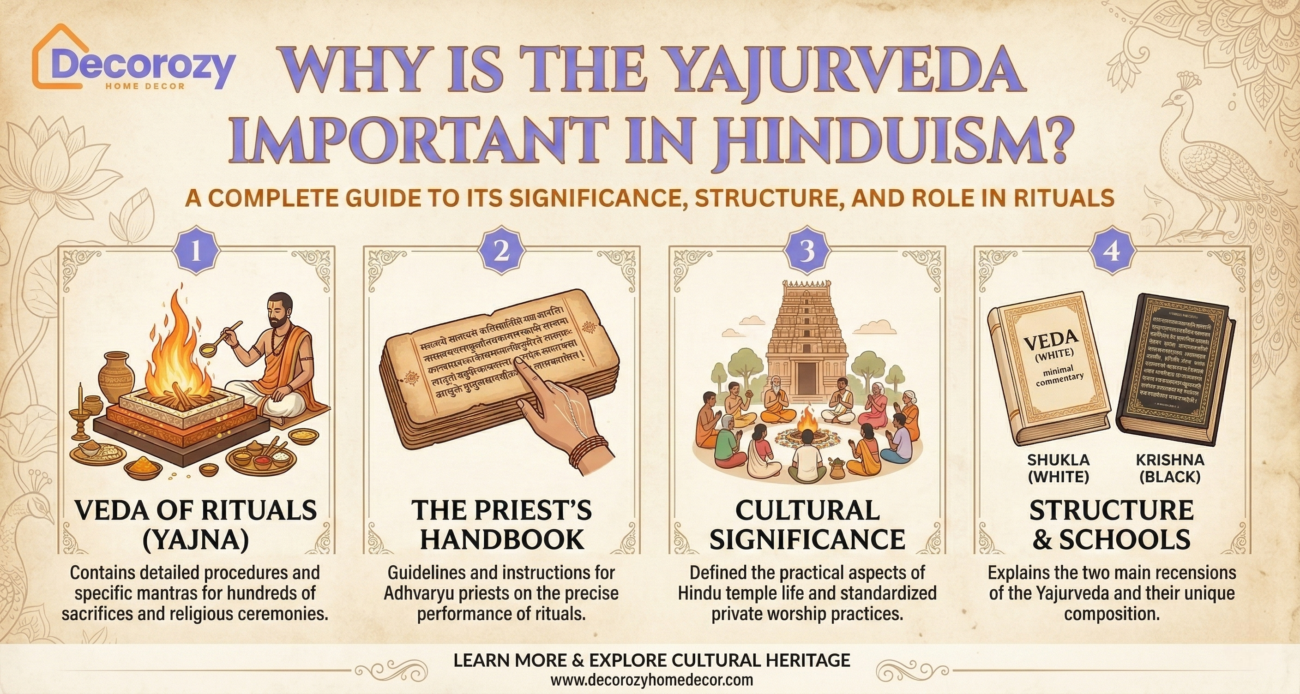
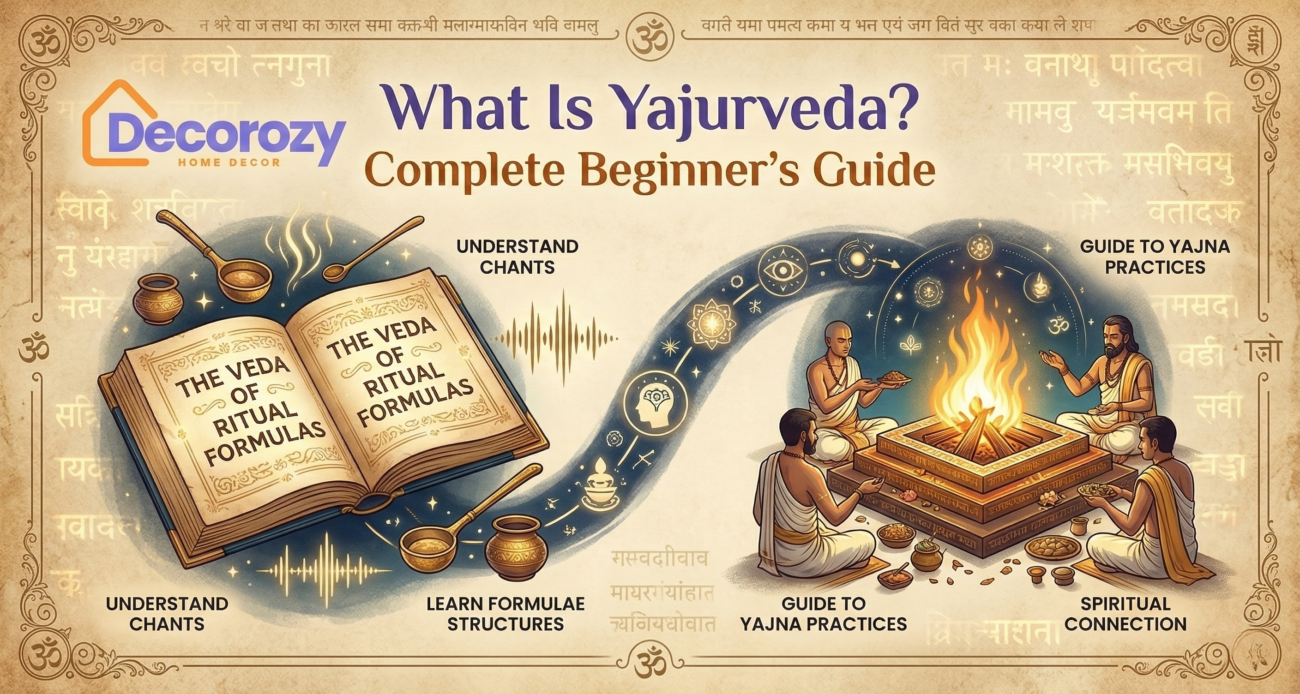
- Answer: The Yajurveda is an ancient Indian scripture and one of the four primary Vedas. It contains a comprehensive compilation of ritual offering formulas, mantras, and guidelines for religious ceremonies.
- Question 2: Is the Yajurveda older than the Rigveda?
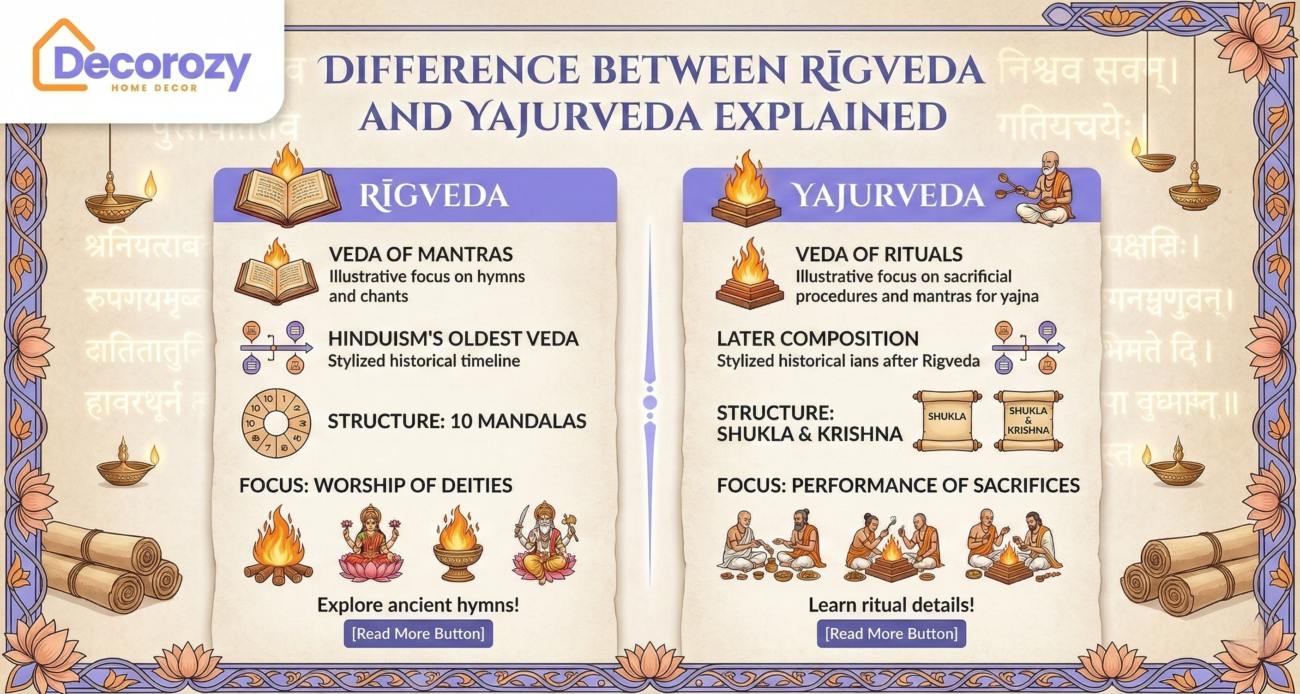
- Answer: No, the Rigveda is significantly older. The Rigveda was composed roughly between 1500 BCE and 1200 BCE, while the Yajurveda was composed later, between 1200 BCE and 800 BCE.
- Question 3: Who wrote the Yajurveda?
- Answer: Like all major Vedic texts, the Yajurveda does not have a single known author. It was compiled over centuries by ancient sages, originally passed down through a strict oral tradition.
Categories
- Astrology & Spirituality
- Budget Home Decor
- Divine Mysteries
- Divine Symbols Meaning
- DIY Home Decor
- Fact
- Festival
- Festival Decoration Ideas
- Ganesha Idols
- Gifting Ideas
- Handicrafts of India
- Hidden Truths & Mysteries
- Hinduism Guide
- Home Decor Ideas
- Home Vastu
- Important personality
- Indian Culture & Traditions
- Interior Design
- Mantras
- Mythological Tales
- Religious Practices
- Spiritual Books
- Spiritual Home Decor
- Spiritual Journey
- Spiritual Life Lessons
- Uncategorized