Ancient Indian literature holds profound mysteries that continue to captivate scholars and spiritual seekers alike. Among these profound texts are the four Vedas, which form the bedrock of Hindu philosophy and ritualistic practices.
If you are a student of history or spirituality, you might find yourself asking: who wrote the Yajurveda explained simply? The answer is far more fascinating than pointing to a single historical author, as it bridges the gap between divine revelation and human compilation.
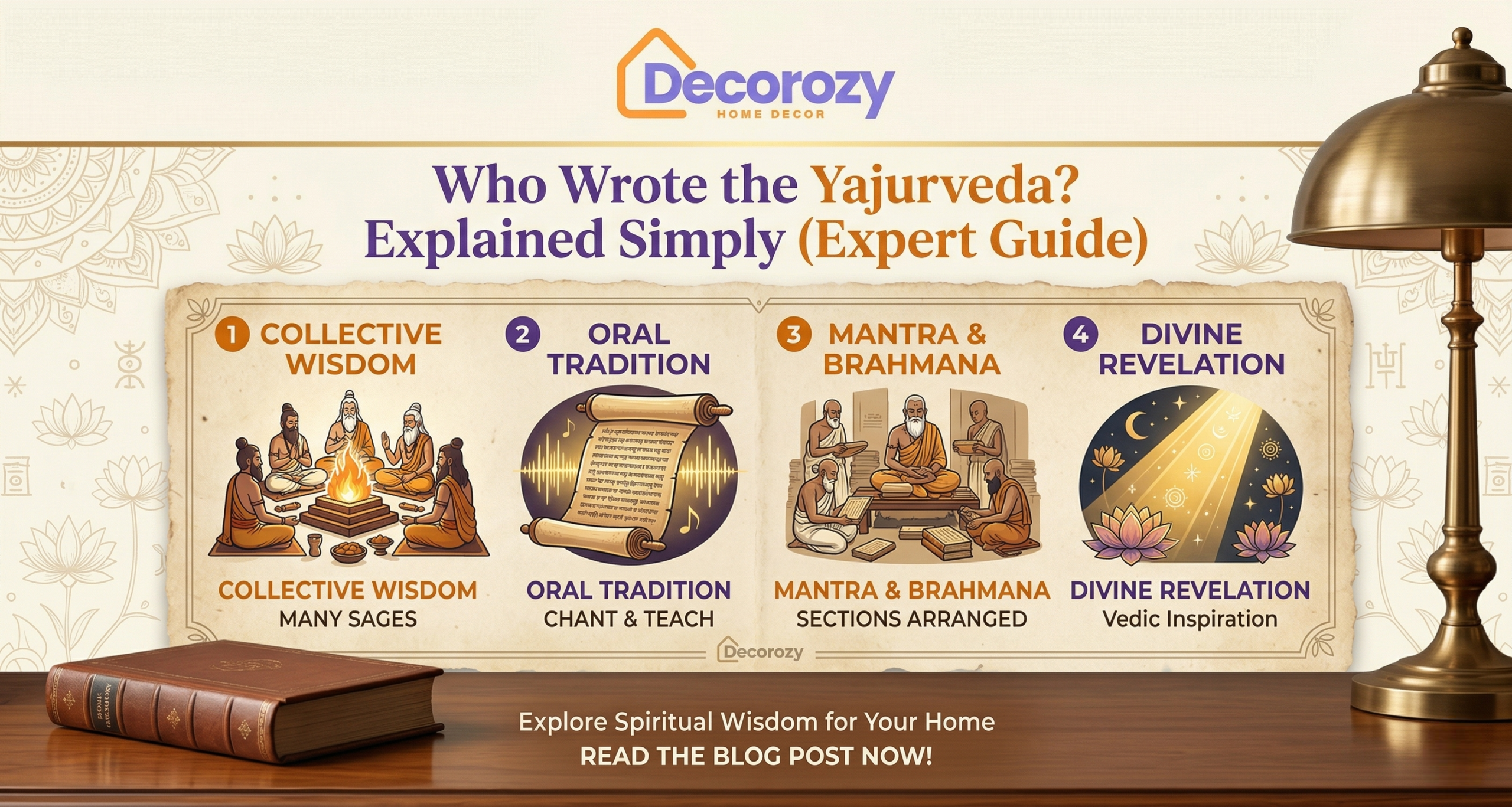
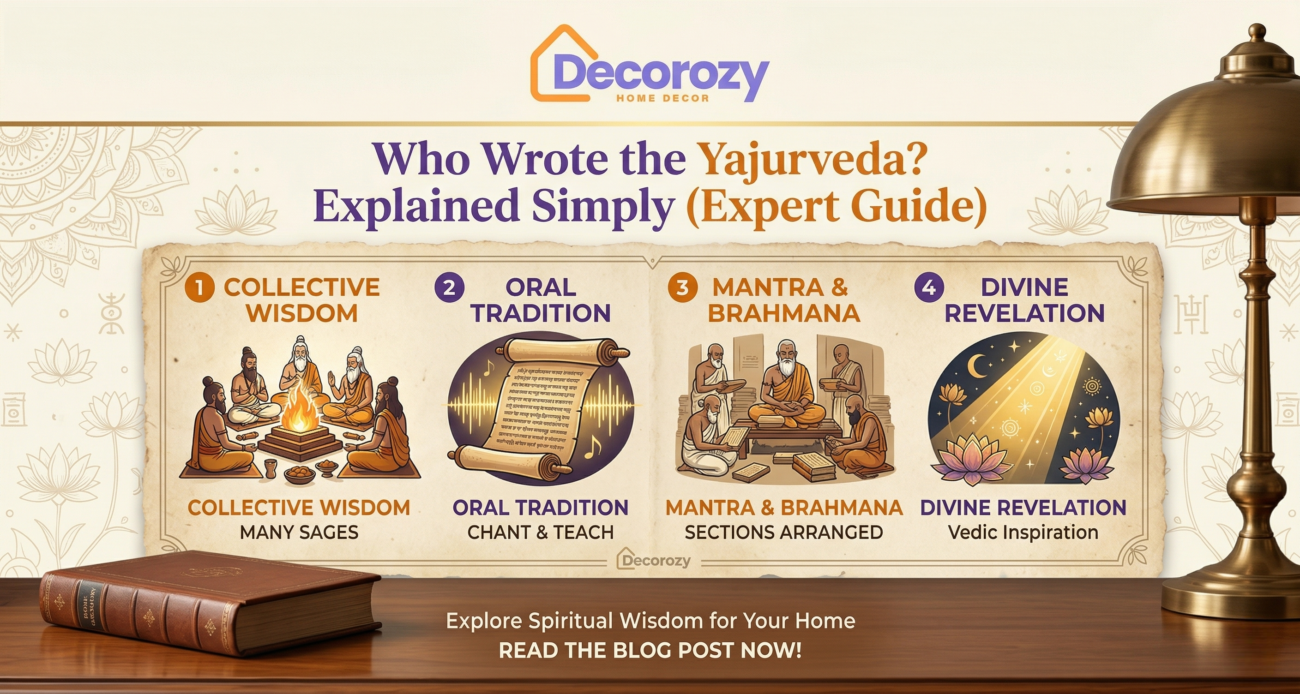
Quick Answer: The Yajurveda does not have a single human author. In Hindu tradition, it is considered Apaurusheya (authorless and divine). The sacred mantras were “heard” by ancient sages (Rishis) in deep meditation. Later, Sage Veda Vyasa compiled and organized these cosmic sounds into the text we know today.
The Divine Origins: Who Wrote the Yajurveda Explained Simply
To truly understand who wrote the Yajurveda explained simply, we must first look at the concept of Shruti. In Sanskrit, Shruti translates to “that which is heard.”
According to ancient Vedic traditions, the Vedas were not composed by human intellect. Instead, they are eternal cosmic vibrations that have existed since the dawn of time.
Highly evolved spiritual masters, known as Rishis or seers, tapped into these frequencies during states of deep meditation. Therefore, these sages are considered the “seers” or discoverers of the mantras, rather than the actual writers or authors.
The Role of Sage Vyasa: Compiling the Sacred Texts
While the ancient sages received the knowledge, the vast ocean of Vedic wisdom needed organization for future generations. This brings us to the most critical human figure in the history of the Vedas.
Sage Krishna Dwaipayana, universally revered as Veda Vyasa, is the master compiler. He realized that human memory and capacity were declining as ages passed.
To preserve the knowledge, Veda Vyasa categorized the singular body of Vedic hymns into four distinct collections. He compiled the Rigveda, Samaveda, Atharvaveda, and the Yajurveda, assigning his disciples to preserve each specific branch.
Exploring the Two Branches: Shukla and Krishna Yajurveda
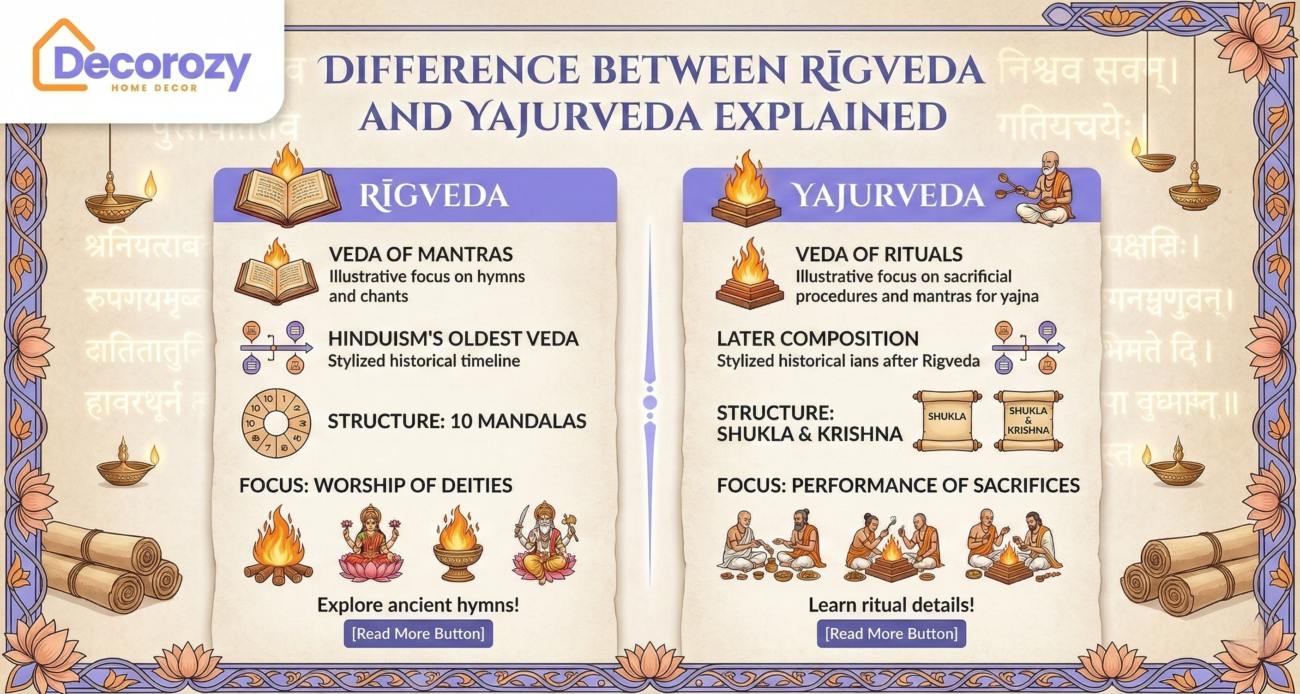
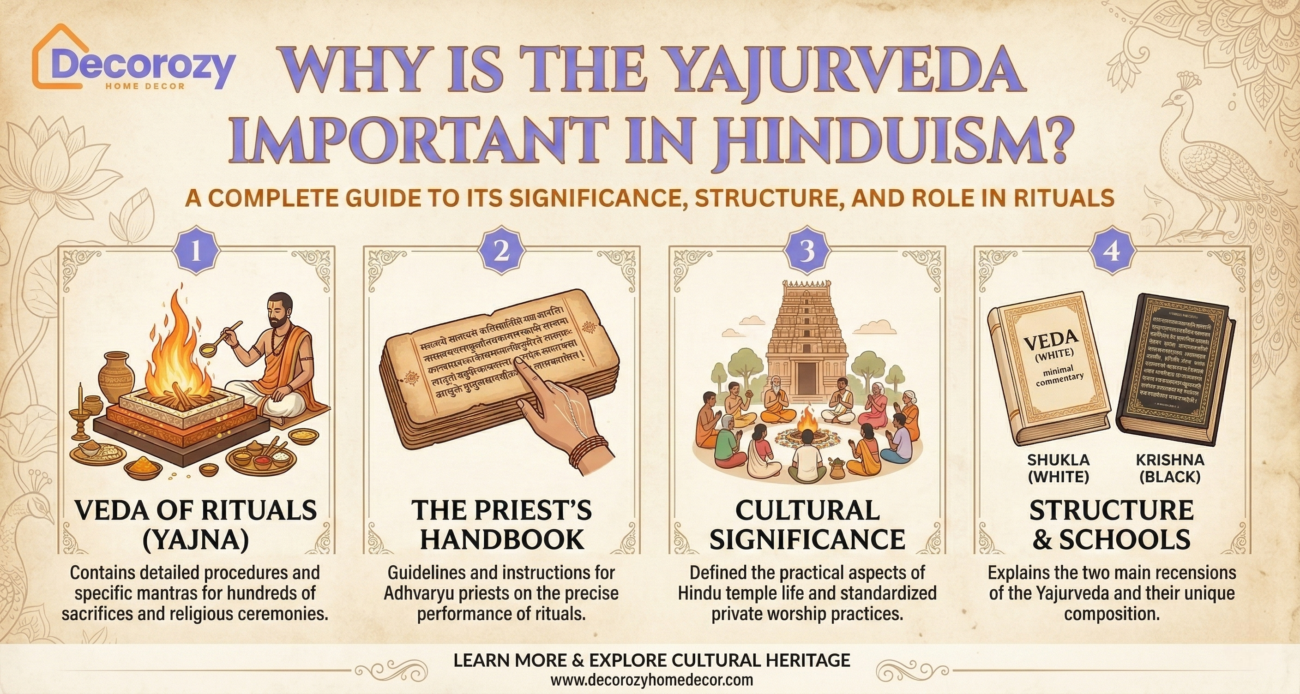
The Yajurveda itself is unique because it is primarily a guidebook for Vedic priests executing ceremonial sacrifices. It is beautifully divided into two primary branches: the Shukla (White) Yajurveda and the Krishna (Black) Yajurveda.
The Krishna Yajurveda represents an older layer of the text where the prose explanations and the poetic mantras are woven together. This branch was primarily preserved and taught by the great Sage Vaishampayana.
Conversely, the Shukla Yajurveda separates the explanatory prose from the main mantras. Tradition states that Sage Yajnavalkya received this clearer, “white” version directly from the Sun God, Surya, making it a distinct and revered lineage.
Understanding these ancient texts enriches our appreciation for history, culture, and human spirituality. Whether you are exploring ancient wisdom or seeking to create a mindful environment in your home, preserving this knowledge is essential. Dive deeper into the art of living beautifully and thoughtfully by exploring more expert articles on Decorozy.com today!
FAQ Schema
- Question 1: Who is the main author of the Yajurveda?
- Answer: The Yajurveda does not have a single human author. It is considered divine knowledge that was revealed to ancient sages and subsequently compiled and organized by Sage Veda Vyasa.
- Question 2: What is the primary purpose of the Yajurveda?
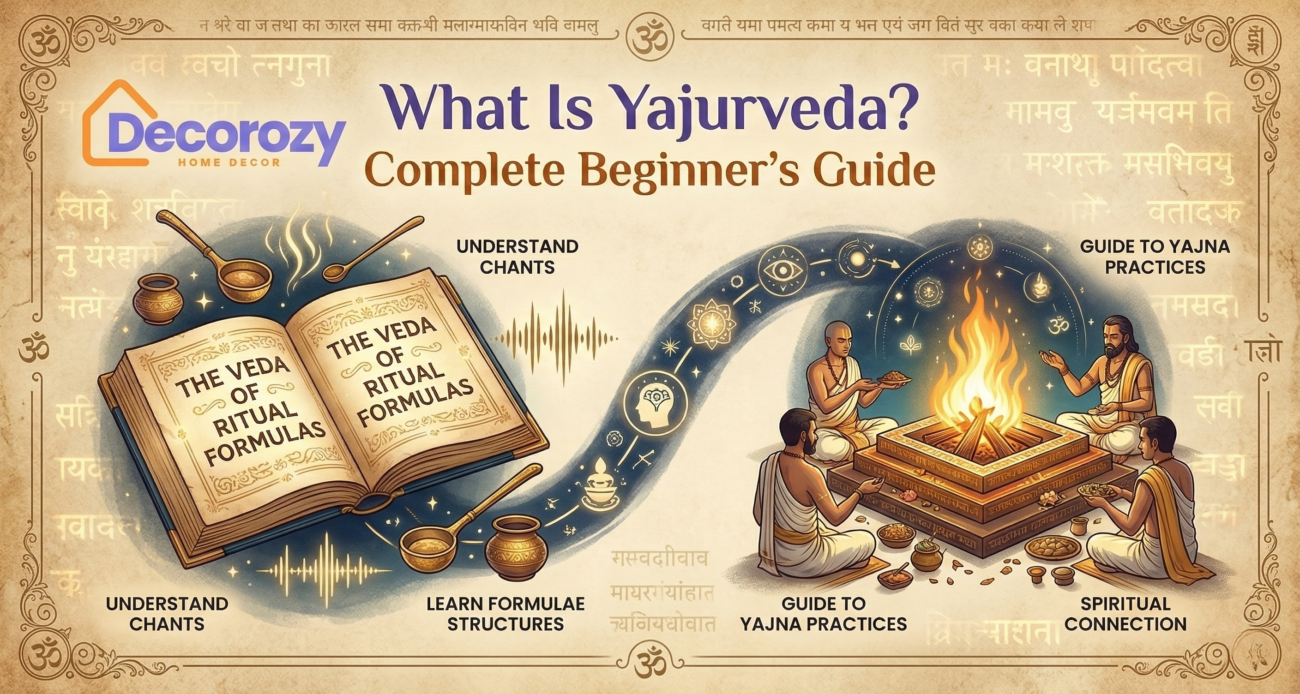
- Answer: The Yajurveda serves as a detailed guidebook for ancient Vedic priests. It contains essential prose mantras, ritualistic formulas, and precise instructions required for performing sacred fire sacrifices.
- Question 3: What is the difference between Shukla and Krishna Yajurveda?
- Answer: The Krishna (Black) Yajurveda mixes sacrificial mantras with explanatory prose in a less organized manner. The Shukla (White) Yajurveda, revealed to Sage Yajnavalkya, clearly separates the sacred mantras from the explanatory text.