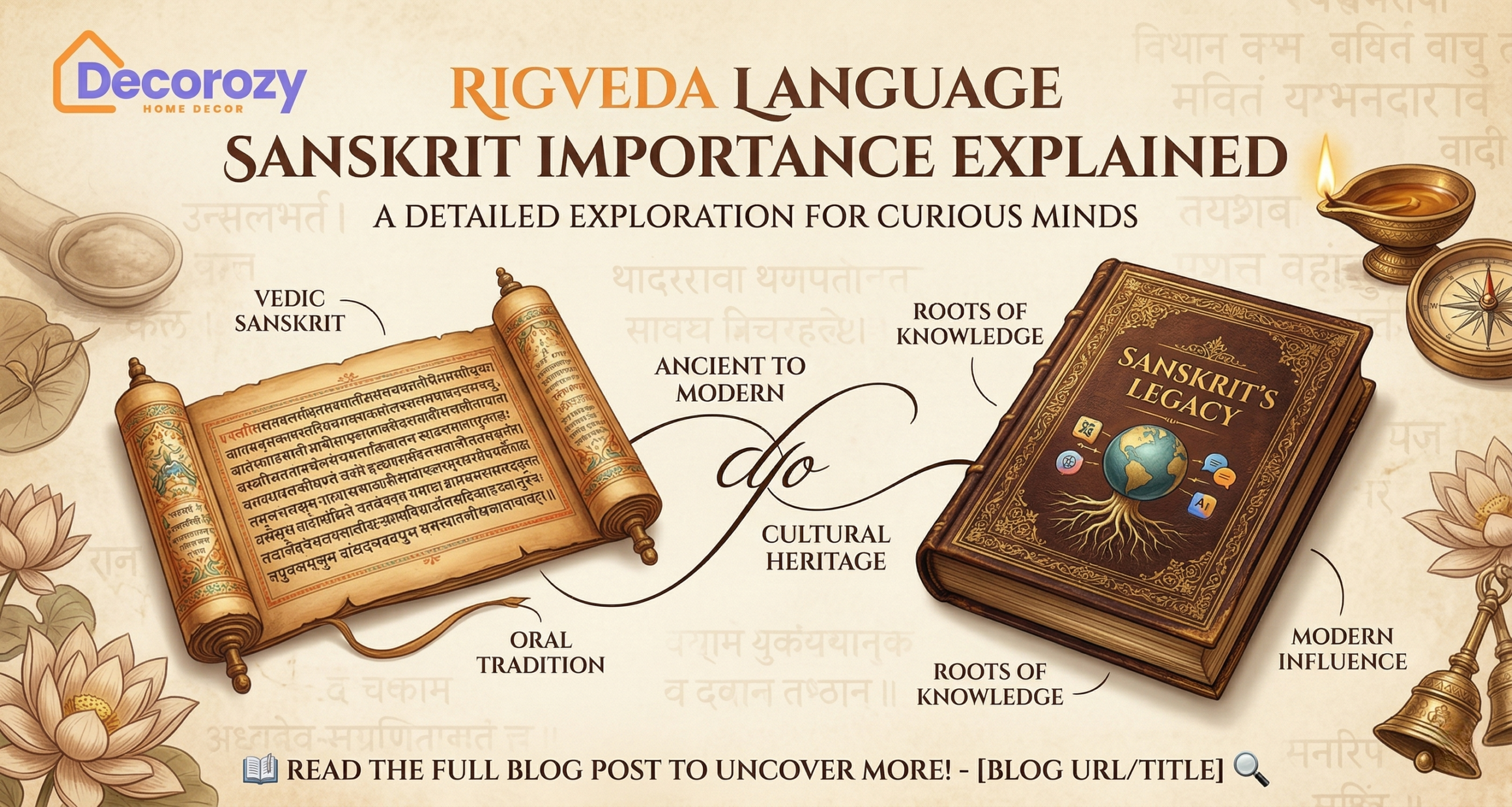
Delving into ancient linguistic history reveals the profound connection between early human civilization and the spoken word. Understanding the exact rigveda language and sanskrit importance is essential for uncovering the intricate roots of Indo-European languages and early historical timelines.
Quick Answer: The Rigveda was composed in Vedic Sanskrit, an ancient Indo-Aryan language. Understanding the rigveda language and sanskrit importance is crucial because it forms the foundational root of many modern languages, preserves millennia of cultural history, and provides unparalleled insights into ancient linguistic evolution.
The Origins of the Rigveda Language and Sanskrit Importance
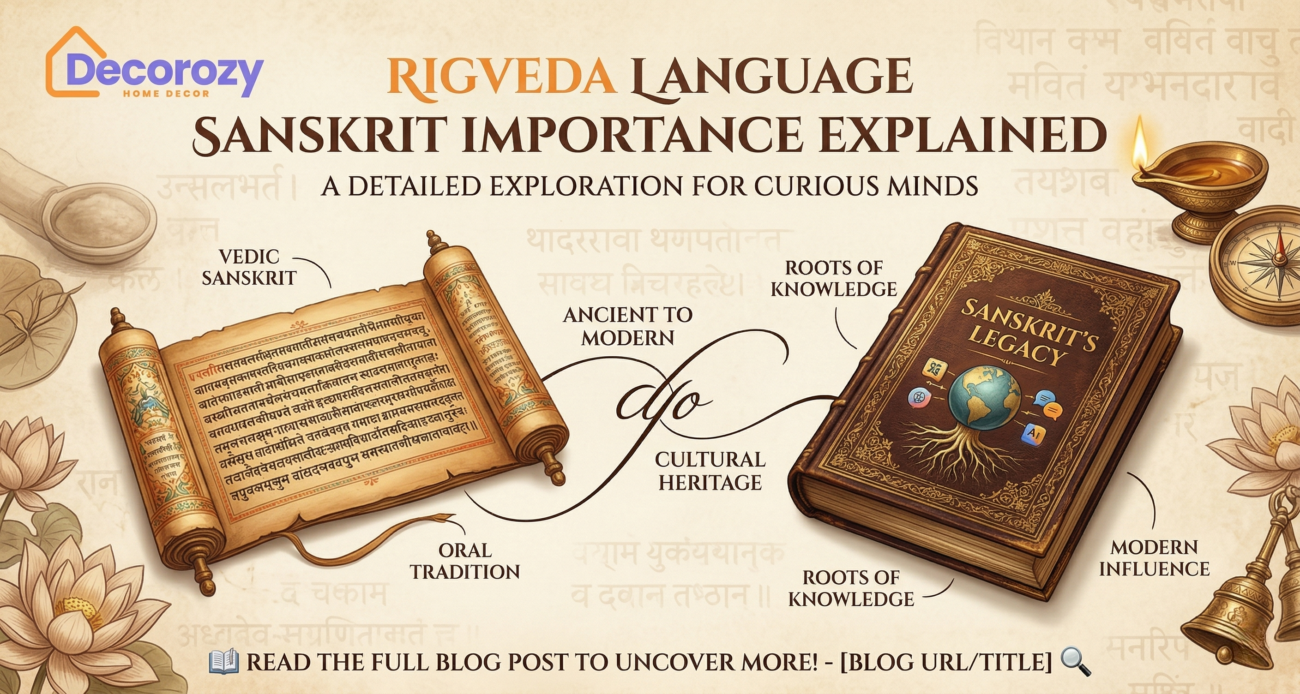
The Rigveda stands as one of the oldest known religious texts, written in an archaic linguistic form known as Vedic Sanskrit. This highly complex language significantly predates the Classical Sanskrit utilized in later historical periods.
Exploring the rigveda language and sanskrit importance reveals how ancient oral traditions preserved incredibly complex phonetic structures. Elite scholars and priests memorized thousands of verses with rigorous, unyielding precision.
This meticulous oral preservation allowed Vedic Sanskrit to remain largely intact over millennia. Today, it serves as a vital historical bridge for modern linguistic scholars tracing the exact origins of Indo-European linguistic roots.
Cultural Impact: Rigveda Language and Sanskrit Importance
Grasping the rigveda language and sanskrit importance unlocks direct access to rich philosophical, scientific, and mathematical concepts. These sacred texts hold the foundational knowledge of early human civilization and ancient Indian societal structures.
Classical Sanskrit eventually evolved directly from these ancient Vedic roots. This evolution was heavily guided by the strict, mathematical grammatical rules laid out by ancient scholars like Panini, which standardized the language permanently.
Today, Sanskrit remains a definitive cornerstone for religious rituals, historical research, and linguistic study. Its enduring legacy continuously influences classical literature, regional dialects, and spiritual practices globally.
Linguistic Evolution from Vedic to Classical Forms
The transition from early Vedic to standardized Classical Sanskrit marks a critical shift in global linguistic history. Vocabulary expanded significantly, while grammatical structures became highly systematized, rigid, and formulaic.
Analyzing this specific shift highlights exactly why modern researchers prioritize these ancient texts. The absolute grammatical precision of Sanskrit makes it a uniquely perfect subject for both historical linguistics and modern computational syntax studies.
Decoding the exact linguistic patterns hidden within the Rigveda provides a clear window into early human history. It maps the migration, trade, and cultural exchanges of ancient Indo-Aryan communities across the broader subcontinent.
The study of ancient languages offers significantly more than just historical context; it intimately connects us to our shared, global intellectual heritage. Are you fascinated by how ancient history shapes our modern world? Explore more deep dives into cultural history and sophisticated aesthetic concepts at Decorozy.com today!
FAQ Schema
- Question 1: What is the main language of the Rigveda?
- Answer: The Rigveda is written entirely in Vedic Sanskrit. This is an ancient, highly archaic form of the language that predates the classical version formalized by later grammarians.
- Question 2: Why is Sanskrit considered so important to history?
- Answer: Sanskrit is vital because it is a foundational Indo-European language. It preserves ancient philosophy, literature, and science, while heavily influencing the vocabulary and grammar of many modern global languages.
- Question 3: Is Vedic Sanskrit fundamentally different from Classical Sanskrit?
- Answer: Yes, Vedic Sanskrit is the older, less rigid form used in early scriptures, featuring distinct vocabulary and pitch accents. Classical Sanskrit is the refined version governed by strict grammatical rules.