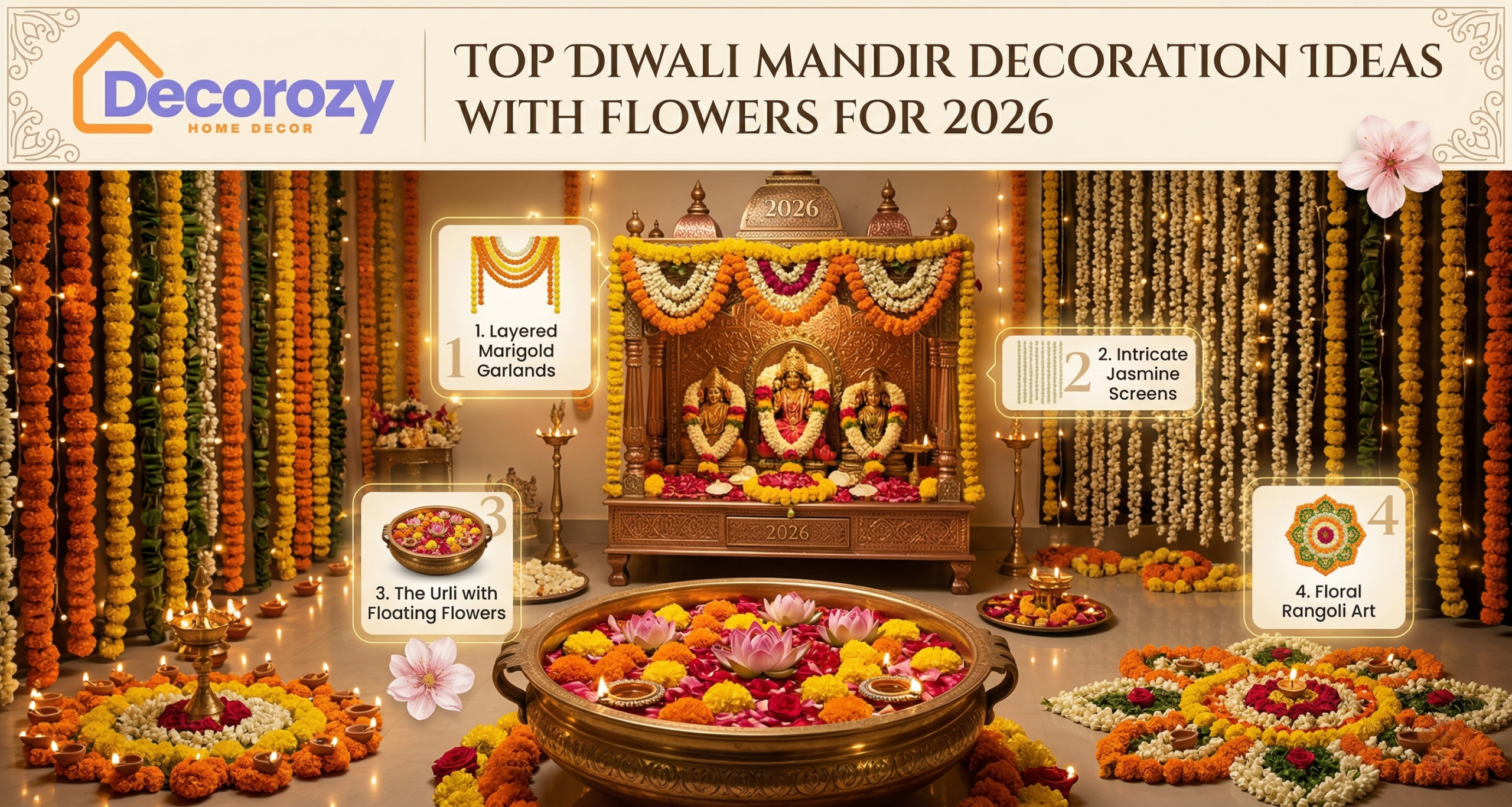
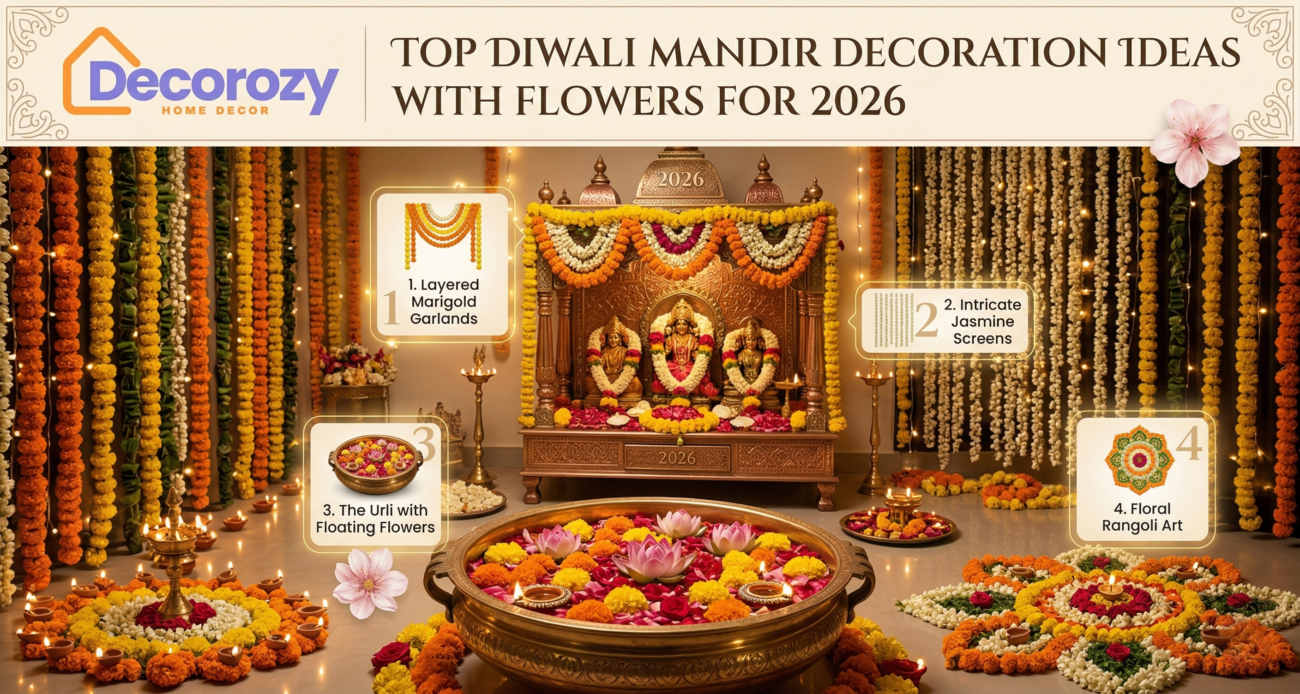
The festival of lights demands a sacred space that radiates purity, devotion, and aesthetic brilliance. Implementing expert diwali mandir decoration ideas with flowers transforms your home temple into a divine sanctuary. Fresh blossoms not only elevate the visual appeal but also infuse the atmosphere with spiritual positivity and joy.
Quick Answer: For the best Diwali mandir decoration ideas with flowers, combine traditional marigold garlands with fragrant jasmine strings. Use lotus blooms as a central focal point around the deities, and frame the mandir entrance with vibrant floral torans. Enhance the setup with strategically placed brass diyas for a divine glow.
Core Principles of Diwali Mandir Decoration Ideas With Flowers
Creating a harmonious spiritual space requires balancing vibrant colors with traditional design elements. Your floral decor should complement, not overpower, the idols and sacred artifacts within the temple.
Utilizing symmetrical floral patterns creates a sense of profound spiritual grounding and visual order. Incorporating classic elements ensures your festive pooja room decor remains culturally authentic.
A structured approach to floral arrangements guides the worshipper’s eye directly to the central deities. Proper scaling is crucial; large mandirs can handle heavy garlands, while smaller shrines require delicate loose blossoms.
Choosing the Right Blossoms for Your Pooja Room
Selecting auspicious flowers is paramount for traditional Indian festival floral design. Marigolds, or ‘Genda Phool’, symbolize the sun and positive energy, making them an essential foundation.
Jasmine strings add unparalleled fragrance and represent purity, elevating the overall spiritual ambiance. Incorporating the sacred lotus directly invokes Goddess Lakshmi, the central focus of the Diwali puja.
Red roses offer a striking visual contrast and are universally associated with divine love and devotion. Always source the freshest, unblemished blooms to ensure your arrangements last throughout the festive night.
Traditional and Modern Diwali Mandir Decoration Ideas With Flowers
Blending heritage with contemporary design yields stunning results for your home temple styling. A classic approach involves draping heavy marigold garlands vertically behind the deities as a vibrant backdrop.
For a modern touch, create an elegant grid pattern using alternating strings of white jasmine and pink orchids. Suspending floral pomanders or ‘kissing balls’ from the temple ceiling adds dynamic, three-dimensional depth.
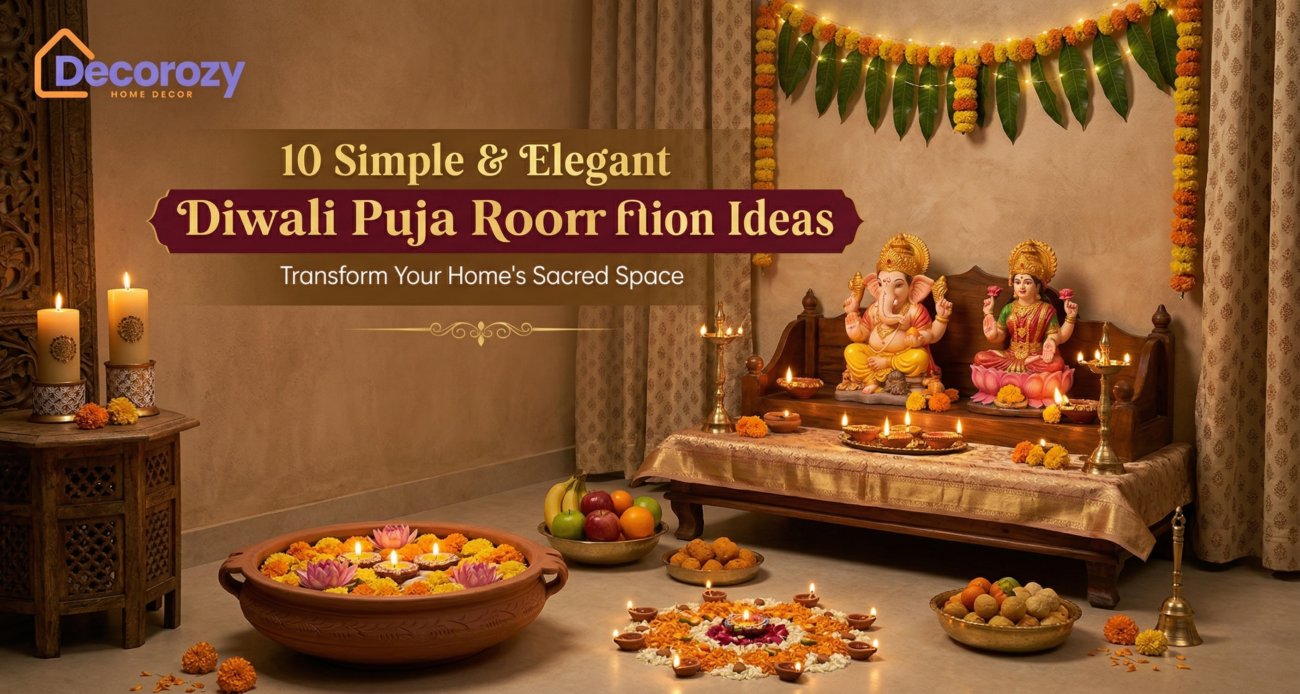
Crafting a traditional floral rangoli at the base of the mandir invites prosperity and visual intrigue. Floating lotus petals in a traditional brass urli bowl serves as an exquisite, minimalist centerpiece.
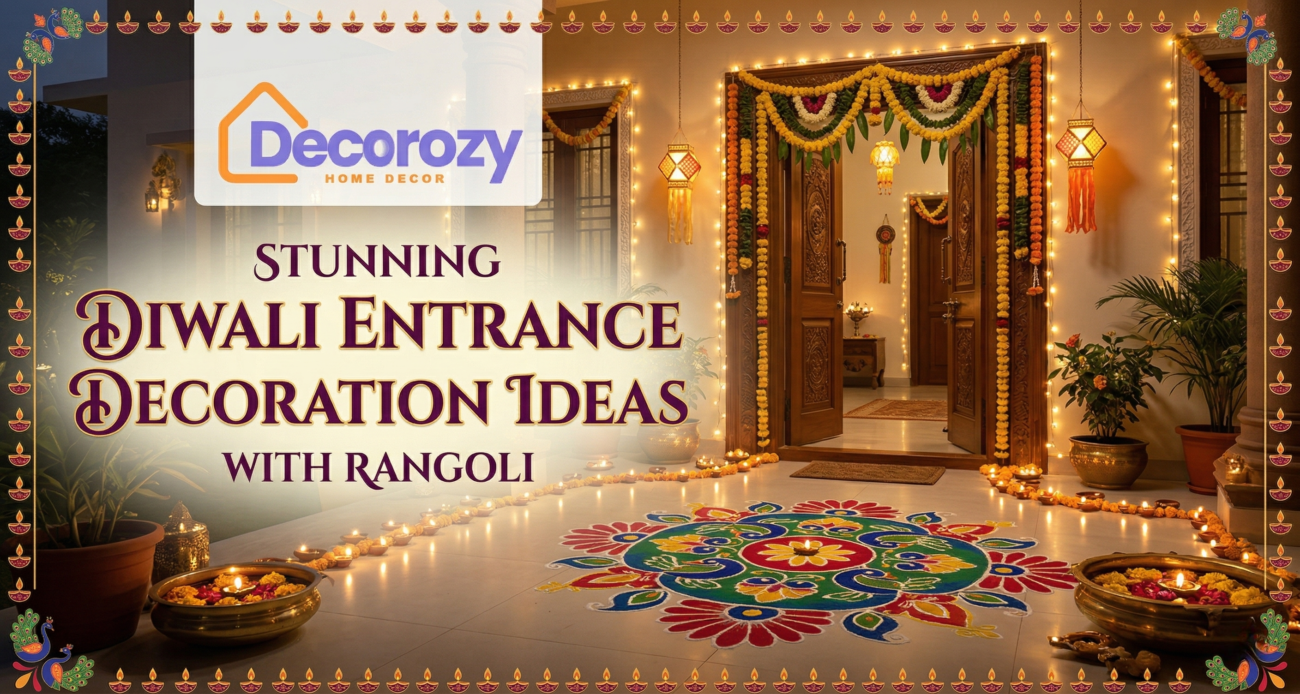
Framing the mandir doors with a lush, continuous floral arch creates a majestic and welcoming entrance. Combining mango leaves with floral strings adds a layer of traditional auspiciousness to modern frameworks.
Lighting Integration in Your Floral Design
Flowers and lighting must work in tandem to create a truly mesmerizing Diwali atmosphere. Soft, warm LED string lights intertwined with jasmine garlands offer a safe, magical glow without generating heat.
Place traditional clay diyas strategically around your lotus arrangements to highlight their natural beauty. Backlighting a dense wall of marigolds creates a dramatic, halo-like effect for the entire shrine.
Avoid placing open flames directly beneath hanging floral installations to ensure complete fire safety. Utilizing brass oil lamps at the base of your floral rangoli casts dynamic shadows and enhances the texture of the petals.
Color Psychology in Festive Floral Decor
Colors play a profound role in dictating the energy and mood of your sacred space. Yellow and orange marigolds stimulate feelings of warmth, optimism, and spiritual awakening.
White jasmine and lilies bring an aura of profound peace, serenity, and divine grace. Touches of vibrant red from roses or hibiscus channel active energy, passion, and vitality.
Balancing these warm and cool tones prevents visual fatigue and creates a highly cohesive design. A monochromatic floral scheme, using only varying shades of white and cream, offers a striking, ultra-modern aesthetic.
Executing Diwali Mandir Decoration Ideas With Flowers Flawlessly
Start by thoroughly cleaning the mandir and polishing all brass and silver pooja vessels. Measure your temple’s dimensions accurately before purchasing your floral strings and loose blossoms.
Establish the background first, securing heavy garlands with non-damaging adhesive hooks or clear wire. Arrange the central deity placements, framing them with delicate, premium flowers like roses or orchids.
Build outward, adding floral torans to the edges and finishing with the floor-level rangoli. Ensure all stems are hidden from view to maintain a clean, professional finish.
Mist the final arrangement lightly with clean water to maintain a crisp, dewy appearance. Step back frequently during the styling process to ensure symmetry and balance from all viewing angles.
Maintaining Floral Freshness During the Festival
Preserving the vitality of your arrangements requires proactive environmental management within the pooja room. Keep the mandir area cool and well-ventilated, avoiding direct exposure to harsh afternoon sunlight.
Submerge the stems of water-dependent flowers in small, hidden floral tubes to extend their lifespan. Regularly remove any wilting petals to prevent the spread of ethylene gas, which accelerates decay in surrounding flowers.
A light spritz of water mixed with a commercial floral preservative can keep blooms looking vibrant for days. Keep fresh flowers safely away from the direct smoke of incense sticks, which can dry out delicate petals.
Budget-Friendly Floral Arrangements
Achieving a luxurious look does not inherently require an extravagant floral budget. Maximize visual impact by mixing expensive focal flowers, like lilies, with abundant, highly affordable marigolds.
Foraging local, seasonal greens to use as fillers adds volume and rich texture at zero cost. Repurposing loose, slightly bruised petals into intricate mandala patterns on the floor is highly cost-effective.
Focus your premium blooms exclusively around the main idols where the eye is naturally drawn. Invest in high-quality artificial green vines to serve as a reusable base, adding fresh flowers to it annually.
Designing an enchanting spiritual space is a profound expression of festive devotion and joy. By implementing these expert strategies, your home temple will radiate unparalleled divine elegance.
Would you like me to draft a companion piece on selecting the perfect brass artifacts to complement these floral designs? Explore more premium home styling guides and exclusive festive decor collections at Decorozy.com today!
FAQ Schema
- Question 1: Which flowers are best for Diwali mandir decoration?
- Answer: Marigolds, jasmine, lotus, and roses are the best flowers for Diwali mandir decoration. Marigolds symbolize positive energy, jasmine offers purity and fragrance, and the lotus is highly auspicious for Goddess Lakshmi during Diwali puja.
- Question 2: How do you keep flowers fresh in the mandir?
- Answer: Keep flowers fresh by misting them lightly with water, keeping the pooja room cool, and using floral water tubes for stemmed blooms. Ensure the flowers are kept away from the direct heat of diyas and incense smoke.
- Question 3: Can we use artificial flowers for mandir decoration?
- Answer: Yes, high-quality artificial flowers can be used for mandir decoration, especially for background garlands or hard-to-reach areas. However, traditional Vedic practices recommend incorporating at least some fresh flowers and leaves to attract positive spiritual energy.