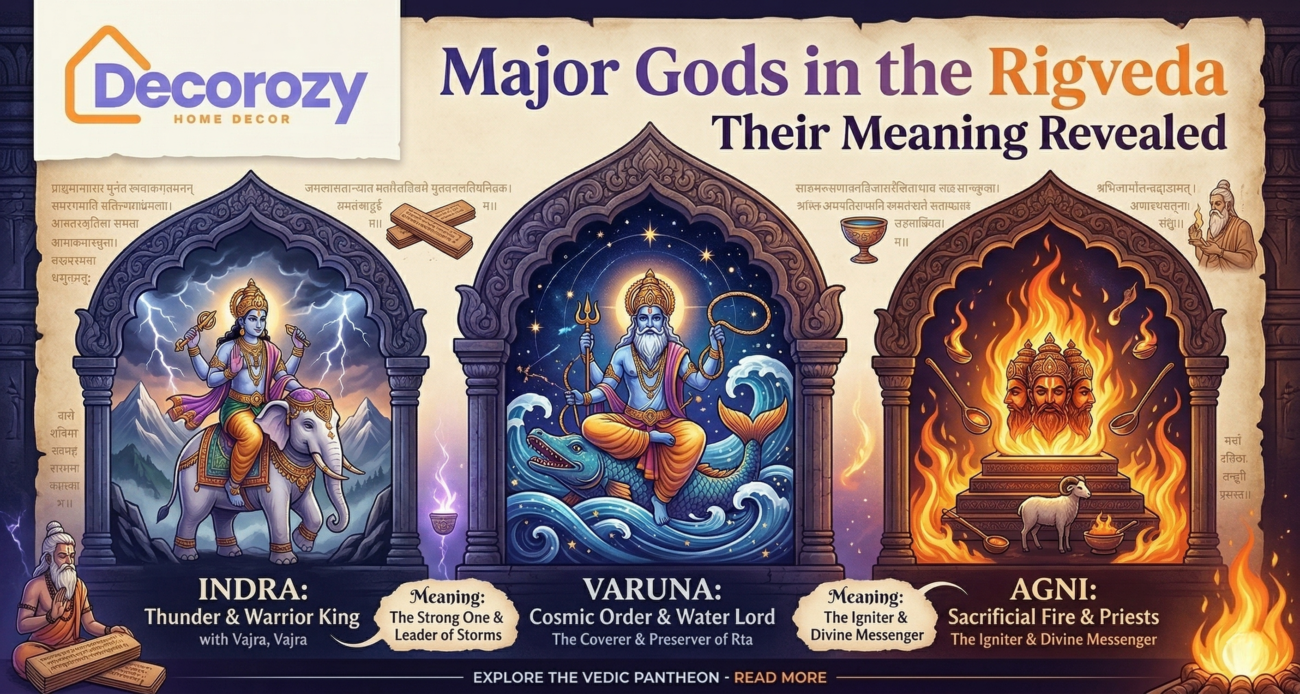
Ancient texts hold incredible secrets about early human civilization and their divine beliefs. Among these, the ancient Indian scriptures present a fascinating hierarchy of powerful deities. Understanding the role of Indra in the Rigveda unlocks the core of ancient Vedic religion.
Quick Answer: Indra in the Rigveda is the supreme warrior god of storms, lightning, and liberation. Featured in over 250 hymns, his central myth involves defeating the serpent-demon Vritra to release stolen cosmic waters, symbolizing the victory of order over chaos.
The Core Story of Indra in the Rigveda: Slaying Vritra
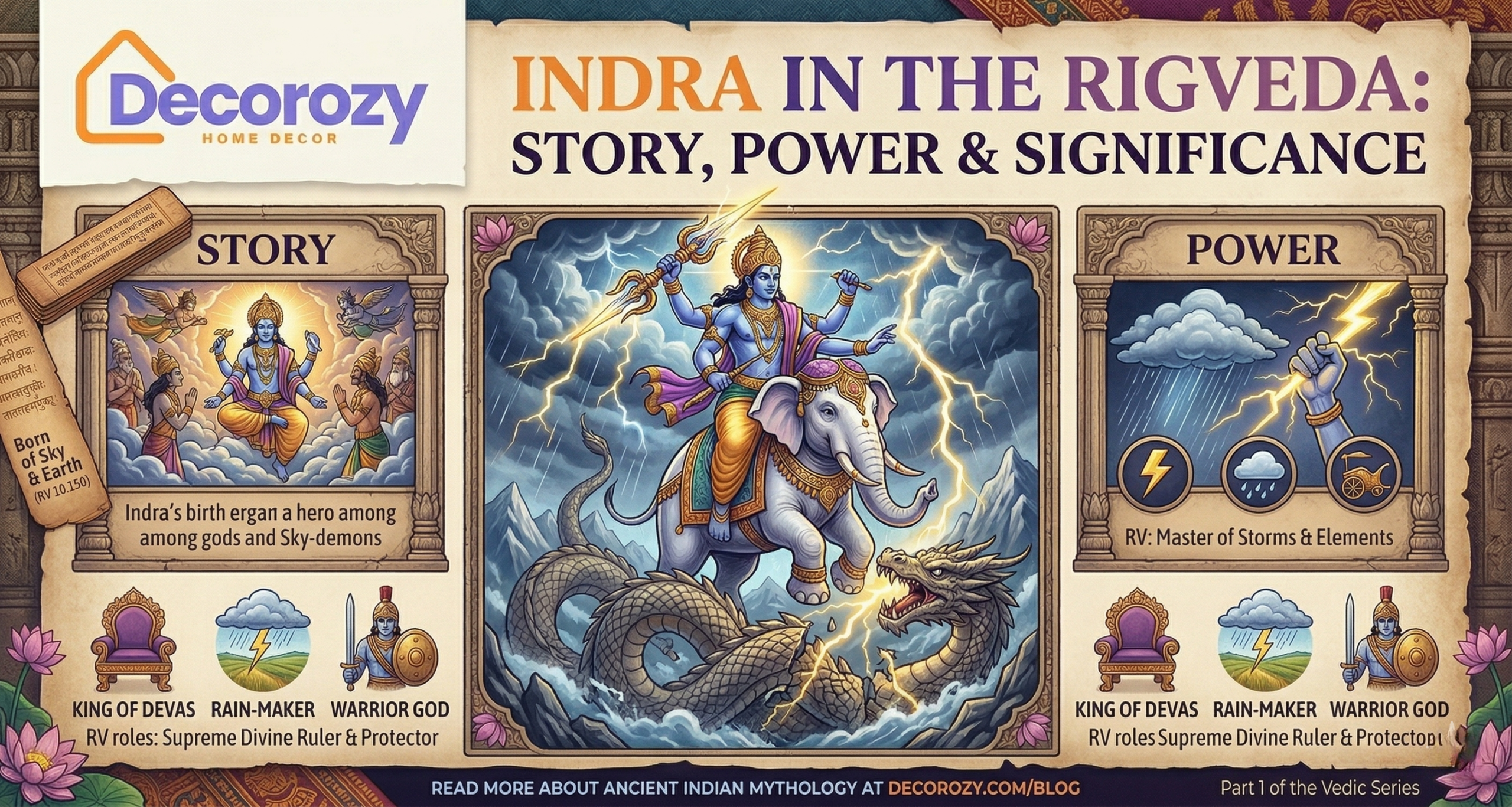
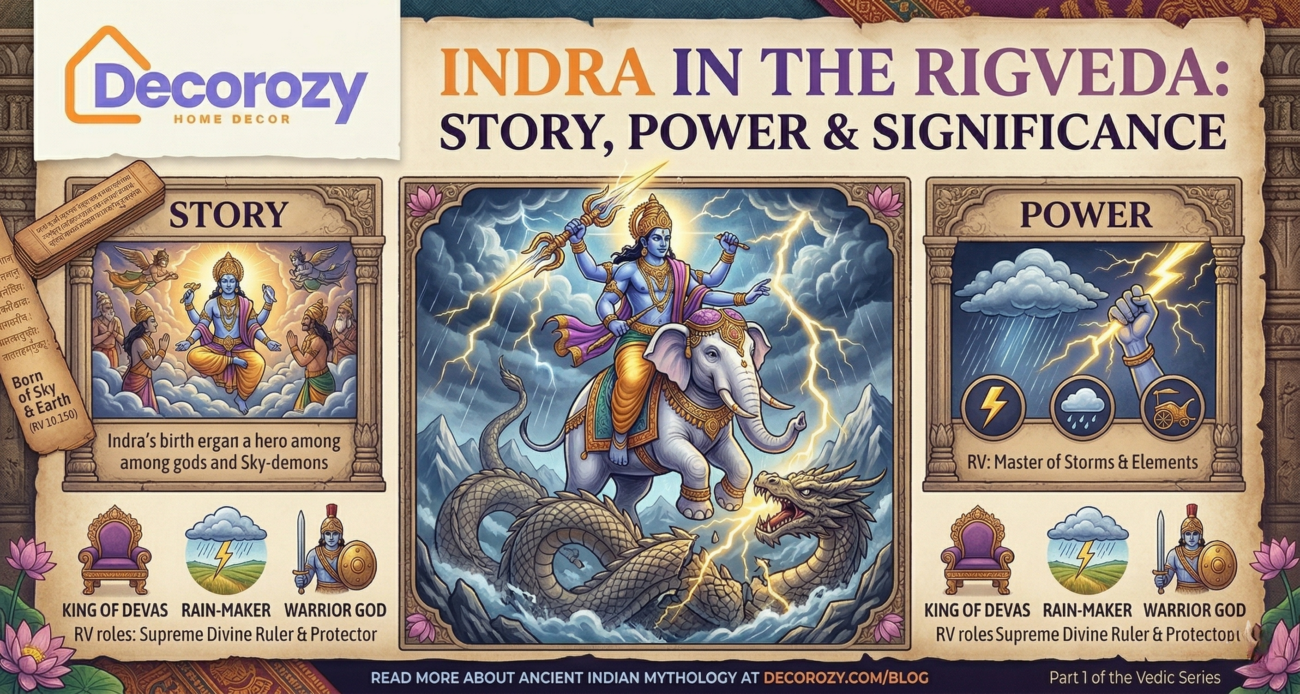
The most prominent mythological narrative surrounding Indra in the Rigveda is his epic battle against Vritra. Vritra was a massive serpent or dragon who represented drought, hoarding the world’s rivers and water supplies. This cosmic blockage caused widespread famine, suffering, and a severe disruption of natural order.
Armed with his divine thunderbolt, the Vajra, Indra engaged in a violent, world-shaking struggle. Bolstered by drinking the sacred Soma beverage, he struck down the mighty serpent with absolute force. This heroic act shattered the mountains and released the captive waters back to the thirsty earth.
This victory is not just a literal story of heavy rainfall ending a severe drought. It represents the eternal triumph of life, movement, and divine order over stagnation and darkness. This single, powerful narrative essentially defines his legendary status in the early Vedic pantheon.
The Immense Power of Indra in the Rigveda
When analyzing the power of Indra in the Rigveda, his physical strength is completely unmatched. He is depicted as a virile, golden-haired warrior driving a golden chariot pulled by magnificent horses. His power is deeply intertwined with the raw forces of nature, specifically thunder, lightning, and rainstorms.
Indra’s immense strength is heavily fueled by Soma, an intoxicating ritual drink granting divine ecstasy. Ancient hymns frequently describe him consuming vast quantities of Soma before heading into fierce battles. This divine elixir empowers him to perform miraculous feats and aggressively protect his loyal followers.
Furthermore, his absolute power extends far beyond just fighting mythological monsters in the heavens. He is a patron deity of the ancient Aryan tribes, leading them to victory in terrestrial battles. He was invoked daily by warriors for protection, strength, and ultimate triumph over earthly adversaries.
The Cultural and Historical Significance
The significance of this thunder deity goes far beyond simple mythological storytelling. With over a quarter of the Rigveda’s hymns dedicated to him, he was the undisputed king of the gods. He perfectly reflects the values of early Vedic society: martial prowess, heroism, and the vital need for rain.
Historically, he represents the dynamic, conquering spirit of the early Indo-Aryan peoples. His destruction of enemy fortresses and slaying of demons directly mirror their own historical expansions. He embodies the ideal ancient chieftain, generously rewarding human loyalty with wealth, cattle, and prosperity.
In the broader cosmic sense, he is the ultimate protector of Rita, the universal truth and order. By constantly battling the forces of chaos, he ensures the survival of the known universe. His divine actions maintain the delicate balance necessary for human civilization and nature to thrive.
The rich mythology of this thunder god offers a profound glimpse into ancient spiritual life. His tales of bravery, immense strength, and cosmic duty continue to fascinate modern historians. For more deep dives into ancient history, mythology, and cultural artifacts, keep exploring Decorozy.com!
FAQ Schema
Question 3: What is the relationship between Indra and Soma?
Answer: Soma is a sacred, intoxicating ritual drink that gives Indra his immense strength and courage. The Rigveda frequently describes Indra drinking large amounts of Soma to prepare for his cosmic battles.
Question 1: Why is Indra considered the most important god in the Rigveda?
Answer: Indra is the most important god because he has the most hymns (over 250) dedicated to him. He was the supreme warrior and weather god, responsible for bringing vital rain and protecting the Vedic people in battle.
Question 2: What is the primary weapon of Indra?
Answer: Indra’s primary weapon is the Vajra, a powerful, divine thunderbolt crafted by the celestial artisan Tvashtr. He used this indestructible weapon to slay the demon Vritra and split mountains.