If you are exploring the origins of ancient Indian literature, you have likely asked yourself: who wrote the rigveda? This foundational text of Hinduism is shrouded in millennia of history, myth, and deep spiritual tradition.
Understanding its origins requires looking past modern concepts of authorship. Instead, we must explore a complex network of ancient sages, divine inspiration, and centuries of dedicated oral preservation.
Quick Answer: The Rigveda was not written by a single author. Instead, it is a compilation of ancient Sanskrit hymns composed by multiple enlightened sages, known as Rishis. Seers from prominent families like Vishvamitra, Vashistha, and Bharadvaja composed these texts, preserving them through a strict oral tradition for centuries.
The Core Concept: Understanding Who Wrote the Rigveda
To truly answer who wrote the rigveda, we must first understand the concept of Shruti, which translates to “that which is heard.”
In ancient Hindu tradition, the Vedas were not actively authored by human minds. Rather, they were divinely revealed to highly evolved spiritual masters.
These enlightened masters, known as Rishis or seers, captured these cosmic vibrations. They then translated these profound spiritual truths into the structured Vedic Sanskrit hymns we study today.
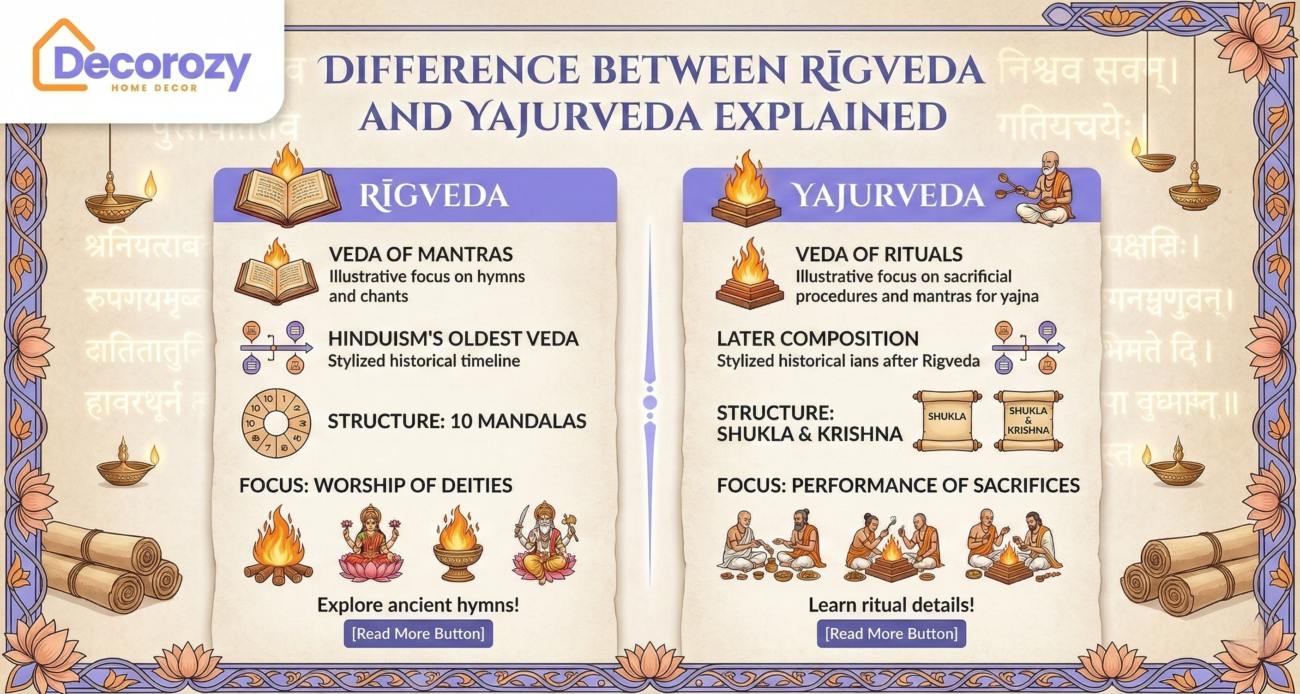
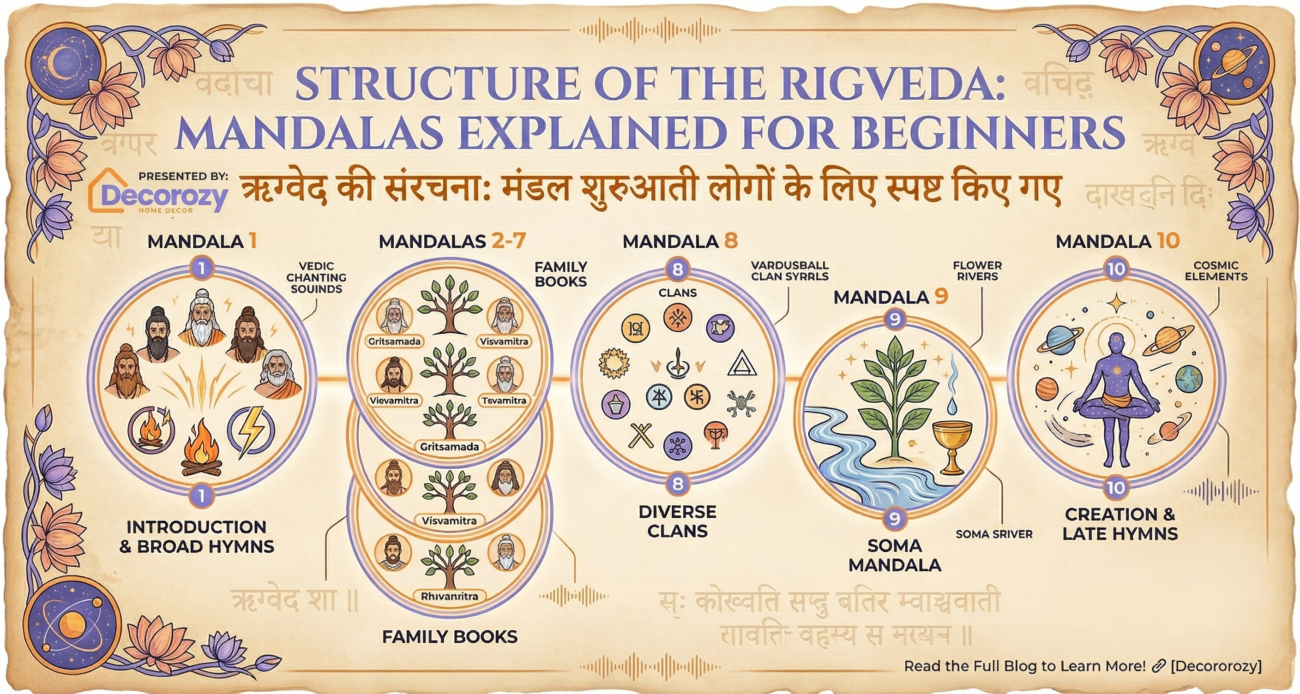
Therefore, the Rishis are considered the conduits or composers of the verses, rather than traditional authors. The text is divided into ten distinct books, called Mandalas, each largely attributed to specific sage lineages.
The Importance of Oral Tradition in Who Wrote the Rigveda
When asking who wrote the rigveda, it is crucial to recognize that the text was not “written” down for many centuries.
The ancient Indians prioritized oral transmission over written manuscripts. They believed that the exact pronunciation and tonal intonation of the hymns held immense spiritual power.
To ensure absolute accuracy, specialized mnemonic techniques were developed. These complex chanting methods prevented the loss or alteration of a single syllable over thousands of years.
By the time the Rigveda was finally committed to palm leaves and birch bark, the oral text had already been perfectly preserved across countless generations.
Detailed Analysis: Key Sages and the Compiler Vyasa
The core of the Rigveda lies in Mandalas 2 through 7, often referred to as the “family books.”
These specific sections are attributed to famous Rishi families. The primary composers include legendary figures like Gritsamada, Vishvamitra, Vamadeva, Atri, Bharadvaja, and Vashistha.
Mandalas 1, 8, 9, and 10 were added later by various other seers, including female sages known as Rishikas, such as Gargi and Maitreyi.
Finally, Hindu tradition credits Sage Krishna Dvaipayana, widely known as Vedavyasa (or simply Vyasa), with compiling and arranging the scattered hymns into the four distinct Vedas we recognize today.
Thank you for exploring ancient history with us. For more expert insights into historical texts, spiritual traditions, and global heritage, continue exploring the archives right here on Decorozy.com!
FAQ Schema
- Question 1: Who compiled the Rigveda?
- Answer: According to ancient Hindu tradition, the Rigveda and the other three Vedas were compiled and systematically arranged by the great sage Krishna Dvaipayana, who is respectfully known as Vedavyasa.
- Question 2: When was the Rigveda originally composed?
- Answer: The hymns of the Rigveda were orally composed in the northwestern region of the Indian subcontinent between roughly 1500 BCE and 1200 BCE, making it one of the oldest extant texts in any Indo-European language.
- Question 3: How is the Rigveda structured?
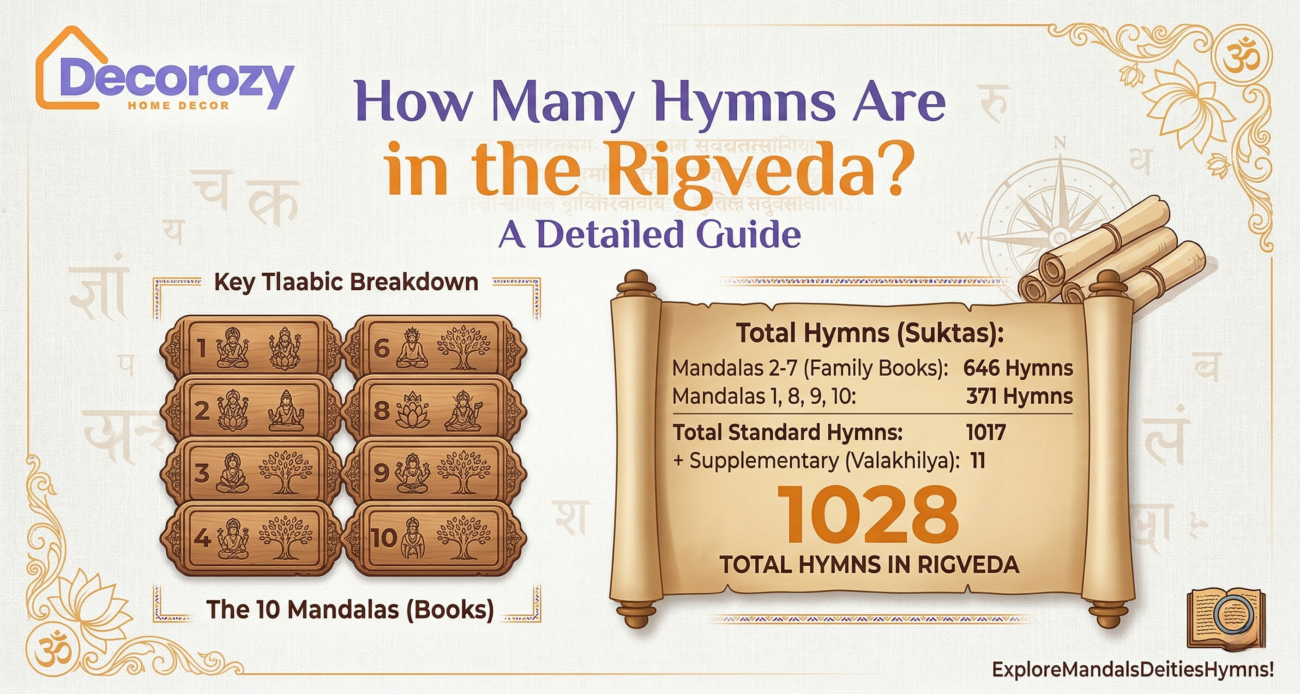
- Answer: The Rigveda is organized into 10 separate books called Mandalas. These Mandalas contain a total of 1,028 individual hymns (Suktas), which are further broken down into over 10,000 specific verses dedicated to various ancient deities.