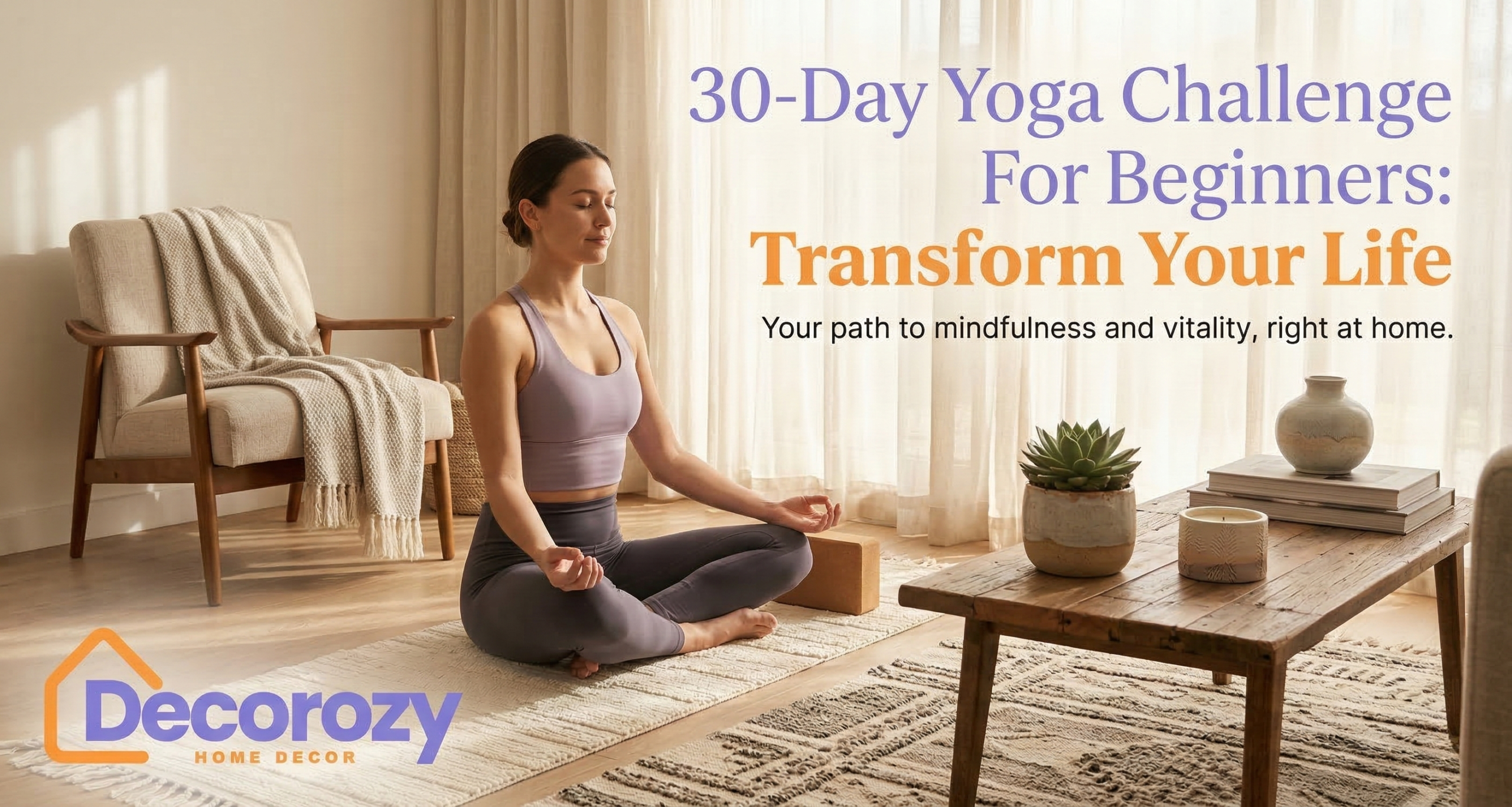
Welcome to your comprehensive guide to starting a foundational yoga practice right from the comfort of your own home. Committing to a consistent daily routine can completely transform your physical health and mental well-being.
If you are looking to build strength, increase flexibility, and reduce stress, a structured 30-day yoga challenge for beginners is the perfect starting point.
Quick Answer: A 30-day yoga challenge for beginners is a structured, daily practice designed to introduce foundational poses, breathing techniques, and mindfulness. By dedicating just 15 to 20 minutes each day, novices can safely build flexibility, core strength, and establish a sustainable wellness habit.
Why Start a 30-Day Yoga Challenge For Beginners?
Embarking on a 30-day yoga challenge for beginners offers profound, scientifically-backed physical and mental health benefits. It creates a structured pathway to learn basic asanas without feeling overwhelmed by complex routines.
Daily repetition accelerates muscle memory, allowing your body to adapt to new stretches and strengthening exercises safely. Within weeks, practitioners typically notice improved posture, increased mobility, and a significant reduction in joint stiffness.
Beyond the physical advantages, this daily commitment fosters incredible mental clarity and stress reduction. Taking dedicated time for yourself each day cultivates mindfulness that translates into better focus and emotional regulation.
Core Elements of a 30-Day Yoga Challenge For Beginners
A successful 30-day yoga challenge for beginners relies heavily on consistency rather than high intensity. Your primary goal is simply showing up to your yoga mat every single day, building a sustainable habit.
The curriculum typically begins with gentle stretching and essential poses like Downward-Facing Dog and Child’s Pose. These foundational movements build the necessary flexibility and joint stability for more advanced sequences later.
Breathwork, or pranayama, is another critical component integrated from day one of the challenge. Learning to synchronize your breath with your movement prevents injury and deepens the essential mind-body connection.
Essential Gear to Maximize Your Practice
You do not need an abundance of expensive equipment to begin your daily yoga journey. A high-quality, non-slip yoga mat is the only strictly mandatory investment to ensure stability during balancing poses.
Wearing comfortable, breathable activewear allows for a completely unrestricted range of motion. Tight or restrictive fabrics can severely hinder your ability to sink deep into foundational stretches and twists.
Optional props like dense yoga blocks and stretching straps are highly recommended for structural modifications. These tools effectively bring the floor closer to you, ensuring proper anatomical alignment even if your flexibility is limited.
A Week-by-Week Breakdown of the Routine
Week one focuses entirely on physical orientation and mastering fundamental resting postures. You will spend time learning diaphragmatic breathing techniques and understanding how your unique body moves in space.
During week two, the focus organically shifts toward building core strength and muscular stability. Dynamic poses like the plank and the Warrior series are introduced to generate internal heat and build cardiovascular endurance.
Week three introduces deeper flexibility targets and mild balance challenges to test your progress. You will experiment with Tree Pose and deeper hip openers, testing the foundational strength you built during the previous weeks.
The final week focuses on flow and integration, seamlessly linking breath with continuous, fluid movement. By day thirty, you will experience a dramatic, measurable improvement in both your physical capabilities and mental stamina.
Creating the Ideal Environment for Practice
Designing a dedicated space in your home signals to your brain that it is time to focus and unwind. Clear away physical clutter to create a minimalist environment that promotes deep mental clarity.
Incorporate calming sensory elements like dim lighting, essential oil diffusers, or soft instrumental music. A tranquil atmosphere significantly lowers your cortisol levels, allowing your muscles to relax into the stretches more easily.
Ensure your practice area is well-ventilated and maintains a comfortable, moderate temperature. Being too cold can cause muscles to tense up, increasing the risk of strains during your daily routine.
Overcoming Common Hurdles During Your Practice
Keeping a daily fitness journal is an excellent way to track your physical progress and emotional fluctuations. Note which specific poses feel challenging and actively celebrate small physical victories, like finally touching your toes.
Always listen to your body and learn to distinguish the difference between muscular discomfort and sharp pain. Taking an active rest day or choosing a gentle restorative flow is perfectly acceptable if you feel physically fatigued.
Finding an online community or a dedicated accountability partner can significantly increase your program completion rate. Sharing your daily journey keeps you highly motivated on days when your natural energy levels are low.
Completing this foundational journey is just the beginning of a lifelong commitment to holistic, mindful wellness. Daily consistency is the true secret to unlocking the profound, life-changing benefits of this ancient practice.
Ready to elevate your home sanctuary and enhance your wellness routine? Explore our premium selection of home decor, yoga accessories, and expert lifestyle guides at Decorozy.com today!
FAQ Schema
- Question 1: Can I lose weight with a 30-day yoga challenge?
- Answer: Yes, a 30-day yoga challenge can aid in weight loss by burning calories, building lean muscle mass, and lowering cortisol levels. It also encourages mindfulness, which often leads to healthier dietary choices and improved metabolism over time.
- Question 2: How many minutes a day should a beginner do yoga?
- Answer: Beginners should aim for 15 to 20 minutes of daily yoga practice. This duration is long enough to build strength, improve flexibility, and establish a habit, without causing excessive muscle fatigue or mental burnout.
- Question 3: Is it safe to do yoga every day as a beginner?
- Answer: Yes, it is perfectly safe to do yoga every day as a beginner, provided you listen to your body. Incorporating gentle, restorative flows on days you feel sore ensures you maintain the daily habit while allowing muscles to recover.