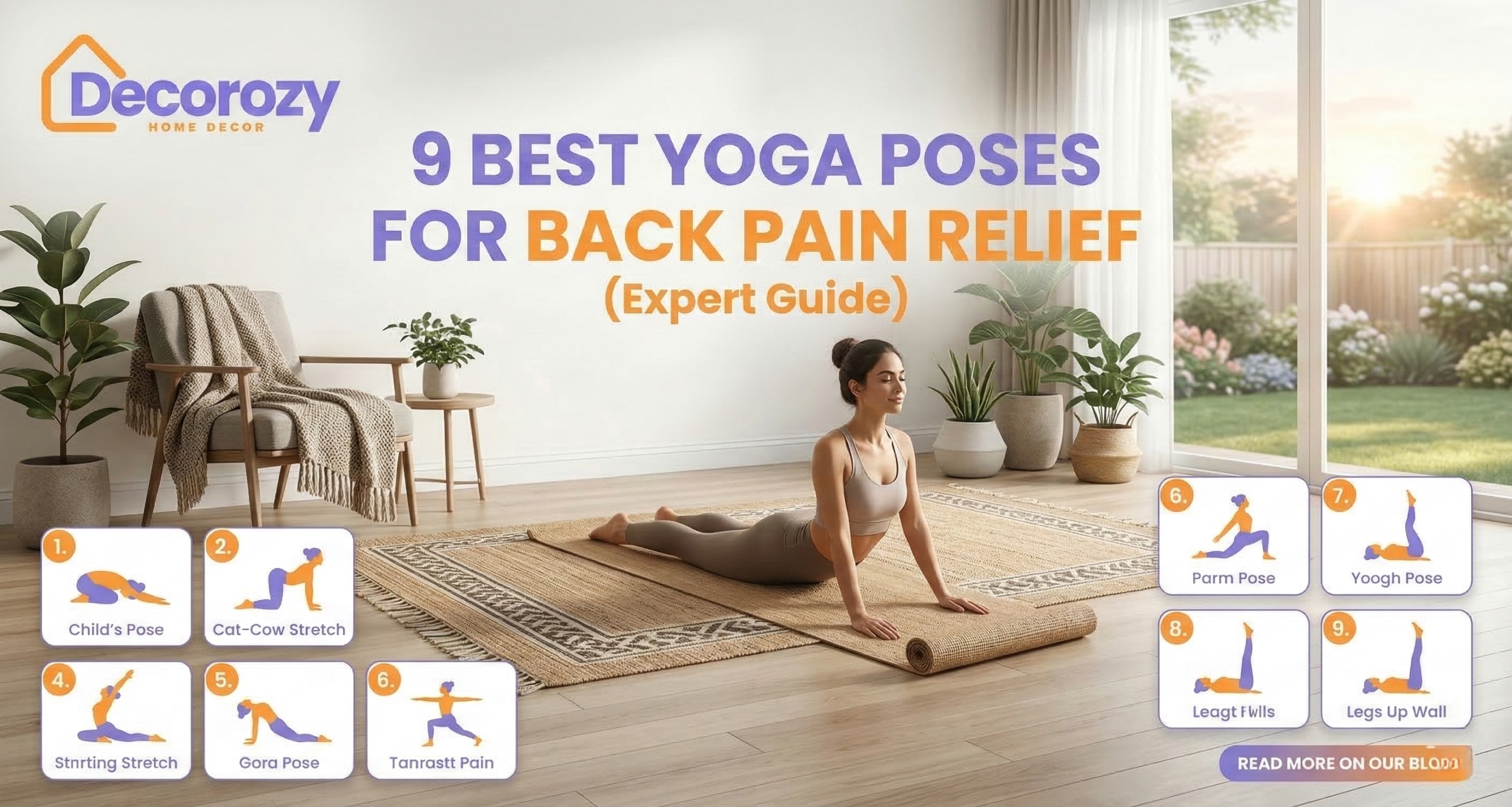
Experiencing chronic lower lumbar discomfort can severely disrupt your daily life and limit your overall productivity. Fortunately, incorporating the best yoga poses for back pain relief into your routine offers a proven, natural remedy. By targeting tight muscles and improving core strength, these gentle stretches actively restore spinal health.
Quick Answer: The best yoga poses for back pain relief include Child’s Pose, Cat-Cow, Downward-Facing Dog, and Sphinx Pose. These specific postures gently stretch the spinal erectors, release tension in the lower back, improve core stability, and promote optimal spinal alignment for lasting comfort.
Understanding Why the Best Yoga Poses for Back Pain Relief Work
Chronic back discomfort often stems from poor posture, prolonged sitting, and weak core muscle groups. Modern lifestyles force us into forward-leaning positions that strain the delicate structures of the lumbar spine.
Practicing the best yoga poses for back pain relief actively addresses these underlying physical root causes. The controlled movements gently lengthen contracted, tight muscles that pull on the vertebrae.
This targeted stretching increases nutrient-rich blood flow to the lumbar region and surrounding tissues. Enhanced circulation accelerates the cellular healing of strained ligaments and tired muscle fibers.
Furthermore, mindful, deep breathing during these exercises directly impacts the central nervous system. It reduces the body’s stress response, thereby lowering the intensity of pain signals sent to the brain.
Top Benefits of the Best Yoga Poses for Back Pain Relief
Engaging in these therapeutic movements yields advantages far beyond simple, temporary muscle relaxation. A dedicated practice fundamentally changes how your body supports its own weight against gravity.
Consistently utilizing the best yoga poses for back pain relief significantly improves your overall spinal flexibility. A flexible spine is far less prone to acute strains when lifting heavy objects or twisting suddenly.
Enhanced flexibility also prevents future injuries by allowing your joints to move freely through their full, natural range of motion. This prevents compensatory patterns where other muscles overwork to make up for stiffness.
Additionally, these postures build essential strength in the abdominal core and oblique muscles. A strong core acts as a crucial, internal support system for your spine, taking pressure off the lower back.
Essential Safety Tips Before Starting Your Routine
Before attempting any new physical regimen, it is crucial to establish basic safety protocols to protect your body. Always consult with a physical therapist or doctor if your back pain is sharp or related to an injury.
Never force your body into a posture that causes sharp, stabbing, or radiating pain down your legs. Yoga should create a sensation of mild tension and release, never acute discomfort.
Always practice on a supportive yoga mat to cushion your knees, hips, and spinal column. Use props like yoga blocks or folded blankets to modify poses if your flexibility is currently limited.
Step-by-Step Guide to the Top Healing Postures
Implementing a safe, effective routine requires understanding the precise mechanics of each restorative movement. Follow this detailed breakdown to master the most beneficial stretches for your spine.
1. Child’s Pose (Balasana)
Child’s Pose is a foundational resting posture that elongates the lower back, hips, and thighs. It acts as a safe reset button for your entire nervous system.
Kneel on the floor, bring your big toes together, and sit your weight back onto your heels. If this strains your knees, place a rolled blanket between your calves and thighs.
Extend your arms straight forward and rest your forehead gently on the mat. Breathe deeply into your back body, feeling your ribs expand and tension melt away.
2. Cat-Cow Stretch (Marjaryasana-Bitilasana)
This dynamic, flowing movement mobilizes the entire spine and releases trapped tension in the torso. It is an excellent warm-up for hydrating the spinal discs.
Start on your hands and knees in a tabletop position with a perfectly neutral spine. Ensure your wrists are directly under your shoulders and your knees are beneath your hips.
Inhale deeply to arch your back, dropping your belly and lifting your chest (Cow). Then, exhale fully to round your spine toward the ceiling, tucking your chin (Cat).
3. Downward-Facing Dog (Adho Mukha Svanasana)
This classic, whole-body inversion stretches the hamstrings, calves, and the entire back line of the body. Tight hamstrings are a major contributor to lower back pain.
From a tabletop position, tuck your toes under and actively lift your hips up and back. Press your hands firmly into the mat, spreading your fingers wide for a stable base.
Keep a slight, generous bend in your knees if your lower back or hamstrings feel exceptionally tight. The primary goal is a straight, elongated spine, not perfectly straight legs.
4. Sphinx Pose (Salamba Bhujangasana)
Sphinx Pose offers a gentle, supported backbend that strengthens the spine and stretches the chest. It counters the forward-hunching posture common in office workers.
Lie flat on your stomach, placing your elbows directly under your shoulders. Keep your forearms parallel to each other with your palms pressing into the floor.
Press firmly into your forearms to lift your upper torso and head away from the mat. Keep your lower body grounded and engage your lower core to protect your lumbar curve.
5. Knees-to-Chest Pose (Apanasana)
This simple, restorative movement acts as a gentle massage for the lower back and sacrum. It is incredibly effective for acute, minor lower back tightness.
Lie flat on your back and slowly draw both knees into your chest. Wrap your arms around your shins or the backs of your thighs.
Gently rock from side to side or draw small circles with your knees. This motion compresses and releases the lower back muscles, stimulating blood flow.
6. Supine Spinal Twist (Supta Matsyendrasana)
Spinal twists are excellent for decompressing the vertebrae and hydrating the spongy intervertebral discs. They help restore rotational mobility to a stiff torso.
Lie on your back, draw your right knee to your chest, and guide it across your body to the left. Keep your left leg extended straight on the floor.
Extend your right arm straight out to the side, anchoring your right shoulder blade to the mat. Hold for several deep breaths before carefully switching to the opposite side.
7. Bridge Pose (Setu Bandhasana)
Bridge pose is a powerful way to strengthen the glutes and lower back while stretching the hip flexors. Weak glutes often force the lower back to overwork during daily tasks.
Lie on your back with your knees bent and the soles of your feet flat on the floor. Position your feet hip-width apart and close enough to touch with your fingertips.
Press into your feet and inhale as you lift your hips high toward the ceiling. Engage your glutes and keep your thighs parallel to prevent straining your knees.
8. Thread the Needle (Parsva Balasana)
This posture provides a deep, localized stretch for the upper back and the muscles between the shoulder blades. It relieves tension that often trickles down to the lower back.
Start in a tabletop position on your hands and knees. Slide your right arm underneath your left arm, bringing your right shoulder and temple to the floor.
Keep your hips elevated and squared toward the ceiling. Breathe deeply into the stretch in your upper back, then slowly return to tabletop and switch sides.
9. Locust Pose (Salabhasana)
Locust Pose is unparalleled for actively strengthening the spinal erectors, glutes, and hamstrings. It builds the muscular endurance necessary for sustained, healthy posture.
Lie on your stomach with your arms resting alongside your body, palms facing down. Keep your neck long by gazing slightly downward at the top of your mat.
Inhale and simultaneously lift your head, chest, arms, and legs off the floor. Reach actively through your fingertips and toes, holding the contraction for a few breaths.
Integrating the Best Yoga Poses for Back Pain Relief into Your Day
Achieving a permanently pain-free life is entirely possible with a consistent, mindful daily stretching routine. Dedicate just fifteen minutes every morning or evening to these healing postures.
Start integrating these gentle movements into your schedule to experience lasting physical benefits and improved mobility. Listen to your body and prioritize consistency over intensity for the best results.
Would you like me to create a customized weekly routine utilizing these poses? For more expert tips on holistic wellness and lifestyle optimization, explore the rest of our guides at Decorozy.com today!
FAQ Schema
- Question 1: How often should I do yoga for back pain?
- Answer: For optimal results, practice yoga for 15 to 20 minutes daily. Consistency is much more effective than infrequent, long sessions for relieving chronic back tension and maintaining spinal flexibility.
- Question 2: Can yoga make my lower back pain worse?
- Answer: Yes, yoga can worsen pain if performed with incorrect form or by pushing into sharp, acute pain. Always listen to your body and avoid forcing deep stretches that aggravate your spine.
- Question 3: What is the single best yoga pose for lower back pain?
- Answer: Child’s Pose is widely considered the safest and most effective introductory pose. It gently decompresses the lower lumbar spine while resting the entire central nervous system and stretching the hips.