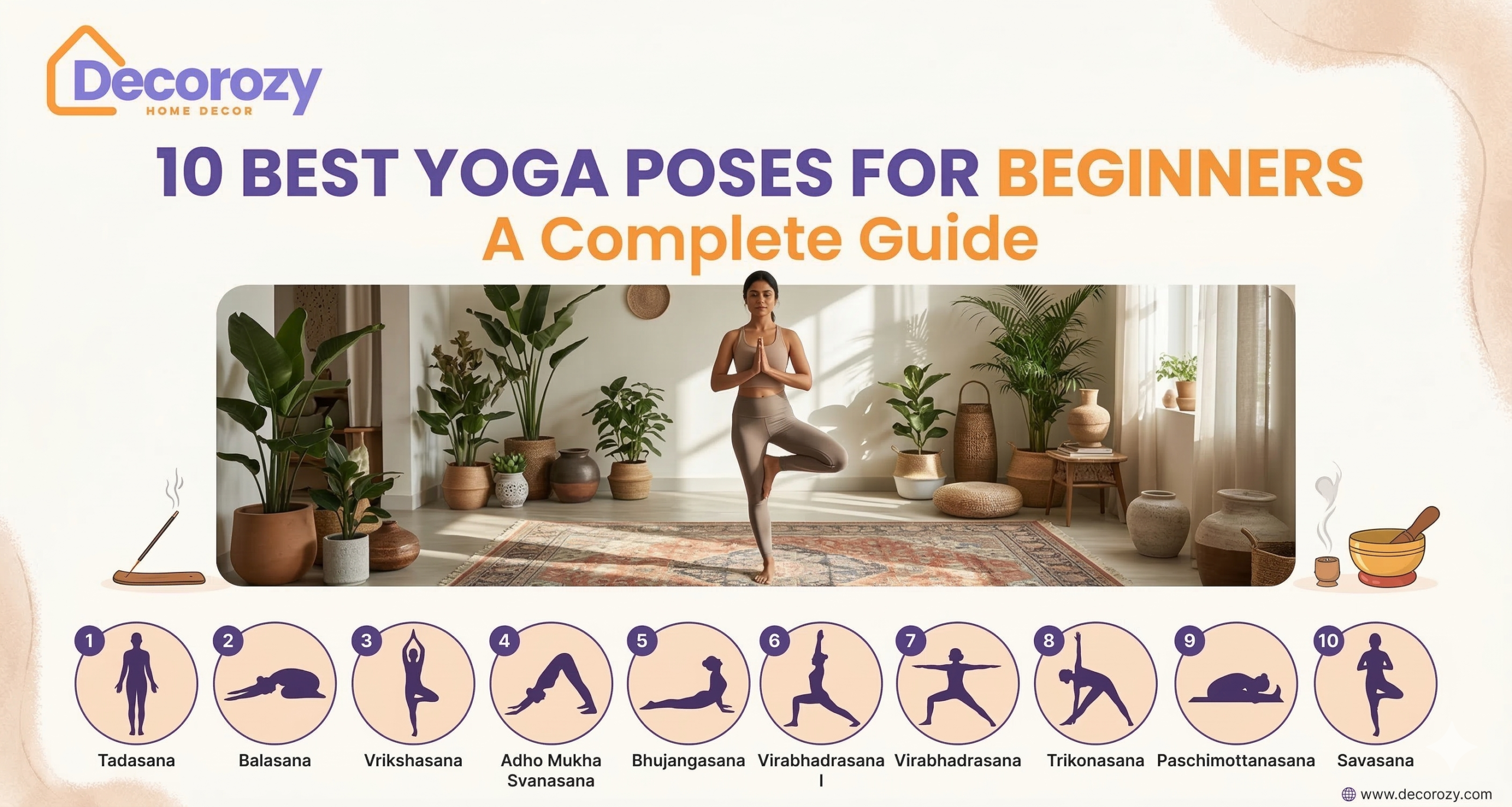
Welcome to your new wellness journey on Decorozy.com. Starting a new fitness routine can feel overwhelming, but establishing a mindful movement practice is incredibly rewarding. Mastering the 10 best yoga poses for beginners will help you build foundational strength, enhance flexibility, and achieve lasting mental clarity.
Quick Answer: The 10 best yoga poses for beginners include Mountain Pose, Downward-Facing Dog, Child’s Pose, Plank Pose, Tree Pose, Warrior I, Warrior II, Bridge Pose, Cobra Pose, and Corpse Pose. These foundational postures build core strength, increase full-body flexibility, and establish proper breathing techniques.
The Core Concept of the 10 Best Yoga Poses for Beginners
Yoga is an ancient practice designed to harmonize the mind, body, and breath through structured asanas.
For those just starting out, focusing on foundational postures is crucial for ensuring safety and steady progress.
These beginner-friendly poses are specifically curated to teach proper anatomical alignment and enhance bodily awareness.
By mastering the 10 best yoga poses for beginners, you create a resilient physical base required for more advanced routines.
The Benefits of the 10 Best Yoga Poses for Beginners
Practicing these basic postures consistently yields significant, data-backed physical and mental health benefits.
Physically, you will experience improved spinal posture, enhanced joint mobility, and increased isometric muscle tone.
Mentally, the deep, rhythmic breathing associated with these poses drastically reduces cortisol, lowering stress and anxiety levels.
Furthermore, this consistent practice boosts blood circulation, promoting cellular health and overall cardiovascular efficiency.
Detailed Breakdown: How to Execute the Foundational Poses
Let us explore the essential postures every novice should learn, focusing on alignment and breath control.
1. Mountain Pose (Tadasana): This is the active foundation of all standing poses. It promotes balance, grounds your posture, and engages the core.
2. Downward-Facing Dog (Adho Mukha Svanasana): A gentle inversion that deeply stretches the hamstrings and calves while building significant strength in the arms and shoulders.
3. Child’s Pose (Balasana): A fundamental resting posture. It gently stretches the hips, thighs, and lower back while calming the central nervous system.
4. Plank Pose (Phalakasana): An excellent isometric hold. It builds profound core stability and fortifies the wrists, arms, and spinal erectors.
5. Tree Pose (Vrksasana): A highly effective balancing posture. It improves neuromuscular focus while strengthening and stabilizing the ankle and knee joints.
6. Warrior I (Virabhadrasana I): A powerful standing pose that actively stretches the hip flexors while building endurance in the quadriceps and glutes.
7. Warrior II (Virabhadrasana II): This dynamic pose externally opens the hips and chest. It drastically improves lower-body stamina and concentration.
8. Bridge Pose (Setu Bandhasana): A gentle supine backbend. It opens the thoracic spine and chest while actively engaging the hamstrings and gluteal muscles.
9. Cobra Pose (Bhujangasana): A highly beneficial, beginner-friendly back extension. It strengthens the posterior spinal muscles and prevents lower back pain.
10. Corpse Pose (Savasana): The ultimate relaxation posture. It is absolutely crucial for nervous system recovery, muscle repair, and complete stress relief.
When practicing, focus on holding each pose for three to five deep, unhurried breaths to maximize the physiological benefits.
Always prioritize strict, proper alignment over the depth of the stretch to prevent soft tissue injuries during your practice.
Embarking on your yoga journey is a powerful, transformative step toward holistic health and comprehensive wellness.
Mastering these foundational asanas will effectively prepare your body and mind for a lifetime of mindful, healthy movement.
Explore more expert wellness tips, home aesthetics, and lifestyle guides today at Decorozy.com!
FAQ Schema
- Question 1: How often should a beginner practice yoga?
- Answer: Beginners should aim to practice yoga 2 to 3 times a week. This frequency builds muscle memory and flexibility without causing excessive strain or fatigue.
- Question 2: Do I need to be flexible to start yoga?
- Answer: No, flexibility is a result of yoga, not a prerequisite. Starting with basic poses helps gradually lengthen tight muscles and improve your overall range of motion over time.
- Question 3: How long should I hold a yoga pose as a beginner?
- Answer: Beginners should hold each yoga pose for 3 to 5 deep, slow breaths. This usually translates to about 15 to 30 seconds per posture to safely stretch the muscle fibers.