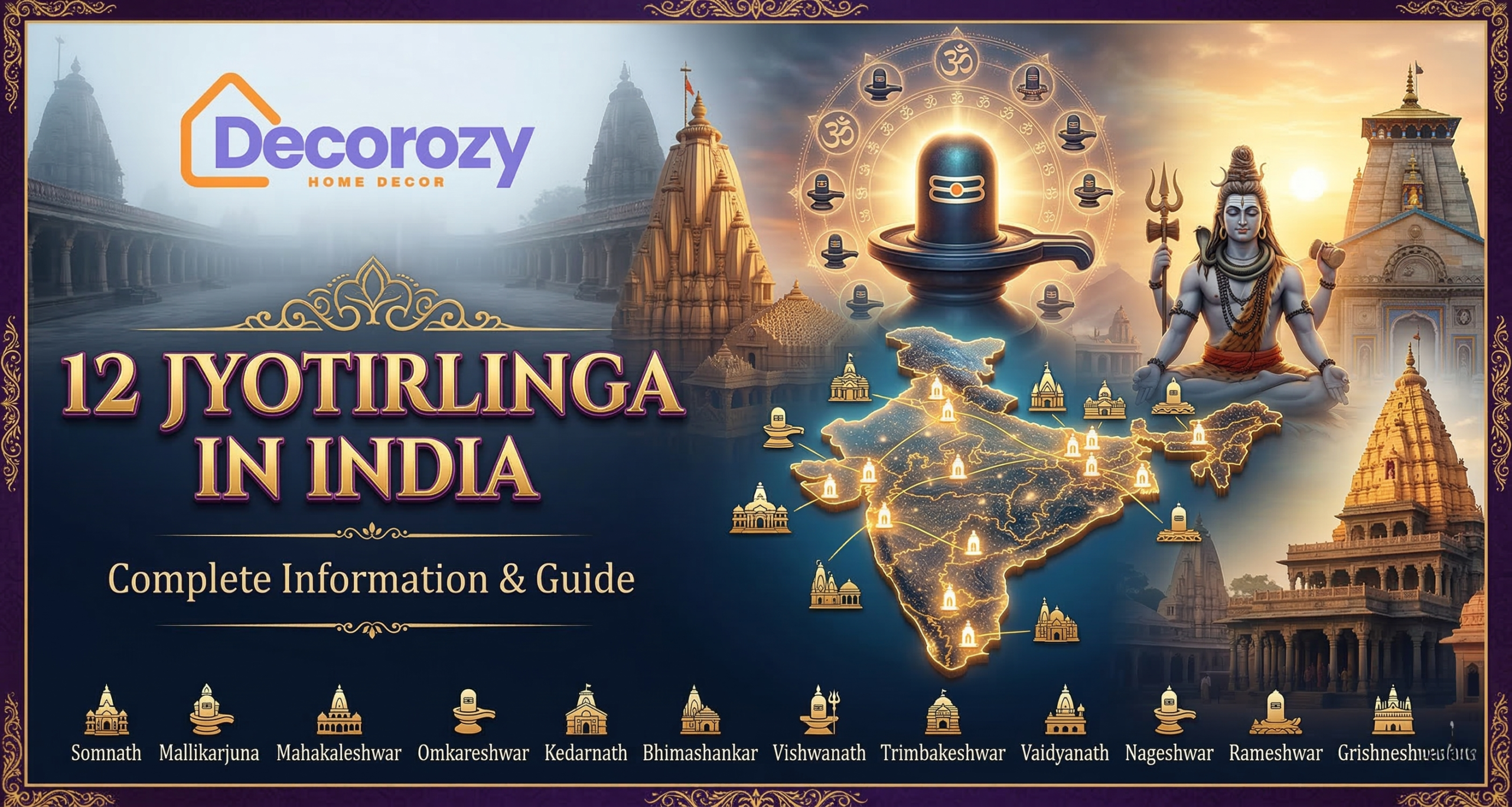
Welcome to the definitive guide on the most revered shrines dedicated to Lord Shiva. Millions of devotees embark on a spiritual journey across the country every year to seek divine blessings.
Understanding the history and location of these temples is essential for any spiritual traveler. This comprehensive post provides all the vital information you need about the 12 Jyotirlinga in India.
Quick Answer: The 12 Jyotirlinga in India are sacred Hindu shrines where Lord Shiva is worshipped as a supreme, radiant column of light. Spread across various states, these temples—including Somnath, Mahakaleshwar, and Kashi Vishwanath—are highly revered sites for pilgrimage, offering devotees spiritual awakening and ultimate liberation (Moksha).
What Are the 12 Jyotirlinga in India?
In Hindu mythology, a “Jyotirlinga” represents the radiant, infinite manifestation of Lord Shiva. The word translates roughly to “column of light.”
According to the Shiva Purana, Lord Shiva pierced the three worlds as an endless pillar of light to settle a debate between Lord Brahma and Lord Vishnu. The places where this light struck the earth became the most sacred shrines.
Originally, it is believed there were 64 Jyotirlingas scattered across the world. However, 12 of these are considered exceptionally holy and auspicious.
Visiting these specific temples is a lifelong dream for many Shaivites. These sites are not just architectural marvels but epicenters of profound spiritual energy.
The Spiritual Significance of the 12 Jyotirlinga in India
Embarking on a pilgrimage to these shrines is known to cleanse the soul of past sins. It is a journey of deep devotion and self-discovery.
Ancient scriptures state that devotees who recite the names of these shrines daily will achieve spiritual enlightenment. They will break free from the cycle of birth and death.
Beyond individual salvation, these temples unite the vast cultural landscape of the country. They draw people from all walks of life, fostering a sense of universal brotherhood.
Each shrine carries its own unique legend, making the journey rich with historical and theological knowledge.
To help you plan your pilgrimage, here is detailed information on each of the divine shrines.
1. Somnath Jyotirlinga (Gujarat)
Located in Prabhas Patan near Veraval in Gujarat, Somnath is traditionally considered the very first Jyotirlinga.
It is known as the “Shrine Eternal” because it has been destroyed and rebuilt numerous times throughout history. The temple stands majestic on the shores of the Arabian Sea.
2. Mallikarjuna Jyotirlinga (Andhra Pradesh)
Situated on the Shri Shaila Mountain by the banks of the Krishna River, this temple is unique. It is one of the few shrines that is both a Jyotirlinga and a Shakti Peetha.
The presiding deities are Lord Shiva (Mallikarjuna) and Goddess Parvati (Bhramaramba). It boasts magnificent Dravidian architecture.
3. Mahakaleshwar Jyotirlinga (Madhya Pradesh)
Located in the ancient city of Ujjain, the Mahakaleshwar idol is “Dakshinamurti,” meaning it faces south. This is a unique feature among all the shrines.
The temple is famous worldwide for its Bhasma Aarti, a powerful morning ritual involving sacred ash. It is a profound spiritual experience.
4. Omkareshwar Jyotirlinga (Madhya Pradesh)
This shrine sits on an island called Mandhata in the Narmada River. The shape of the island naturally resembles the sacred Hindu symbol “Om.”
The temple consists of two main shrines: Omkareshwar (Lord of Omkara) and Amareshwar (Immortal Lord). It offers a deeply peaceful environment for meditation.
5. Kedarnath Jyotirlinga (Uttarakhand)
Nestled high in the snow-capped Garhwal Himalayas, Kedarnath is one of the most challenging shrines to reach. It is only accessible for six months a year due to extreme weather.
Situated near the Mandakini River, it is also a vital part of the sacred Chardham Yatra. The spiritual aura here is unmatched.
6. Bhimashankar Jyotirlinga (Maharashtra)
Surrounded by the lush Sahyadri hills near Pune, Bhimashankar is renowned for its natural beauty. It is the source of the Bhima River.
The temple features intricate Nagara-style architecture. The surrounding wildlife sanctuary makes it a haven for nature lovers and devotees alike.
7. Kashi Vishwanath Jyotirlinga (Uttar Pradesh)
Located in Varanasi, the spiritual capital of India, this shrine is situated on the western bank of the holy river Ganga.
It is believed that breathing your last in Kashi brings immediate liberation. The temple complex is a vibrant hub of continuous prayer and devotion.
8. Trimbakeshwar Jyotirlinga (Maharashtra)
Situated near Nashik, this temple is located at the source of the Godavari River.
The unique feature of this Jyotirlinga is its three-faced Linga. These faces represent the Hindu trinity: Lord Brahma, Lord Vishnu, and Lord Rudra (Shiva).
9. Baidyanath Jyotirlinga (Jharkhand)
Also known as Baba Baidyanath Dham, this temple is located in Deoghar. It is the site where the demon king Ravana worshipped Lord Shiva.
Millions of pilgrims undertake the strenuous Kanwar Yatra every year. They carry holy water from the Ganges to offer to the deity here.
10. Nageshwar Jyotirlinga (Gujarat)
Located near Dwarka, Nageshwar is revered as the first among the 12 shrines in the ancient text of the Rudra Samhita.
The temple features an impressive, towering 25-meter-tall statue of Lord Shiva. It is believed to protect devotees from all types of poisons and worldly temptations.
11. Ramanathaswamy Jyotirlinga (Tamil Nadu)
Situated on the island of Rameswaram, this magnificent temple is deeply connected to the epic Ramayana.
Lord Rama is said to have prayed to Lord Shiva here to absolve himself of the sin of killing Ravana. The temple is famous for its exceptionally long and beautifully carved corridors.
12. Grishneshwar Jyotirlinga (Maharashtra)
Located near the famous Ellora Caves in Aurangabad, Grishneshwar is the last of the 12 sacred shrines.
Also known as Kusumeshwarar, the temple is built of distinct red rocks. It is a stunning display of pre-historic architectural brilliance.
Exploring these divine destinations requires proper planning and devotion. We hope this guide helps you on your path to spiritual fulfillment.
Discover more inspiring home and lifestyle content, and find peace in your everyday surroundings by visiting Decorozy.com today!
FAQ Schema
- Question 1: Which is the first Jyotirlinga in India?
- Answer: Somnath, located in Prabhas Patan, Gujarat, is traditionally recognized as the first of the 12 Jyotirlingas in India. It is highly revered and known as the “Shrine Eternal” due to its rich history of reconstruction.
- Question 2: Where are the 12 Jyotirlingas located?
- Answer: The 12 Jyotirlingas are spread across India: two in Gujarat (Somnath, Nageshwar), three in Maharashtra (Bhimashankar, Trimbakeshwar, Grishneshwar), two in Madhya Pradesh (Mahakaleshwar, Omkareshwar), and one each in Andhra Pradesh, Uttarakhand, Uttar Pradesh, Jharkhand, and Tamil Nadu.
- Question 3: What is the difference between a Shivling and a Jyotirlinga?
- Answer: A Shivling is a general symbolic representation of Lord Shiva created by humans for worship. A Jyotirlinga, however, is a self-manifested (Swayambhu) column of light where Lord Shiva is believed to have physically appeared, making it exceptionally sacred.