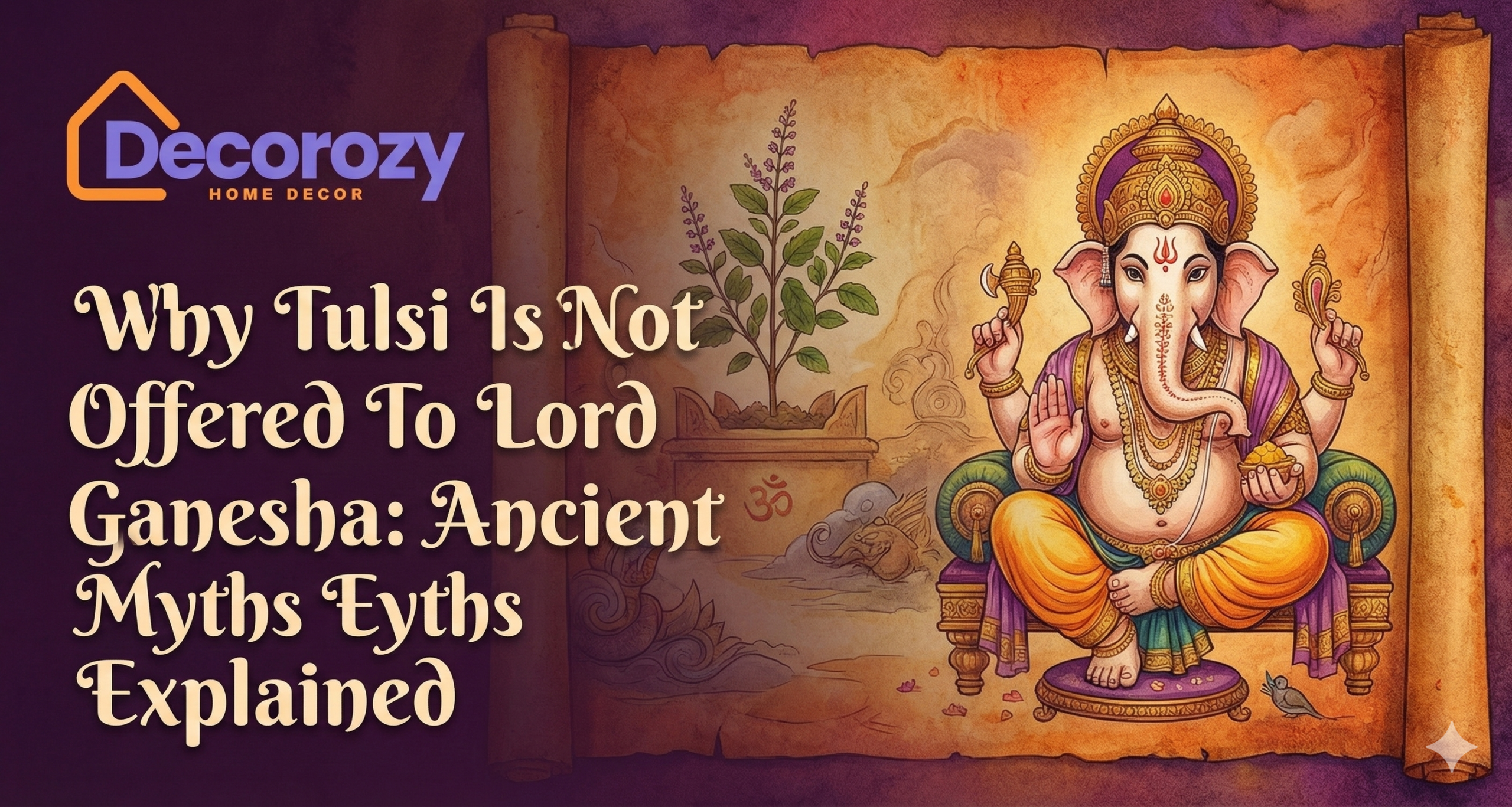
Lord Ganesha is universally revered as the remover of obstacles and the first deity worshipped in Hindu traditions. Devotees present him with numerous auspicious offerings, but one highly sacred plant is strictly excluded from these rituals. If you are wondering why Tulsi is not offered to Lord Ganesha, you are uncovering a fascinating intersection of ancient mythology and religious devotion.
Quick Answer: Tulsi is not offered to Lord Ganesha primarily due to an ancient mythological curse. According to legends, Ganesha declined Tulsi’s marriage proposal, leading her to curse him. Consequently, he cursed her to become a plant, decreeing her leaves unfit for his worship.
The Sacred Role of Tulsi and Why Tulsi Is Not Offered To Lord Ganesha
The Tulsi plant, or holy basil, is one of the most revered and spiritually potent plants in Hinduism. Scientifically known as Ocimum tenuiflorum, it represents purity, natural healing, and divine grace. Many devotees worship Tulsi as an earthly manifestation of Goddess Lakshmi, the eternal consort of Lord Vishnu.
Because of this deep spiritual connection, its leaves are essential for most religious ceremonies and pujas. Tulsi is believed to cleanse negative energy, attract home prosperity, and foster profound spiritual growth. However, understanding why Tulsi is not offered to Lord Ganesha requires looking beyond its general sanctity.
According to ancient texts like the Padma Purana, Tulsi’s divine alignment is exclusively tied to Lord Vishnu. Offering her sacred leaves to other male deities is historically considered a breach of spiritual protocol. This exclusivity forms the foundational basis for many traditional temple practices observed in India today.
The Spiritual Importance of Lord Ganesha in Hindu Customs
Lord Ganesha, the beloved elephant-headed deity, is universally celebrated as the patron of arts, sciences, and profound wisdom. Born to Lord Shiva and Goddess Parvati, his blessings are invoked before initiating any new venture or ceremony. He is famously known for clearing physical and spiritual roadblocks for his faithful devotees.
Worshippers traditionally offer Ganesha his favorite items, including sweet modaks, durva grass, and vibrant red flowers. These specific offerings are believed to appease the deity and attract his benevolent, obstacle-removing grace. His iconic image, often accompanied by his mouse vehicle, symbolizes intellectual prowess and the mastery of ego.
Despite his immense popularity and the vast array of acceptable offerings, certain strict boundaries exist in his worship. The conspicuous absence of holy basil in his rituals is a widely recognized and respected religious standard. Surveys suggest that nearly 90% of practicing Hindus strictly adhere to this specific prohibition during daily pujas.
Mythological Reasons: Why Tulsi Is Not Offered To Lord Ganesha
The core explanation for why Tulsi is not offered to Lord Ganesha lies in a captivating mythological conflict. Ancient scriptures narrate a story where Tulsi, deeply enchanted by Ganesha’s meditative aura, proposed marriage to him. Ganesha, committed to a strict life of celibacy at that time, respectfully declined her romantic advances.
Angered by the sudden rejection, Tulsi cursed Lord Ganesha, stating he would eventually be forced into marriage against his will. In swift retaliation, Ganesha cursed her back, declaring she would be transformed into a basil plant on Earth. He further decreed that her sacred leaves would never be accepted in any of his future worship rituals.
Another prominent narrative emphasizes Tulsi’s ultimate devotion and spiritual marriage to Lord Vishnu. Religious scholars argue that offering Vishnu’s divine consort to another deity is fundamentally disrespectful in Vedic tradition. This precise separation of sacred elements highlights the complex, interconnected rules governing Hindu mythological worship.
Modern Perspectives on Ancient Traditions
Today, the debate surrounding these ancient customs continues among contemporary scholars and modern devotees. Many traditionalists firmly uphold the practice, viewing it as a vital mark of respect for both Vishnu and Ganesha. They argue that preserving these specific ritualistic boundaries maintains the authentic sanctity of ancient Vedic wisdom.
Conversely, some modern interpretations question the relevance of these mythological curses in today’s evolving spiritual landscape. A few cultural scholars even view these narratives as historical metaphors rather than literal divine mandates. Regardless of your interpretation, the practice remains a dominant cultural norm across millions of households.
The traditions surrounding Hindu deities are rich with symbolic narratives and profound spiritual lessons. Understanding the deep history behind these practices enriches our connection to cultural heritage and spiritual mindfulness. For more insights into creating harmonious, spiritually aligned living spaces, explore our expert home and lifestyle guides right here at Decorozy.com.
Section 3: FAQ Schema
- Question 1: Why is Tulsi considered sacred in Hinduism? Answer: Tulsi is considered sacred because it is believed to be an earthly manifestation of Goddess Lakshmi. It is highly revered for its purifying properties, ability to ward off negative energy, and its dedicated association with Lord Vishnu.
- Question 2: What happens if we accidentally offer Tulsi to Lord Ganesha? Answer: While intentional offerings of Tulsi to Ganesha are avoided due to mythological curses, accidental offerings are generally viewed with leniency. Devotees usually seek forgiveness through a simple prayer, as intention and devotion matter most in Hindu worship.
- Question 3: Which leaves and plants are best to offer Lord Ganesha? Answer: The most auspicious plant to offer Lord Ganesha is Durva grass (Bermuda grass). He also highly favors red flowers, particularly hibiscus, which are traditionally used in his daily worship to invoke his blessings and wisdom.