Have you ever wondered about the deeper spiritual meanings behind ancient Hindu traditions? Hanuman Bahuk is a revered cornerstone of faith for millions worldwide, holding a unique and powerful place in the hearts of devotees.
This profound concept beautifully intertwines a sacred, healing text with an iconic physical stance of devotion.
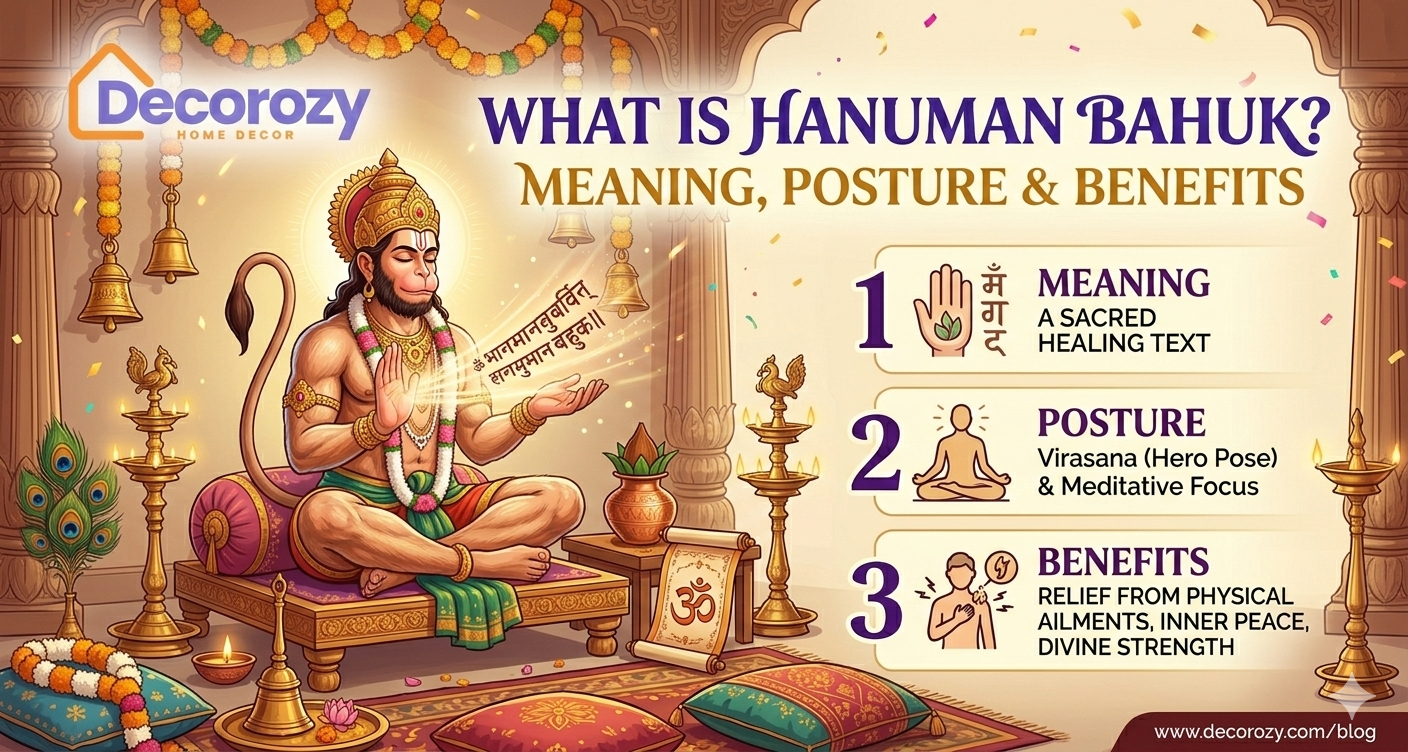
Quick Answer: What is Hanuman Bahuk? Hanuman Bahuk is a sacred 44-verse Hindu hymn dedicated to Lord Hanuman, chanted primarily to seek healing, protection, and solace from physical ailments. Additionally, it refers to a symbolic arm posture featuring crossed wrists and folded hands, representing absolute devotion, selfless service, and immense strength.
The Core Concept Behind Hanuman Bahuk
In Hindu spirituality, this term transcends a simple physical pose or a basic prayer. It is a profound representation of absolute devotion, unyielding discipline, and unwavering faith.
The iconic stance features Lord Hanuman standing with his hands folded respectfully and his arms crossed at the wrists. This highly distinctive positioning speaks volumes about his deep respect for Lord Ram and Sita.
Furthermore, it serves as a powerful, timeless reminder of how we should approach our daily duties. It teaches believers to act with humility, strict discipline, and selfless dedication in everything they do.
Spiritual Significance and Benefits of Hanuman Bahuk
The physical posture itself holds immense symbolism within the realm of Hinduism. It perfectly merges two essential, divine qualities: profound devotion and unparalleled strength.
The folded hands symbolize a complete and humble surrender to the divine will. Conversely, the crossed wrists showcase the immense physical and spiritual power generated by that very devotion.
Devotees frequently turn to the 44-verse hymn to seek relief from life’s harshest physical and mental challenges. Reciting this powerful ode is widely believed to shower followers with divine blessings, promoting deep healing and mental well-being.
Ultimately, the actions of Lord Hanuman remind us of the immense value of “seva” or selfless service. True, enduring power emerges only when our actions serve a much higher, noble purpose.
A Detailed Analysis of Hanuman Bahuk in Art and Worship
The visual legacy of Lord Hanuman’s devotion is deeply rooted in Indian culture and history. You can find this iconic posture beautifully preserved in ancient Hindu art and intricate temple sculptures.
Historic sites, such as Hampi’s famous Virupaksha Temple and the stunning structures of Khajuraho, prominently showcase this stance. These magnificent carvings bring epic scenes from the Ramayana to life for modern devotees.
Today, worshippers actively keep this cultural legacy alive through daily rituals and faithful practice. Devotees often adopt this folded-hand posture while reciting the sacred Stotra to express their profound gratitude.
During major festivals like Ram Navami, chanting these verses becomes a powerful, central communal activity. It unites believers in their shared reverence for Lord Hanuman’s enduring love, loyalty, and divine purpose.
Conclusion
In essence, this timeless scripture and symbolic stance encapsulate the very best of Hindu spiritual values. It guides believers toward a life enriched by courage, humility, inner strength, and faith.
By understanding and embracing this powerful symbol, we can cultivate dedicated service and profound peace in our own lives.
FAQ: People Also Ask
- Why is the Hanuman Bahuk chanted? Devotees chant this sacred 44-verse hymn primarily to seek healing from physical ailments, mental distress, and life’s daily challenges. It is believed to invoke Lord Hanuman’s protective blessings, granting the reciter profound solace and well-being.
- What does the arm posture of Hanuman represent? The unique posture, featuring folded hands and crossed wrists, symbolizes the perfect union of ultimate devotion and immense strength. It reflects Lord Hanuman’s absolute surrender, humility, and selfless service to Lord Ram and Sita.
- Where can you find historical depictions of this posture? This iconic stance is prominently featured in historical Hindu art and architecture across India. Famous examples include the intricate pillar carvings at Hampi’s Virupaksha Temple and the ancient, awe-inspiring sculptures of Khajuraho.