Welcome to the ultimate guide on the Marathi New Year. If you have ever wondered why is Gudi Padwa celebrated, you are about to uncover a rich tapestry of history, mythology, and vibrant culture. This auspicious festival marks fresh beginnings, joyful family gatherings, and profound spiritual renewal across India.
Quick Answer:Why is Gudi Padwa celebrated? It is celebrated to mark the start of the Hindu New Year and the creation of the universe by Lord Brahma. It also honors Lord Rama’s victorious return to Ayodhya and the beginning of the bountiful spring harvest season.
The Core Concept: Why is Gudi Padwa Celebrated Across India?
The roots of this auspicious day run deeply into Hindu mythology and ancient Indian history. According to the sacred Brahma Purana, Lord Brahma recreated the universe on this exact day following a massive cosmic deluge.
By establishing the concept of time (Kalachakra), he set the foundation for the Hindu lunar calendar. This is why the first day of the Chaitra month, officially known as Chaitra Shukla Pratipada, is revered as a cosmic new beginning.
Historically, the festival also commemorates the legendary victory of King Shalivahana over foreign invaders. This monumental triumph led to the creation of the Shalivahana Shaka calendar, which dictates the festive dates in Maharashtra, Karnataka, and Andhra Pradesh today.
Spiritual and Cultural Benefits: Why is Gudi Padwa Celebrated with Such Fervor?
Beyond ancient myths, the festival offers immense spiritual and practical benefits for modern devotees. Raising the iconic Gudi flag outside homes is believed to actively ward off negative energies and invite divine grace.
The Gudi acts as a powerful symbol of victory, echoing Chhatrapati Shivaji Maharaj’s historic military triumphs and Lord Rama’s defeat of the demon king Ravana. Families use this vibrant holiday for inner renewal and to recommit to righteous living (dharma).
Agriculturally, the festival aligns perfectly with the conclusion of the Rabi crop season. Farmers celebrate their bountiful harvest, transforming the day into a massive, community-wide thanksgiving festival filled with gratitude, hope, and prosperity.
Detailed Analysis of Gudi Padwa 2026 Rituals and Timings
To fully experience the blessings of the Marathi New Year, observing the correct rituals and timings is essential. The celebrations for the upcoming year are set to be vibrant, community-focused, and deeply traditional.
Gudi Padwa 2026 Date and Muhurat
In 2026, Gudi Padwa falls on Thursday, 19 March. Devotees generally begin their preparations early in the morning to align with the most auspicious planetary hours.
Element
2026 Details (India)
Date
Thursday, 19 March 2026
Tithi
Chaitra Shukla Pratipada
Tithi Starts
~06:52 AM (19 March)
Tithi Ends
~04:52 AM (20 March)
Erecting the Sacred Gudi
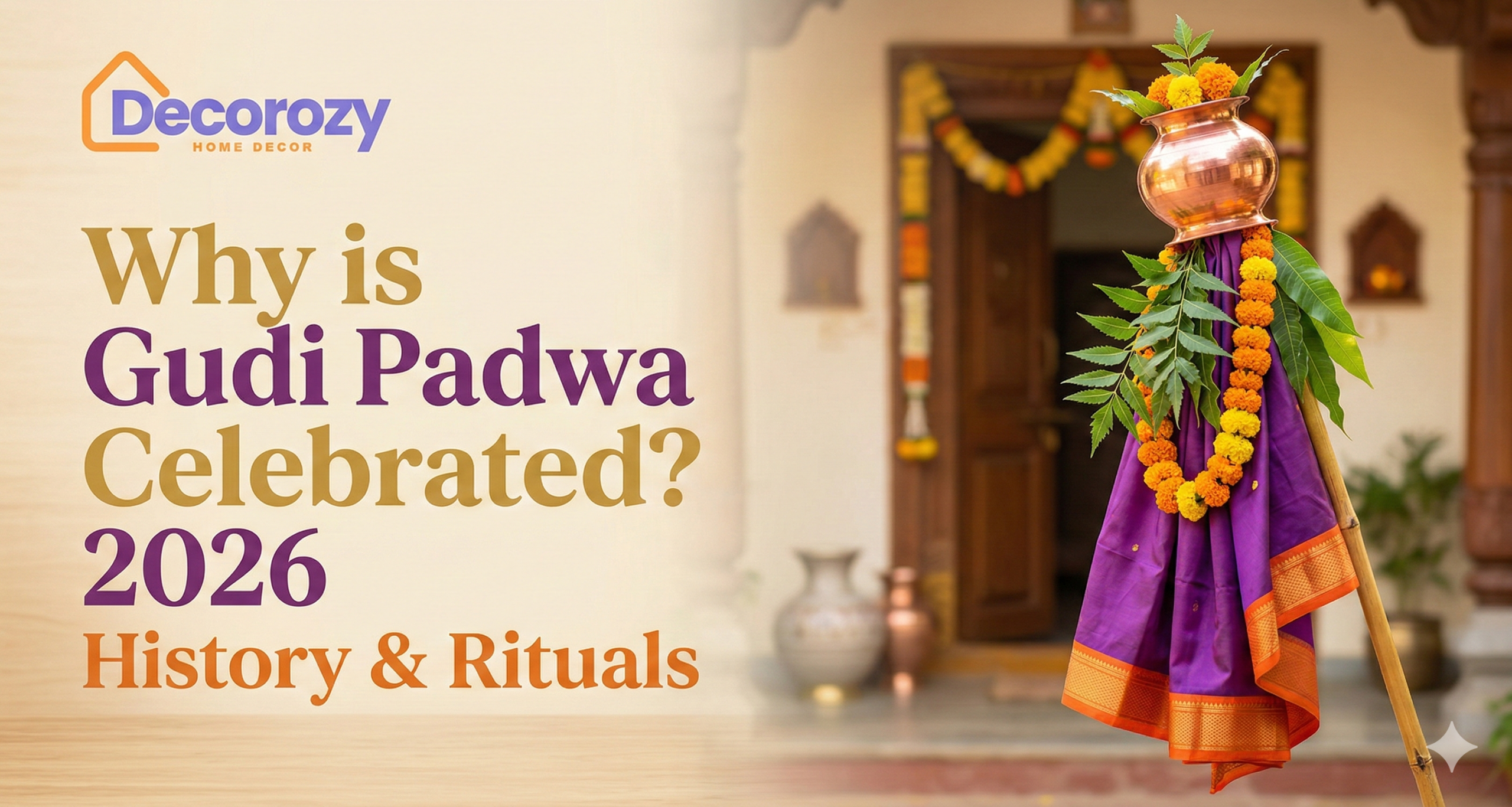
The most important ritual of the day is hoisting the Gudi flag outside the right side of the main entrance. It is constructed using a long bamboo pole draped in a bright, auspicious silk cloth.
The pole is carefully adorned with purifying neem leaves, fresh mango leaves, and a garland of bright marigolds. Finally, an inverted copper or silver pot is placed at the very top, representing abundance and ultimate victory.
Traditional Foods and Festivities
No Maharashtrian festival is complete without an array of mouth-watering traditional delicacies. Families prepare elaborate feasts featuring sweet Puran Poli and rich, saffron-infused Shrikhand.
A unique ritual also involves eating a specific mixture of bitter neem leaves and sweet jaggery. This symbolic practice reminds devotees to accept both the bitter and sweet experiences that the upcoming year will inevitably bring.
Section 3: FAQ Schema
What is the main story behind Gudi Padwa?
The main story behind Gudi Padwa stems from Hindu mythology, which states that Lord Brahma created the universe and the concept of time on this specific day. It also celebrates Lord Rama’s victorious return to Ayodhya after his 14-year exile and his triumph over Ravana.
What does the Gudi symbolize?
The Gudi symbolizes victory, prosperity, and the triumph of good over evil. The bamboo represents strength, the neem leaves signify purification, the inverted copper pot attracts divine abundance, and the entire structure acts as a flag warding off negative energies from the home.
Are Gudi Padwa and Ugadi the same?
Yes, Gudi Padwa and Ugadi fall on the exact same day (Chaitra Shukla Pratipada) and celebrate the Hindu New Year. While it is called Gudi Padwa in Maharashtra and Goa, the same festival is celebrated as Ugadi in Karnataka, Andhra Pradesh, and Telangana with slightly different regional customs.