Every year, millions of devotees gather to witness the spectacular chariot festival in Puri, but many spiritual seekers still ask: who is Lord Jagannath? Rooted deep within ancient Hindu Dharma, this enigmatic deity brings vibrant spiritual life to eastern India and beyond.
If you are looking for a concise explanation of his identity, origins, and the immense cultural weight he carries, you are in the right place.
Quick Answer: Who is Lord Jagannath? He is a highly revered Hindu deity worshipped as the “Lord of the Universe” and is considered an abstract manifestation of Lord Krishna or Lord Vishnu. Primarily venerated in Puri, Odisha, he is famous for his unique, limbless wooden idol and the grand annual Rath Yatra festival.
The Core Concept: Who is Lord Jagannath?
To truly understand who is Lord Jagannath, we must look at the linguistic roots of his name. The word translates beautifully from Sanskrit, combining “Jagat” (The Universe) and “Natha” (Lord or Master).
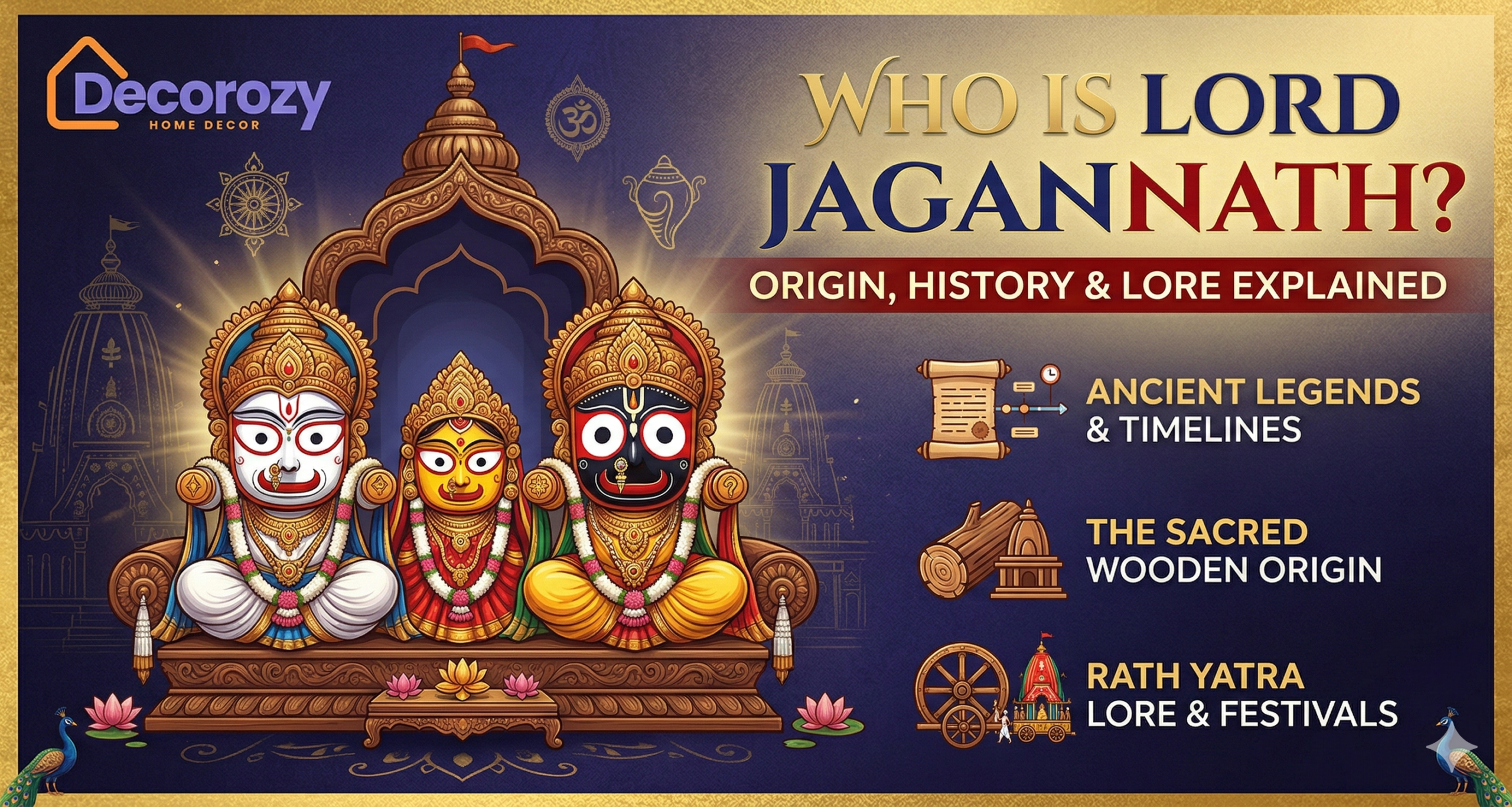
Unlike traditional depictions of Hindu gods, his idol is famously carved from a sacred neem wood stump, known as Daru Brahma. He is honored alongside his siblings, Lord Balabhadra (the elder brother) and Goddess Subhadra (the sister), forming a divine triad.
This unique iconography features massive, perfectly round, lidless eyes. These unblinking eyes symbolize his constant, watchful care over his devotees, representing both the sun and the moon.
The Spiritual Significance and Benefits of His Worship
Worshipping Lord Jagannath offers a deeply inclusive spiritual experience. He is known as a non-sectarian and compassionate deity, eagerly listening to the prayers of all devotees regardless of their background.
The colors of the deities in the Puri temple hold profound symbolic meaning, representing the diverse races and qualities of the earth. Jagannath’s dark hue signifies inscrutability, Balabhadra’s white represents enlightenment, Subhadra’s yellow symbolizes pure goodness, and the red of the Sudarshan Chakra signifies immense power.
For centuries, his universal appeal has drawn a highly diverse demographic of followers. During major festivals like the Rath Yatra, attendance regularly exceeds 1 to 1.5 million people, encompassing Indian locals, Bangladeshi Hindus, and international devotees from various racial and cultural backgrounds who follow the Vaishnava tradition.
Detailed Analysis: Who is Lord Jagannath in History and Lore?
The historical footprint of Lord Jagannath is as vast as his spiritual influence. The 12th-century Jagannatha Temple in Puri stands as a monumental testament to his legacy, serving as one of the sacred Char Dham pilgrimage sites.
Legend states that Lord Vishnu appeared in King Indradyumna’s dream, instructing him to carve a deity from a mystical log floating in the sea. This sacred driftwood was later carried by a tribal chief, illustrating the deep fusion of indigenous tribal roots with classical Vedic traditions.
Throughout history, who is Lord Jagannath has been a question answered by the greatest spiritual minds. Prominent historical figures and saints, including Adi Shankaracharya in the 8th century and Ramanujacharya in the 12th century, established vital monasteries in Puri to honor his presence.
Furthermore, Lord Jagannath is seamlessly integrated into the concept of the Dashavatara (the ten avatars of Vishnu). During different festivals, he is worshipped as various incarnations, such as the Vamana avatar in the month of Bhadra, and is deeply linked to the fierce Narasimha avatar due to his wooden form.
Conclusion
The lore of Lord Jagannath is a beautiful tapestry of mythology, devotion, and striking iconography. He represents the ultimate, boundless Supreme Being, offering spiritual salvation to anyone willing to embrace his teachings.
As we look forward to the upcoming Jagannath Rath Yatra on Thursday, July 16, 2026, the global community of devotees will once again celebrate the unmatched legacy of the Lord of the Universe.
Section 3: FAQ Schema
1. Who is Lord Jagannath? Lord Jagannath is a highly revered manifestation of the Hindu god Lord Vishnu, heavily associated with Lord Krishna. Meaning “Lord of the Universe,” he is primarily worshipped in Puri, Odisha, and is renowned for his unique, non-human wooden idol.
2. Why does Lord Jagannath look different from other deities? His distinct appearance—featuring a large, flat face, massive round eyes without eyelids, and an absence of visible limbs—symbolizes his infinite nature (without beginning or end). This iconography is believed to be a fascinating blend of ancient tribal worship and classical Hindu traditions.
3. What is the Rath Yatra and why is it important? The Rath Yatra is an ancient, grand chariot festival where Lord Jagannath, Lord Balabhadra, and Goddess Subhadra are pulled through the streets on massive wooden chariots. It symbolizes the deities stepping out of their temple to grant darshan (auspicious sight) to devotees from all walks of life.