How Did Radha Die? The Untold Story of Her Divine Departure
The love between Radha and Krishna is the ultimate symbol of spiritual devotion in Indian culture. Often described as two bodies but one soul, their bond transcends the physical realm, leading many devotees to wonder about the conclusion of their earthly journey. Specifically, how did Radha die, and what happened during her final moments with the Lord of Dwarka?
Quick Answer: How Did Radha Die?
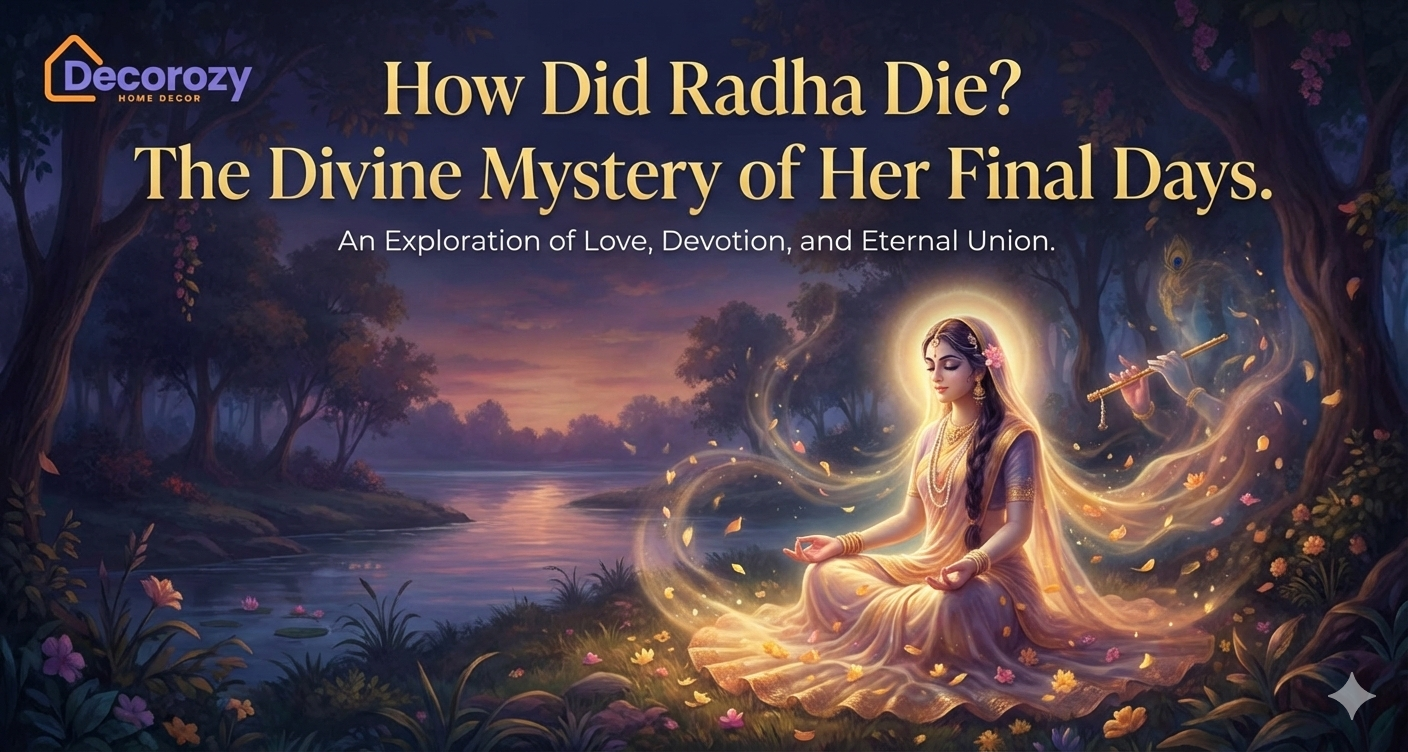
Radha did not die in a conventional human sense; she attained Mahasamadhi. In her final moments in a forest near Dwarka, Lord Krishna played a divine melody on his flute at her request. As she listened, her soul merged into Krishna. Heartbroken, Krishna then broke his flute, symbolizing the end of his earthly music.
## The Spiritual Origin and Separation of Radha Krishna
To understand the end, we must look at the beginning. Radha, the daughter of Vrishbhanu, is considered an incarnation of Goddess Lakshmi, while Krishna is the eighth avatar of Lord Vishnu. Their love blossomed in the forests of Vrindavan, where the sound of Krishna’s flute would draw Radha into a state of divine ecstasy.
However, their physical separation began when Krishna had to leave Vrindavan for Mathura to fulfill his dharma by slaying the tyrant Kansa. While Krishna moved on to become the King of Dwarka, Radha remained in the village, proving that true love does not require physical proximity.
## The Final Journey: How Did Radha Die in Dwarka?
Years later, feeling the pull of her eternal connection, Radha traveled to Dwarka to see Krishna one last time. While she initially stayed at the palace to be near him, she soon realized that the administrative grandeur of royalty could not match the spiritual intimacy they shared in the woods.
She eventually left the palace to live in solitude as a pracharika (devotee). During these final days, her physical form grew frail, signaling it was time for her to return to the spiritual fold. When Krishna reached her in her final moments, she had only one request: to hear the music that first brought them together.
## The Broken Flute and the Moment of Union
As Krishna played the flute, the melody was so profound that it encapsulated their entire journey—from the banks of the Yamuna to the throne of Dwarka. As the last note faded, Radha closed her eyes and her life force merged into Krishna. This is the core answer to how did Radha die: it was a transition from a physical form back into the divine essence of the Lord.
In a powerful display of grief and reverence, Krishna broke his flute and threw it into the bushes. He vowed never to play it again, as the source of his inspiration—Radha—was no longer there to listen in human form.
Key Takeaways from Radha’s Departure
- Divine Union: Her passing represents the merging of the Jivatma (individual soul) with the Paramatma (supreme soul).
- Unconditional Love: Radha never sought the title of “Queen,” choosing instead a path of pure devotion.
- Symbolism: The broken flute signifies that some melodies are too sacred to be repeated once their purpose is fulfilled.
Section 3: FAQ Schema
Q: Did Radha and Krishna ever get married? A: While some folklore mentions a “Gandharva” wedding in the forest, traditionally, Radha and Krishna were never formally married. Their bond is celebrated as Parakiya Rasa, a love that exists beyond social contracts and remains purely spiritual.
Q: Where did Radha spend her last days? A: Radha spent her final days in the vicinity of Dwarka. After a brief period at Krishna’s palace, she moved to a quiet forest area to practice meditation and prepare for her departure from the material world.
Q: Why did Krishna break his flute after Radha died? A: Krishna broke his flute as a symbolic gesture of the end of an era. Since the flute was the primary instrument used to express his love for Radha, her departure meant the music of his heart had also reached its earthly conclusion.