Who Can Defeat Lord Shiva? Exploring the Mythological Battles
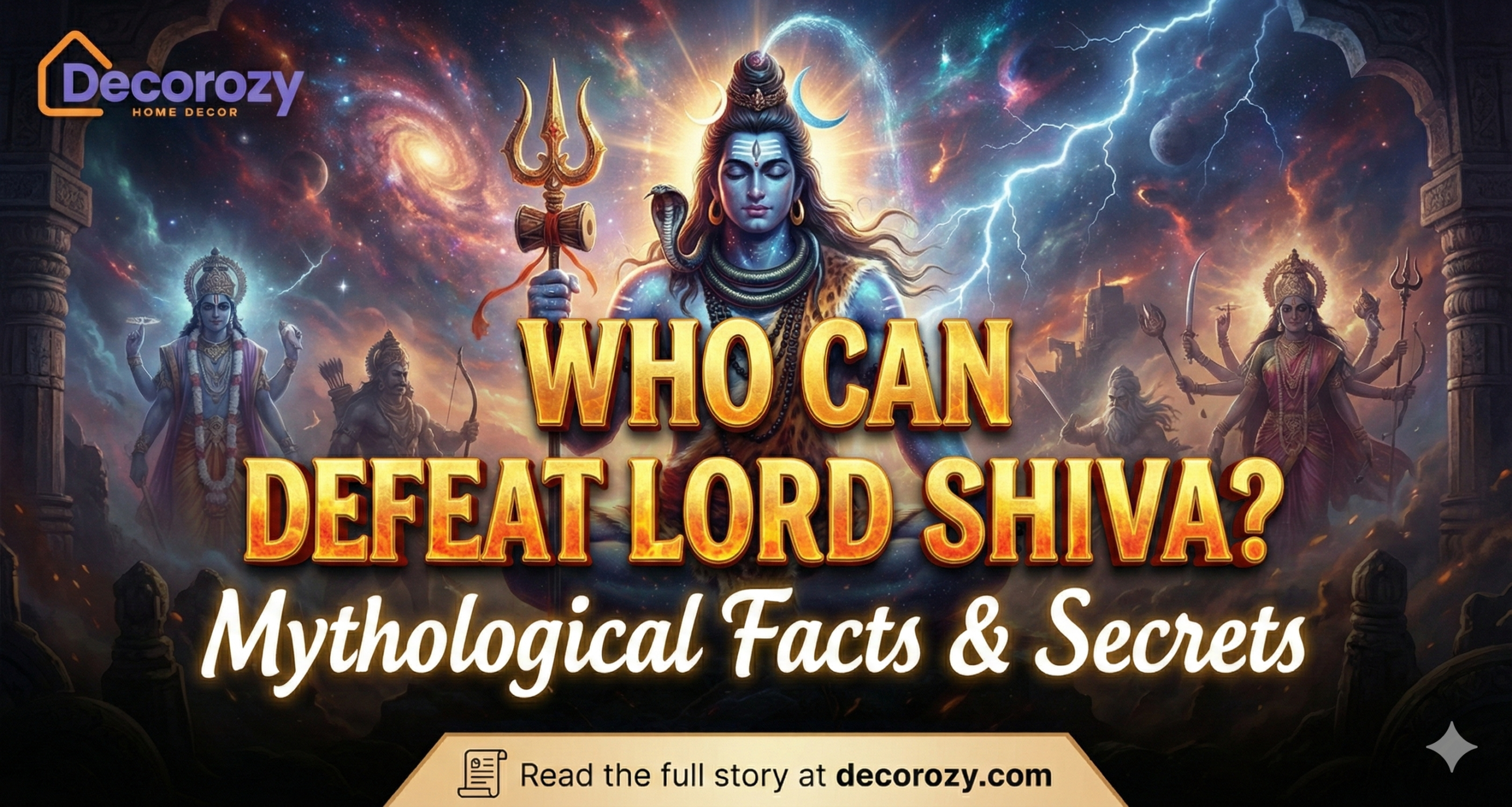
Lord Shiva, the “Destroyer” within the Hindu holy trinity, stands as an emblem of ultimate power, asceticism, and cosmic balance. Adorned with ash and a serpent, his presence evokes both awe and deep spiritual curiosity.
Quick Answer: Who Can Defeat Lord Shiva?
In direct combat, Lord Shiva is considered invincible. However, philosophically, Goddess Shakti can “defeat” him as she is his essential energy (Prakriti). Additionally, Shiva often “surrenders” to the pure devotion of his followers, and cosmic Time (Mahakala) eventually dissolves all physical manifestations during Pralaya.
The Invincibility of Mahadev: Understanding the Destroyer
The question of who can defeat Lord Shiva is a central debate in Vedic scholarship. Shiva’s invincibility is rooted in his role as the master of dissolution. His third eye symbolizes a perception that transcends physical reality, capable of reducing the universe to ashes.
His ascetic nature grants him unparalleled control over the senses. By conquering desire and ego, Shiva becomes impervious to the weapons of gods and demons alike. His dance, the Tandava, is not merely a performance but the mechanical rhythm of universal recreation.
Mythical Adversaries: When Demons Challenged the Divine
Throughout history, many have wondered who can defeat Lord Shiva among the Asuras. Legendary figures like Ravana and Andhaka attempted to challenge his supremacy, but these tales always conclude with a lesson in humility.
- Ravana: The demon king tried to uproot Mount Kailash. Shiva simply pressed his toe down, trapping Ravana and forcing him to sing hymns of praise for a thousand years.
- Andhaka: Born from Shiva’s sweat, this demon fought for millennia but was ultimately impaled by Shiva’s trident, eventually transforming into a devotee.
Divine Equals: The Roles of Vishnu and Shakti
When exploring who can defeat Lord Shiva, we must look toward the other supreme pillars of Hinduism. The relationship between the Trimurti and the Devi provides the most nuanced answers to this cosmic hierarchy.
Lord Vishnu: The Equal Balance
Lord Vishnu, the Preserver, is often viewed as Shiva’s equal. While texts like the Shiva Purana or Vishnu Purana may emphasize one over the other, the concept of Harihara proves they are two sides of the same coin. Neither can truly defeat the other; they maintain the universe through a state of eternal stalemate and mutual respect.
Goddess Shakti: The Source of Power
The most profound answer is Shakti. It is often said, “Shiva without Shakti is Shava (a corpse).” As his divine consort and the personification of energy, Shakti doesn’t defeat Shiva through violence but through her essential nature. She is the power by which he acts; without her, the Destroyer has no medium through which to destroy.
Conclusion: The Victory of Devotion
Ultimately, the only force that truly “conquers” Mahadev is the love of a sincere devotee. Shiva is Bholenath—the innocent lord—who easily surrenders his heart to those who approach him with purity.
While no weapon or warrior can claim victory over him, the cycle of Time and the grace of the Divine Mother remind us that Shiva exists beyond the concepts of winning and losing. He is the eternal consciousness that remains when all battles are over.
Section 3: FAQ Schema
Can Lord Vishnu defeat Lord Shiva? No, they are considered equal cosmic forces. In Hindu mythology, battles between Vishnu and Shiva typically end in a stalemate or the manifestation of a joint form (Harihara), signifying that preservation and destruction are equally necessary for the universe.
Has any demon ever won a war against Shiva? No demon has ever successfully defeated Lord Shiva in direct combat. While some Asuras gained boons that made them nearly invincible, Shiva—often with the help of Vishnu’s strategy—always found a way to neutralize the threat and restore cosmic order.
What is the significance of Shiva’s third eye in battle? Shiva’s third eye represents “Jnana” or supreme wisdom. In a martial context, it is a weapon of mass destruction that unleashes fire (Agni) to incinerate ego, ignorance, or physical enemies who threaten the balance of the cosmos.
Would you like me to generate a high-quality image of Lord Shiva in his meditative state to accompany this blog post?