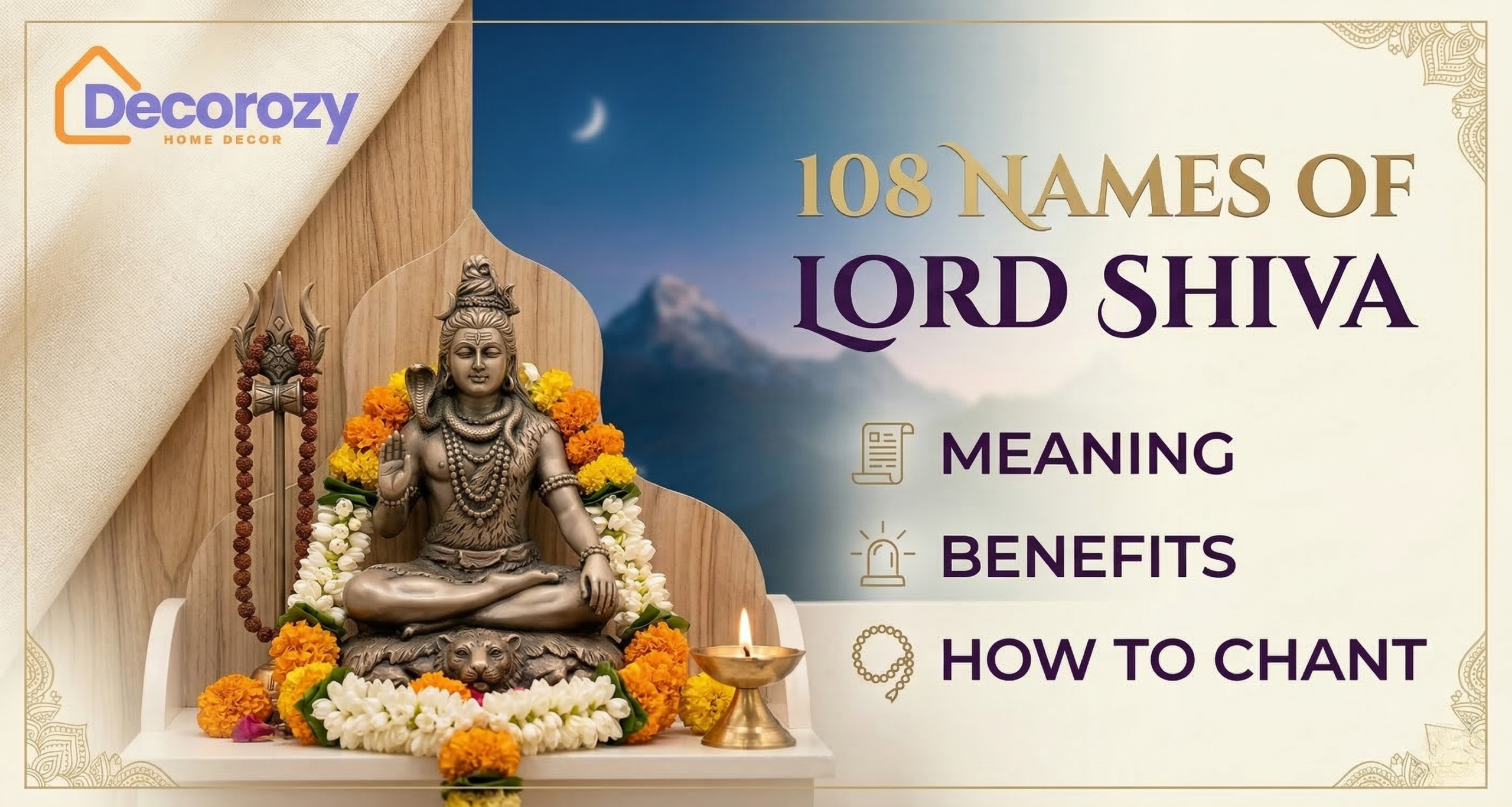
Lord Shiva, the Supreme Being in Hindu mythology, represents the ultimate cosmic energy of transformation and destruction.
Revered as a vital pillar of the Holy Trinity (Trimurti), He embodies the perfect balance between stillness and motion, meditation, and dynamic action.
One of the most spiritually enriching traditions to honor this mighty deity is the daily recitation of His sacred titles.
Quick Answer: The 108 Names of Lord Shiva, known as the Shiva Ashtottara Shatanamavali, are powerful Sanskrit mantras describing His divine attributes. Chanting these names aligns your internal energy with cosmic vibrations, offering profound mental peace, spiritual awakening, and protection from negative karmic influences.
The Core Concept Behind the 108 Names of Lord Shiva
The number 108 holds immense spiritual, mathematical, and astronomical significance in Hinduism.
Ancient Vedic texts state that there are exactly 108 energy lines, or nadis, that converge to form the human heart chakra.
Furthermore, cosmic measurements reveal that the distance between the Earth and the Sun is approximately 108 times the Sun’s diameter.
By chanting the 108 Names of Lord Shiva, practitioners actively align their physical and spiritual beings with the fundamental rhythms of the universe.
This sacred list of names, the Shiva Ashtottara Shatanamavali, captures every facet of His supreme nature, from the fierce destroyer to the compassionate protector.
Here is the complete and sacred list of the 108 Names of Lord Shiva, complete with their English translations:
No.
Name (Sanskrit)
Meaning (English)
1
Om Shivaya Namah
The pure one
2
Om Maheshwaraya Namah
The great lord
3
Om Shambhave Namah
The benevolent
4
Om Pinakine Namah
Wielder of the trident
5
Om Shashishekharaya Namah
Moon-crested
6
Om Vamadevaya Namah
The gentle one
7
Om Virupakshaya Namah
Lord with a distorted eye
8
Om Kapardine Namah
Lord with matted hair
9
Om Nilalohitaya Namah
Blue and red-colored Lord
10
Om Shankaraya Namah
Giver of happiness
11
Om Chandrapalaya Namah
Lord who wears the moon
12
Om Kapaline Namah
Lord with a skull in hand
13
Om Haraaya Namah
Remover of sins
14
Om Tripurantakaya Namah
Destroyer of the three cities
15
Om Vrishankaya Namah
Bull-bannered
16
Om Vrishabharudaya Namah
Rider of the bull
17
Om Bhasmodhulitavigrahaya Namah
Covered in sacred ash
18
Om Samapriyaya Namah
Lover of equality
19
Om Sureshaya Namah
Lord of the gods
20
Om Gangadharaya Namah
Bearer of the Ganga
21
Om Lalatakshaya Namah
One with a third eye
22
Om Kalakalaya Namah
Destroyer of time
23
Om Kripaya Namah
The compassionate
24
Om Bhaktavatsalaya Namah
Beloved of devotees
25
Om Mrityunjayaya Namah
Conqueror of death
26
Om Sukshmatmanaya Namah
Subtle soul
27
Om Jagadvyapine Namah
All-pervading
28
Om Jagadgurave Namah
Guru of the universe
29
Om Vyomakeshaya Namah
Sky-haired
30
Om Mahasenajanakaya Namah
Father of Kartikeya
31
Om Charuvikramaya Namah
Of graceful valor
32
Om Rudraya Namah
The fierce one
33
Om Bhutapataye Namah
Lord of beings
34
Om Sthanave Namah
Eternal
35
Om Ahirbudhnyaya Namah
Deep as the cosmic serpent
36
Om Digambaraya Namah
Clothed with directions
37
Om Ashutoshaya Namah
Easily pleased
38
Om Girishaya Namah
Lord of mountains
39
Om Anaghaya Namah
Sinless
40
Om Bhuvanapaya Namah
Creator of the worlds
41
Om Bhaktimataam Varaya Namah
Best among devotees
42
Om Bhavyaya Namah
Auspicious and gracious
43
Om Bhavagamyaya Namah
Attainable through devotion
44
Om Bhavanaya Namah
The creator
45
Om Bhavaya Namah
Source of all
46
Om Prabhave Namah
The radiant Lord
47
Om Pravaraya Namah
The supreme
48
Om Varadaya Namah
Granter of boons
49
Om Varenyaya Namah
The most adored
50
Om Sumukhaya Namah
Pleasant-faced
51
Om Sukshmaya Namah
The subtle one
52
Om Sugandhaya Namah
Fragrant
53
Om Suhride Namah
True friend
54
Om Mandaradarine Namah
Holder of the Mandara mountain
55
Om Mridaya Namah
The gracious
56
Om Maharshaye Namah
The great sage
57
Om Mahadevaaya Namah
The great god
58
Om Avyayaaya Namah
Imperishable
59
Om Haraya Namah
The remover
60
Om Pushadantabhitaya Namah
Terror to Pushadanta
61
Om Avyagraya Namah
Unchanging
62
Om Dakshadhwaraharaya Namah
Destroyer of Daksha’s sacrifice
63
Om Haraya Namah
The destroyer
64
Om Bhaganetrabhidya Namah
One who destroyed Bhaga’s eye
65
Om Avyayaya Namah
The eternal
66
Om Tejase Namah
Full of radiance
67
Om Maheshaya Namah
The supreme ruler
68
Om Ganadhipaya Namah
Lord of ganas (attendants)
69
Om Vishalakshaya Namah
Wide-eyed
70
Om Vrishabadhvajaya Namah
Bull-bannered
71
Om Ugraya Namah
The terrible
72
Om Kapaline Namah
Skull-bearer
73
Om Kamaraye Namah
Destroyer of desire
74
Om Andhakasurasudanaya Namah
Slayer of the demon Andhaka
75
Om Gangaadharaaya Namah
Holder of the Ganges
76
Om Lalatakshaya Namah
Third-eyed
77
Om Kalakalaya Namah
Time beyond time
78
Om Kripaya Namah
The merciful
79
Om Mrityunjayaya Namah
Victor over death
80
Om Sukshmatmane Namah
Of subtle essence
81
Om Jagatapataye Namah
Lord of the world
82
Om Jagadgurave Namah
Teacher of the world
83
Om Vyomakeshaya Namah
Whose hair is the sky
84
Om Mahasenajanakaya Namah
Father of Lord Kartikeya
85
Om Charuvikramaya Namah
Of beautiful stride
86
Om Rudraya Namah
Fierce and mighty
87
Om Bhutapataye Namah
Lord of all creatures
88
Om Ahirbudhnyaya Namah
Deep as the ocean
89
Om Digambaraya Namah
Naked Lord, clothed in space
90
Om Ashutoshaya Namah
Easily satisfied
91
Om Girishaya Namah
Lord of the Himalayas
92
Om Anaghaya Namah
The sinless
93
Om Bhuvanapaya Namah
Creator of the universe
94
Om Bhaktimataam Varaya Namah
Chief among devotees
95
Om Bhavyaya Namah
The beautiful
96
Om Bhavanaya Namah
The nurturer
97
Om Bhavaya Namah
The originator
98
Om Prabhave Namah
The supreme Lord
99
Om Pravaraya Namah
Eminent among the best
100
Om Varadaya Namah
Granter of wishes
101
Om Varenyaya Namah
The most excellent
102
Om Sumukhaya Namah
Lord with a beautiful face
103
Om Sugandhaya Namah
Fragrant one
104
Om Suhridaya Namah
Kind-hearted
105
Om Mandaradarine Namah
Holder of the Mandara
106
Om Mridaya Namah
The kind-hearted one
107
Om Mahadevaaya Namah
The greatest God
108
Om SadaShivaya Namah
The eternal auspicious one
Profound Benefits of Chanting the 108 Names of Lord Shiva
Engaging in this spiritual practice offers benefits that transcend religious boundaries.
It serves as a holistic tool for aligning the mind, body, and soul.
Mental Peace and Clarity: Reciting these mantras significantly calms an overactive mind. It helps alleviate daily anxiety, reduces stress hormones, and creates a profound sense of inner stillness.
Spiritual Awakening: Regular recitation stimulates the higher energy centers, specifically the Ajna (third eye) and Sahasrara (crown) chakras. This energetic activation accelerates spiritual growth and expands human consciousness.
Protection and Karma Cleansing: Lord Shiva is universally revered as the destroyer of evil and ignorance. Chanting His names forms a protective energetic shield around the practitioner, actively warding off negative intentions.
Furthermore, this dedication aids in purifying past karmic debts. It empowers devotees to release deeply held anger, guilt, and ego, ultimately paving the way for lasting prosperity and success.
Detailed Analysis: How to Effectively Chant the Sacred Names
To harness the maximum benefit from this practice, establishing a focused and mindful routine is essential.
You can perform this chant silently in your mind (manasika japa), in a soft whisper (upamsu japa), or aloud (vaikhari japa).
Here is a highly effective, step-by-step framework to begin your practice:
Select a Sacred Space: Find a quiet, undisturbed area in your home. Sitting near a traditional Shivling or a serene image of Lord Shiva helps anchor your focus.
Utilize a Rudraksha Mala: A traditional rosary containing 108 beads is highly recommended. It acts as a physical guide to keep your count accurate while you meditate.
Set Your Intention: Always open your session with a grounding prayer, such as “Om Namah Shivaya,” to center your energy.
Chant with Mindfulness: Move slowly through the list. Focus on the phonetic vibration and English meaning of each distinct name to deepen your connection.
Conclude with Gratitude: Close your ritual by offering a mental or physical token of thanks, such as lighting incense or presenting fresh flowers.
Remember, unwavering consistency and genuine faith are the true catalysts for transformation.
Start Your Spiritual Journey Today
The 108 Names of Lord Shiva are far more than a simple list; they are energetic keys to cosmic power and spiritual healing. By inviting Lord Shiva’s blessings into your daily routine, you actively cultivate peace, protection, and enlightenment.
If you seek deeper inner strength, allow this timeless practice to nourish your soul.
Explore more spiritual guides, home altar setups, and devotional practices right here on Decorozy.com to elevate your everyday living.
FAQ Schema
Question 1: Can beginners chant the 108 names of Lord Shiva?
Answer: Yes, absolutely anyone can chant these sacred names regardless of their experience level. Beginners should start by listening to audio recitations or slowly chanting a few names daily, gradually building up to the full 108 names as their devotion grows.
Question 2: What is the best time to chant Lord Shiva’s names?
Answer: The most spiritually potent time is during Brahma Muhurta (between 4:00 AM and 6:00 AM). However, chanting with a pure, focused intention at any time of the day will still yield immense spiritual benefits and cosmic blessings.
Question 3: Do I need to follow any rituals before chanting?
Answer: There are no strict or rigid rules required to begin chanting. While maintaining basic physical cleanliness is recommended, the most critical requirement is approaching the practice with absolute sincerity, deep love, and unwavering devotion.